Tap water and supplyGuide
Water quality after a wildfire: what Santa Rosa learned about benzene, and what to do before you drink
After the 2017 Tubbs Fire, tap water in part of Santa Rosa tasted and smelled wrong. Melted plastic pipes had put benzene, a chemical that can cause cancer, into the water. The pipes were the problem, not the river. If your home is near burned houses or your water lost pressure, use bottled water and do not boil tap water until a lab test or your utility says it is clear.
Listen to this article
Read aloud by an AI voice.
On November 8, 2017, a month after the Tubbs Fire, a Fountaingrove resident complained to Santa Rosa Water. The tap water tasted and smelled wrong.[1]
Tests found benzene, a chemical that can cause cancer.[2] They also found other VOCs, short for volatile organic compounds. VOCs are chemicals that evaporate easily, like those in fuels and solvents.[1] The city told people in the area not to drink the water, and not to boil it either.[2]
The river was not the problem. The water got dirty inside the neighborhood's own pipes, where the fire had melted plastic.[1][3] The Tubbs Fire, and the Camp Fire in Paradise a year later, were the first known wildfires to contaminate a water system this way.[3] We compare the two below.
Below: how a fire gets into a pipe, how bad it got in Santa Rosa, why boiling can make it worse, and what to do with your own tap or well after a fire.
The river was fine. The pipes were not.
Most of us picture water trouble starting at the source: ash in a lake, a dirty river. After the 2017 fires, Sonoma Water, the county's wholesale water agency, tested its water and found no problems.[4]
The trouble was in the network that carries water to homes.[3] The highest levels were in service lines, the pipes that run from the water main in the street to each home's meter.[1]
It was not only one street. In the first round of tests, 87 samples were over the state limit for benzene, mostly in Fountaingrove but not all. A second round found benzene at seven spots outside the closed-off area.[2] Investigators found vinyl chloride, a chemical linked to melted plastic. They found no sign of fuel byproducts, which would point to something like a leaking buried tank.[2] The clues pointed to the pipes.
How does a fire get into a water pipe?
Researchers think chemicals get in two ways: heat and suction. Then they spread and linger.[5] Follow the numbers.
- Heat. Many water lines and meters are plastic, such as PVC or HDPE. Heat breaks them down, and they release chemicals into the water.[5]
- Suction. When pipes break, or firefighting and other demand pull hard on the system, water pressure drops. Smoke, hot gases and chemicals can then be sucked into the lines.[5][6]
- Spread. Dirty water can move to parts of the system the fire never reached.[5]
- It lingers. Some plastics soak up these chemicals like a sponge, then slowly release them back into clean water.[5][6] After the Camp Fire, researchers working with EPA estimated that some plastic pipes needed more than 280 days of flushing.[6]
You usually cannot see it. Pipes can look fine and still hold pressure. The only way to know is a lab test.[5] Smell is no guide either: water with no odor can still be affected.[7]
How much benzene was in the water?
California allows 1 part per billion (ppb) of benzene in drinking water. The federal limit is 5.[8] Every fire sample in this chart was far over both limits.
The nine Fountaingrove service lines on the city's map, 100 to more than 500 ppb, were 100 to more than 500 times California's limit.[1] The highest sample after the Tubbs Fire was 40,000 ppb.[3]
What Santa Rosa did, and what it cost
The city cut Fountaingrove's water off from the rest of the system so the contamination could not spread.[2] Then it found and replaced the damaged parts.[1]
- More than 7,000 water samples.
- New water parts for all 352 properties in the advisory area, including 8 hydrants, 28 blow-off valves and 1,265 feet of water main.
- About $8 million, which the city expected to qualify for repayment from FEMA, the federal disaster agency.
- Nearly a year before the advisory was lifted.[1]
Spread across the 352 properties, that is about $23,000 and about 20 water samples each. Only 13 of the 352 still had a house standing.[1] So most of that work served lots whose homes had burned.
Why boiling can make it worse
Boiling is the usual fix after a water system loses pressure. It kills germs that may have gotten in.[5]
It does not remove the danger from VOCs. These chemicals turn to vapor when heated, so boiling the water, or taking a hot shower, can put them in the air you breathe.[5][9] Sonoma County's own guidance says boiling will not protect you from chemical contamination and may increase your exposure.[10]
That is why fire areas get different notices. Read yours carefully.[5]
- Boil Water: germs are the worry. Boil before drinking.
- Do Not Drink: use other water for drinking, cooking and brushing teeth.
- Do Not Drink, Do Not Boil: chemicals may be present. Boiling would release them.
- Do Not Use: no drinking, cooking, bathing or washing dishes.[9]
Older county advice for wells said to boil water while you wait for bacteria test results.[11] Boiling helps with germs, not chemicals. The county's newer well page says to use bottled water, and that boiling may increase chemical exposure, until testing shows the water is safe for all uses.[10]
Our take: if your home is near burned houses, or your water lost pressure, treat it as a chemical problem first. Use bottled water for drinking, cooking, brushing teeth and baby formula, and do not boil the tap water, until a lab test or your water utility says it is clear. Boil only when the notice says Boil Water.
On city water: what to do after a fire
- Follow your utility's notice until it is lifted, even if the water looks and smells fine.[5]
- Know which pipes are yours. The utility usually owns the pipes up to the meter. You usually own the line from the meter to the house, and everything inside.[5] Utilities are usually not required to test inside homes.[5]
- Flush when you are told to. Once the utility says its mains are clear, run your taps one at a time. Start with the tap closest to where the water line enters the house and finish with the farthest.[5]
- Test your own tap if you live near burned homes. Ask a state accredited lab for a broad VOC test. Ask for it by name, "EPA Method 524.2." It checks for a wide range of chemicals, not just benzene.[7][5] Test water that has sat in the pipes, from the kitchen sink and a shower.[5] There is no standard method for testing homes yet, so ask the lab how to collect the sample.[5] Our water testing guide lists local labs.
- Do not count on a filter. A filter can remove some VOCs when it is built and kept up for them. Above its limits, they pass right through.[5] Refrigerator and faucet filters are not approved for heavily contaminated water.[6] See our guide to home water filters.
On a well: what to do after a fire
A well is its own small water system, with the same weak spots: plastic pipe, a pressure tank and pressure that can drop.[10]
- Stay away from damaged wiring. Do not touch burned wires or the well casing near them. Call a licensed well contractor, an electrician or the power company.[11][7]
- Check the pressure. Open an outside faucet. If air spits out with the water, or nothing flows, the system lost pressure.[10][11]
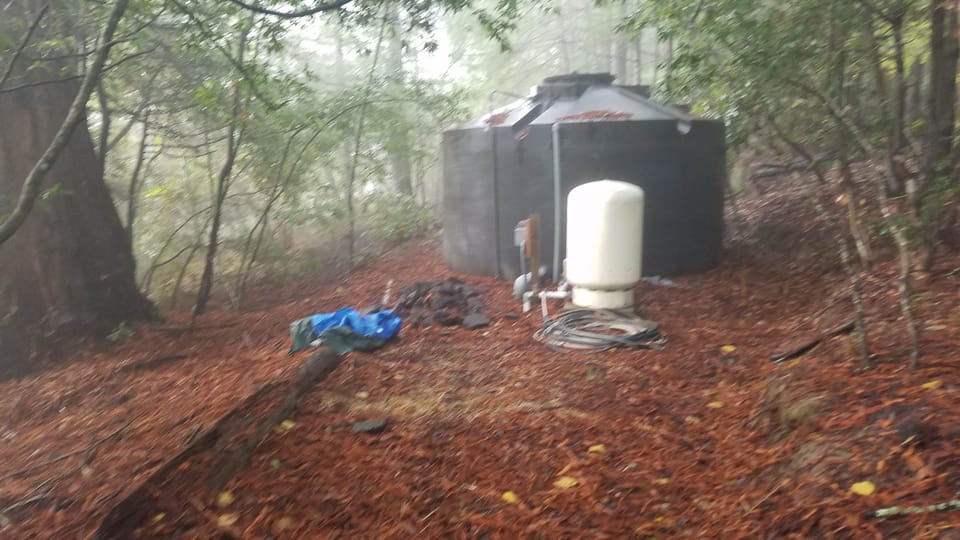
- Look it over. Check the wellhead, pressure tank, storage tank vents, filters and any plastic pipe for melting. Look for ash or debris in tanks.[10]
- Use other water until you test. Bottled or hauled water for drinking, cooking, dishes, brushing teeth, ice and baby formula. Avoid running well water through the house plumbing until you know it is clean, so you do not spread anything into your pipes.[10]
- Test it. Let the water sit still in the pipes for 72 hours first. Then have a state accredited lab test for VOCs (ask for "EPA Method 524.2") and SVOCs, similar chemicals that evaporate more slowly ("EPA Method 8270E"). Also ask for the basic well tests: bacteria, nitrate, cloudiness, pH, conductivity and color. Ask about metals too, such as lead, copper and zinc.[10] Our well test planner builds the list.
- Get repairs done by a licensed well contractor or pump installer. Questions about well repairs go to Permit Sonoma's Well and Septic section, (707) 565-2849.[10] Health questions go to Sonoma County Environmental Health, (707) 565-6565.[12]
One more step before cleanup crews arrive: mark where your well, well lines, septic tank and leach field are. Scraping away even a little soil can ruin a leach field.[11] Our septic guide explains how one works.
Who decides the water is clean again?
Your water system tests, under orders from the State Water Board. Since January 1, 2024, a state law covers any wildfire of 300 acres or more that damages or destroys buildings connected to a water system.[9][13] The board must have that system test for benzene as soon as it is safe. If benzene turns up, the board can order more testing, flushing, notices to customers and repairs.[13]
People argue about when that test should be required and how wide it should be.
- The state's drinking water division has said benzene "indicates whether or not other contaminants are present," as quoted by the Purdue team below, which disputes it.[14]
- Purdue University researchers who studied both the Tubbs and Camp fires say benzene alone is not enough. After the Tubbs Fire, some samples had no benzene but had a different VOC above both the state and federal limits. They also say the 300 acre size rule has no science behind it. What matters, they say, is lost pressure and burned buildings.[14]
- EPA calls benzene "not a perfect indicator," because some samples free of benzene held other VOCs.[5]
- One small Altadena water district manager, after the 2025 Eaton Fire near Los Angeles, said the law treats systems as "guilty until proven innocent," though he added he was "not saying that's wrong." He said a notice under the law does not by itself mean a system has a problem.[9]
So EPA and the Purdue team agree that a broad test catches more than a benzene test. What the state should require is still being argued. A UC San Francisco researcher who studied both fires adds that once testing is done and comes back negative, people can trust the results.[9]
Our take: if your pipes were near burned homes, ask your lab for EPA Method 524.2, not benzene alone. EPA and the researchers agree benzene alone can miss other chemicals.
And the creeks?
Short answer: creek testing found less harm than the pipe testing did. Here is what testing found, and what you can do.
The 2017 Tubbs and Nuns fires burned 93,363 acres, about 8% of the Russian River watershed and more than a quarter of the Laguna and Mark West Creek area.[4] Those creeks include habitat for endangered species and sources of drinking water.[4]
Before the first big rain, crews laid thousands of straw wattles, long rolls of straw, around burned homes, burned slopes and storm drains.[15] Staff from the North Coast Regional Water Quality Control Board, the state agency that protects local water, then sampled four creek sites during storms that winter and spring and tested for more than 60 things.[4]
- Soot chemicals: low levels of PAHs, a kind of chemical fire leaves behind. They turned up downstream of Coffey Park, a Santa Rosa neighborhood that burned.[4]
- Metals: sometimes above the water board's guidelines, but within the range seen in past storms.[4]
- Toxicity: water samples did not harm the three test animals, a tiny shrimp-like amphipod, a water flea and a minnow.[4]
The water board said its erosion controls, such as straw wattles,[15] and the cleanup of burned debris may have helped keep pollution out.[4] The next, wetter winter left more fire residue in creek beds, with some metals above levels of concern at several sites. Over the two years, two creek-bed samples (Paulin Creek in 2018, Franz Creek in 2019) harmed test animals, with no cause found. Overall, the water board found the residues did not reach levels toxic to creek life or a threat to people.[16]
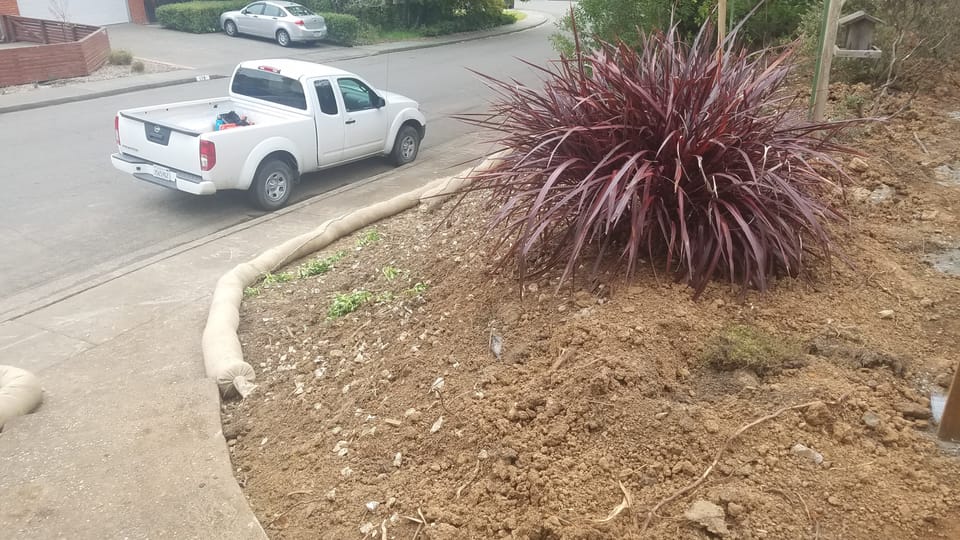
What you can do after a fire near you: keep ash and loose soil out of the gutter and storm drain, which carry runoff straight to creeks.[4] Straw wattles around burned ground and drain inlets help.[15] Our guide to stopping erosion on a slope covers burned hillsides, and fine sediment and salmon explains why mud in a creek matters to fish.
Before the next fire
Ways to keep fire out of water pipes have not been proven yet. EPA lists reasonable steps for water utilities. One is a backflow preventer on every service line, a one-way valve that keeps water from a damaged home from flowing back into the main. Others are fire-resistant concrete meter boxes and brass meters.[5][6] As of 2021, the Paradise Irrigation District, which serves Paradise, required backflow prevention on every water connection.[5]
- Ask your utility whether your meter has a backflow preventer, and what kind of meter box you have.
- On a well, know where the well, the water lines, the septic tank and the leach field are, so you can mark them fast.[11]
- Keep drinking water on hand for the weeks a notice can last. Our guide to water when the power goes out covers how much to store and how.
What it means for you
- Burned houses nearby or lost pressure? Bottled water first. No boiling until a test or your utility clears it.
- Read the notice word for word. Boil Water and Do Not Boil mean opposite things.
- Your pipes are yours to test. Ask for EPA Method 524.2, not benzene alone.
- On a well that lost pressure or was near the fire, let the water sit 72 hours, then test before you use it.
Our view: the good news from 2017 is that the river supply tested clean, and the creek water did not harm test animals. The hard lesson is that the last few feet of pipe to a home matter as much as the source. Next: plan a test with the well test planner, read where your tap water comes from, or sign up below for our newsletter.
Photos by Devan Hemmings unless noted.
Sources
- 1. CBS San Francisco and Bay City News, Water advisory in burned Santa Rosa neighborhood lifted after nearly a year (2018)
- 2. KQED Science, Cancer-causing chemical found in some Santa Rosa drinking water (February 2018)
- 3. Proctor, Lee, Yu, Shah and Whelton, Wildfire caused widespread drinking water distribution network contamination, AWWA Water Science 2(4), e1183 (2020), abstract via US EPA HERO
- 4. North Coast Regional Water Quality Control Board, Fact sheet: Santa Rosa post-fire water quality monitoring (2018)
- 5. US EPA, Addressing contamination of drinking water distribution systems from volatile organic compounds (VOCs) after wildfires (EPA 817-F-21-011, October 2021)
- 6. Andrew Whelton and Caitlin Proctor, Wildfires can poison drinking water. Here's how communities can better prepare, The Conversation via Scientific American (August 3, 2020)
- 7. US CDC, Private wells after a wildfire
- 8. State Water Resources Control Board, MCLs, DLRs and PHGs for regulated drinking water contaminants (updated September 2024)
- 9. Los Angeles Times, Boiling won't help. Explaining the Palisades and Altadena 'Do Not Use' water alerts (January 22, 2025)
- 10. Sonoma County Emergency Management, Water wells after a wildfire (2024)
- 11. Sonoma County Emergency Management, Water wells and septic systems after wildfire
- 12. Sonoma County Environmental Health, Well water testing
- 13. California Health and Safety Code section 116596 (added by AB 541, Chapter 530, Statutes of 2023), via FindLaw
- 14. Andrew Whelton and Nikki Zavodny, Purdue University, Update to State of California code as it pertains to drinking water safety after wildfires (February 2025)
- 15. Mary Callahan, The Press Democrat, Damage to creeks, water supply analyzed after Sonoma County fires (November 14, 2017), via Government Technology
- 16. North Coast Regional Water Quality Control Board, Fact sheet: Santa Rosa post-fire water quality monitoring, year 2 (2019)
Checked 2026-10-24. Rules and programs change. If something here is out of date, the source above wins. Spot an error? See our corrections policy.
Related reads
 Tap water and supplyWater map: your supplier, watershed and groundwaterEnter an address or click the map. We show who supplies your water, which watershed you live in, and which groundwater basin is under you.Updated Oct 11, 2026
 Tap water and supplyWhere Sonoma County tap water comes from, and who gets itTurn on a tap in Santa Rosa or Petaluma and the water very likely came from the Russian River. Wells beside the river pull it from the gravel below. It gets chlorine and a pH boost, then travels by pipe to your city. In summer, that river water is winter rain released from Lake Mendocino and Lake Sonoma. On a private well? This page is not about your water.Updated Oct 18, 2026
 Tap water and supplyIs your Sonoma County water safe to drink? City, well, tank, creek and rainCity water is disinfected with chlorine, and Sonoma Water and Santa Rosa say they add no fluoride. Wells, tanks, creeks and rain have no one testing them for you. Look up your supplier, then find your source below.Updated Oct 11, 2026