Tap water and supplyGuide
Where does wastewater go after you flush? Sonoma County's sewer plants, from Santa Rosa to The Geysers
Most of it is cleaned and reused. In 2025, the Santa Rosa area plant recycled 90% of the treated water it sent out, and almost two thirds of that went to make steam for power at The Geysers. Some plants release treated water to creeks and rivers, mostly in the wet months. Find your plant in the list below.
Listen to this article
Read aloud by an AI voice.
Every day, about 20 million gallons of what the Santa Rosa area flushes, showers and drains arrives at one treatment plant on Llano Road. It is called the Laguna Treatment Plant. Here we also call it the Santa Rosa area plant.
Most of it does not go to the river.
About two thirds of the recycled water is pumped 41 miles uphill to The Geysers, a field of power plants in the Mayacamas Mountains.[1][2][3] There it is sent down into hot rock and turned into steam that makes electricity.[4]
That is the big surprise in Sonoma County's sewers. Here is the rest of the trip, plant by plant: how the water gets clean, where it goes after treatment, when it is allowed into a creek, and what you can do at your own sink.
Which plant takes your wastewater?
If you pay a sewer bill, your drains run to one of these plants. Find your town first. After the plant's name is where its treated water ends up.
- Santa Rosa, Rohnert Park, Cotati, Sebastopol, South Park. Laguna Treatment Plant, Llano Road. The Geysers, farms, vineyards and parks. Some to creeks and the Laguna de Santa Rosa, a large wetland, from October 1 to May 14.[1]
- Petaluma, Penngrove. Ellis Creek Water Recycling Facility. Farms, vineyards, parks and schools.[5][2] The Petaluma River, but not from May 1 to October 20.[6]
- Sonoma and much of Sonoma Valley. Sonoma Valley County Sanitation District. Irrigation and wetlands from May to October. Schell Slough or Hudeman Slough (sloughs are slow, marshy channels) from November to April.[7]
- Windsor, and since 2025 Larkfield, Wikiup and the airport area. Windsor's plant. The Geysers, farms, parks, public spaces and golf courses.[8][2]
- Healdsburg. Healdsburg's plant. Vineyards, and fill stations where people pick up water.[9][10] The Russian River from October to mid-May.[10]
- Cloverdale. Cloverdale's plant. Ponds beside the Russian River, where it soaks into the ground.[11]
- Guerneville, Rio Nido and nearby. Russian River County Sanitation District. The Russian River from October 1 to May 14. A forest beside the plant and the Northwood Golf Course in summer.[12]
- Occidental. Occidental County Sanitation District. Dutch Bill Creek from October 1 to May 14. Irrigation in summer.[13]
No sewer bill? Your house probably has a septic system, a buried tank that treats wastewater in your own yard. State rules for septic systems near the river are changing. See our story on the state's plan to cut bacteria in the Russian River.
Who runs your plant matters if you ever have a sewer spill or backup. Sonoma Water, the county's water agency, runs eight sewer districts and zones, including Sonoma Valley, Guerneville and Occidental.[14] Most cities run their own.
Step 1: down the drain
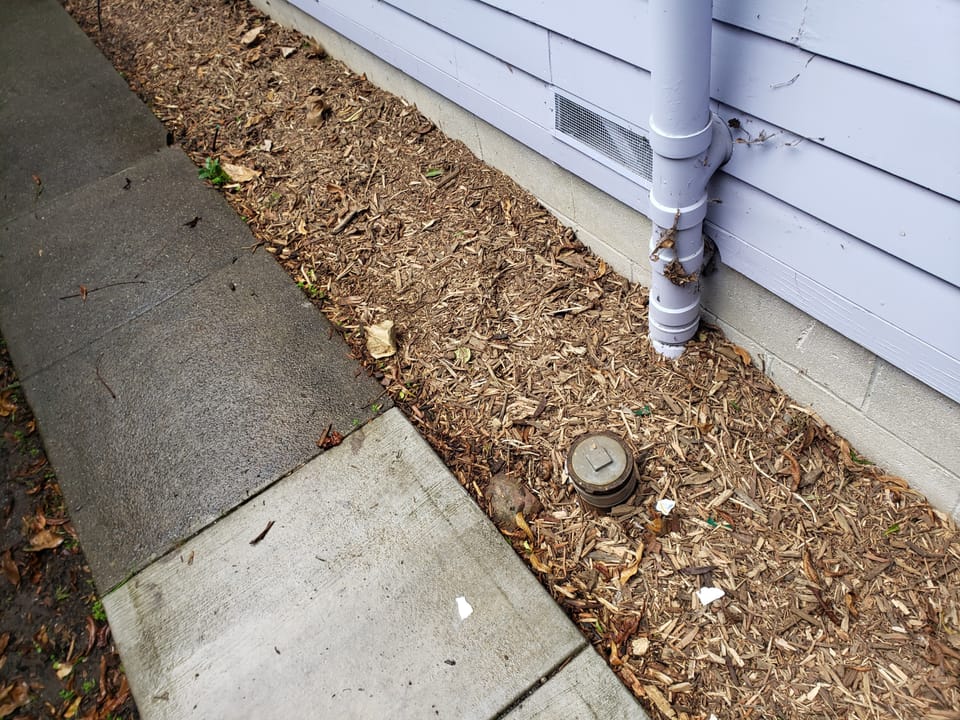
Everything you send down a toilet, shower, sink, dishwasher or washer goes into one pipe.[15] It is called the lateral. It runs from your house to the sewer main under the street.
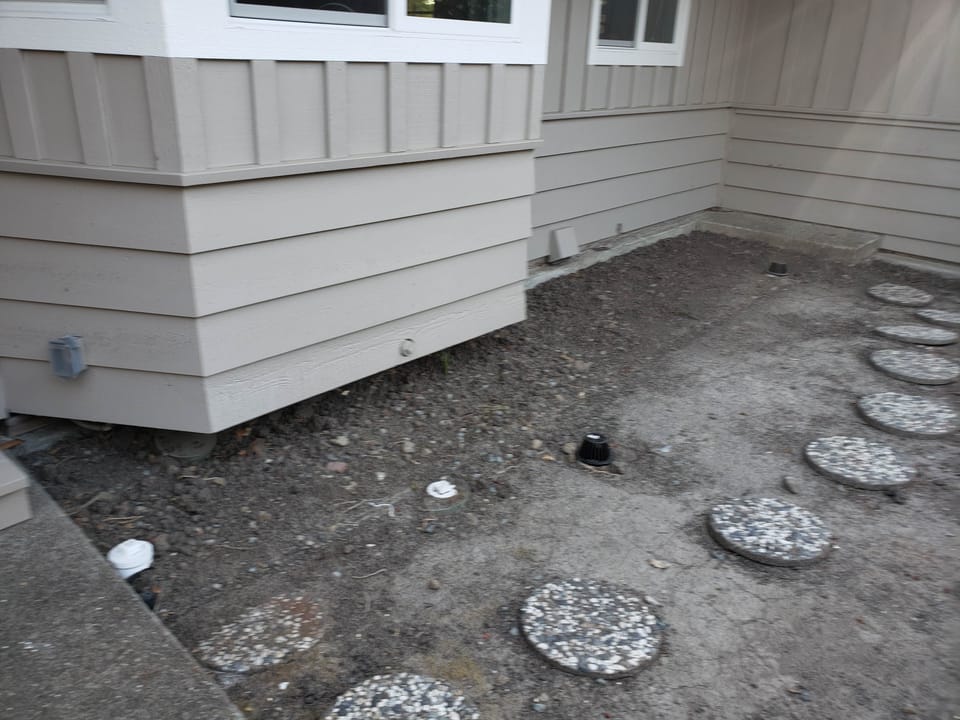
Along the way are cleanouts: capped pipes that stick up out of the ground so a plumber can reach a clog.
From the street, sewer mains and pump stations carry it to the plant. The Laguna plant serves about 237,800 people in Santa Rosa, Rohnert Park, Cotati, Sebastopol and the South Park area.[1]
In 2025, about 20.6 million gallons a day came into the plant.[2]
Step 2: how the plant cleans it
Read this diagram top to bottom. Each step takes out something the last one left behind.
Three words come up a lot. Here is what they mean.
- Primary treatment. Letting the water sit so solids sink and grease floats, then removing both.[16]
- Secondary treatment. Using microbes to eat the waste dissolved in the water.[16]
- Tertiary treatment. One more cleaning step after that, such as filtering.[16] Then the water is disinfected to kill germs.
The Laguna plant does all three, then disinfects the water with ultraviolet light.[1][17] Santa Rosa has used all three steps since 1988.[18]
The clean water then waits in six storage ponds. Together they hold up to 1,650 million gallons.[17] The ponds let the city choose when and where water leaves, and keep a supply for summer, when releases to creeks are not allowed.[17]
The solids do not go to waste either. They are digested in tanks, dried and spread on fields as a soil amendment. In wet months, when fields are too soggy, the plant makes compost instead.[1]
Step 3: up the mountain to The Geysers
The Geysers is a field of geothermal power plants on the line between Sonoma and Lake counties. Steam from deep, hot rock spins the turbines.
For decades, the plants took out more steam than nature put back. By 1989, the steam pressure was falling hard.[4]
Lake County found a fix first. In 1997 it began piping its treated wastewater to The Geysers.[4] The hot rock turns injected water back into steam.[4]
Santa Rosa followed. Since 2003, it has pumped about 11 million gallons a day up a 41-mile pipeline with four pump stations, to a tank high in the Mayacamas.[3] The city says The Geysers makes enough power for 100,000 households.[3]
The project cost $220 million, the largest in the city's history.[19] It also helped keep Santa Rosa's treated water out of the Russian River. More on that below.
Here is how the Santa Rosa area plant used its recycled water in 2025. Look at the top bar: The Geysers took most of it.
Most of the rest watered about 6,400 acres of farms, vineyards, parks, golf courses and landscaping in Santa Rosa and Rohnert Park.[1] Some went to industry.[2] Recycled water here is cleared for vineyards, playgrounds, parks and crops that are eaten raw. It is not for drinking.[15]
Step 4: the creek, only in winter
Some treated water still goes into creeks and rivers. The rules keep it to the wet months, when the water is high.
- Santa Rosa area. Only from October 1 to May 14, into Santa Rosa Creek, the Laguna de Santa Rosa and a ditch that drains to it. The amount is capped at 5% of the Russian River's flow, measured at Hacienda Bridge.[1] The usual limit in this region is 1% of the river's flow. Santa Rosa's permit allows up to 5% as an exception.[1]
- Healdsburg. Only from October to mid-May, when rain swells the river.[10]
- Petaluma. Only from October 21 to April 30. In summer, only if there is more water than the recycled system can store or use.[6]
Why winter? Rain swells the river then, which lowers the risk of harm.[10]
The Laguna de Santa Rosa matters here too. It has been described as the largest freshwater wetland complex on the northern California coast.[1] State water regulators require the plant to add no extra phosphorus to the Laguna overall. Phosphorus is a nutrient that can feed algae.[17]
Why Santa Rosa sends its water uphill
In February 1985, 1.5 million gallons of raw sewage spilled from Santa Rosa's system into the Laguna and the Russian River.[18] Eleven days later, the city began an illegal release of 750 million gallons of treated wastewater to relieve its overfull ponds.[18]
State regulators then told Santa Rosa to build a system that kept almost all of its water out of the river.[18] The city studied a pipe to the ocean, farm irrigation and a reservoir on a west county dairy.[19][18]
The Geysers won. The city council picked it on a 5 to 2 vote in 1998.[18]
It was a fight. Here are both sides, in their terms.
- For. Supporters said it would solve a decades-long problem with discharges to the river, make clean power and work in any weather.[19][3] The city and Calpine, The Geysers' operator, say it has almost entirely cut Santa Rosa's discharges to the Russian River.[19]
- Against. The Alexander Valley Association sued over a pipeline through its vineyards. The Audubon groups backed the project but sued to keep the pipe out of their Mayacamas sanctuary.[18] Others opposed it as fuel for growth.[19] The cost also rose by more than $48 million during construction.[18]
- How it ended. Both suits settled. The city paid more than $1.3 million to cross the sanctuary, and agreed to supply Alexander Valley farmers with recycled water.[18]
Our take: twenty years on, it looks like a good trade for the river. In 2025, the plant recycled 90% of the water it sent out, by our math.[2]
How the other plants compare
Each plant files a yearly report with the State Water Board.[2] We added up what each one recycled and released in 2025. Each bar shows what happened to one plant's treated water. Blue was reused. Green went to wetlands. Gray was released to a creek, river, slough or bay, or to ponds where it soaks into the ground. The gallons by each name are what came into the plant that year.
- Santa Rosa and Windsor recycle most of theirs. Both send water to The Geysers.[2] Windsor now shares storage ponds with the plant that served Larkfield, Wikiup and the airport area. In September 2025, Windsor said that lets it recycle all of its water.[8] Its 2025 state report still shows 13% released.[2] Our take: the 2026 report will show whether it gets to all of it.
- Petaluma, Healdsburg and Guerneville release most of theirs in winter. That is allowed under their permits.[6][10][12] Petaluma's release goes to the Petaluma River, which runs to San Pablo Bay.[6]
- Sonoma Valley sends almost a quarter to wetlands. From May to October its water goes to irrigation and to improving wetland habitat.[7][2]
- Cloverdale recycles none yet. Its water soaks into ponds next to the Russian River. The city is planning an upgrade to treat it well enough to reuse.[11]
These numbers swing with the weather. A wet winter brings more water in and leaves fewer thirsty fields.[10]
Is recycled water safe on food and vines?
People disagree, so here are both sides.
- The case for. Santa Rosa says its recycled water meets state standards for reuse and is cleared for crops eaten raw.[15] Healdsburg vineyards take it for free, and one grower told Grist it means he does not strain groundwater or the public water system.[10]
- The case for caution. Some growers worried that nitrate, minerals and chemicals in it would taint their grapes. Grist called those worries unfounded.[10] And Sonoma Water says most treatment plants are not designed to remove medicines, so flushed pills can pass through into the environment.[14]
Our take: regulators and the agencies that run these plants treat it as safe for the uses they approve, and that is not drinking. The best thing you can do is keep things out of the sewer that the plant cannot take out.
What not to send down the drain
Every gallon you send, a plant has to clean. And some things it cannot clean at all.
- Flush only pee, poop and toilet paper. Wipes, floss and hygiene products tangle in pipes and pumps, even ones labeled flushable.[14] Wipes can catch on tree roots in sewer pipes and build into big clogs with grease.[20]
- Put cooled grease in the trash. Wipe pans with a paper towel first. Fats and cooking oil harden inside sewer pipes and can cause spills.[14]
- Take old medicines to a take-back site. Do not flush them.[14]
- Take household hazardous waste to a drop-off site. Never pour it down a drain.[14]
- Keep rain out of the sewer. A downspout or yard drain tied into the sewer can overload it in a storm and cause overflows.[14] Send roof water to a barrel, a garden or the storm drain instead. See sink it or shed it.
- Keep your cleanout caps on tight. In the Guerneville area district, Sonoma Water says rain and floodwater getting in through open caps can add to overflows.[12]
To report a sewage spill or backup in a Sonoma Water district, call (707) 523-1070, day or night.[14] In a city, call your city's public works or water department.
Want to reuse water before it ever reaches the sewer? Washer water can go straight to your garden. See laundry to landscape.
Fix winter leaks fast in Sonoma Valley. In its sanitation district, 30% of a home's sewer bill is based on the water it uses from December to February.[7] So a leak in those months raises your water bill and your sewer bill.
What it means for you
Our take:
- Find your plant in the list above. That is where your drain water goes.
- Flush only pee, poop and toilet paper. Grease goes in the trash and old pills to a take-back site.
- Check that no downspout runs into your sewer line.
- Use less water indoors. It is less for the plant to clean, and less that might reach a creek in winter.
Next: follow the water the other way, from the river to your faucet, in where Sonoma County tap water comes from.
Photos by Devan Hemmings unless noted.
Sources
- 1. North Coast Regional Water Quality Control Board, City of Santa Rosa Laguna Treatment Plant, NPDES permit Order R1-2020-0012 with fact sheet
- 2. State Water Resources Control Board, Volumetric Annual Report of Wastewater and Recycled Water
- 3. City of Santa Rosa, Geysers Recharge
- 4. Calpine, The Geysers: The Water Story
- 5. Psomas, Ellis Creek Water Recycling Facility
- 6. San Francisco Bay Regional Water Quality Control Board, City of Petaluma Ellis Creek Water Recycling Facility, Order R2-2021-0008
- 7. Sonoma Water, Sonoma Valley County Sanitation District
- 8. Prell, Windsor unites with neighboring sanitation district to achieve 100% recycling of treated wastewater, KRCB, September 25, 2025
- 9. City of Healdsburg, Agricultural Irrigation Program
- 10. Nitta, A California town's wastewater is helping it battle drought, Grist, January 23, 2023
- 11. City of Cloverdale, Recycled Water Planning Program, WaterSMART grant application, 2023
- 12. Sonoma Water, Russian River County Sanitation District
- 13. Sonoma Water, Occidental County Sanitation District
- 14. Sonoma Water, Pollution Prevention and Source Control
- 15. City of Santa Rosa, Recycled Water
- 16. State Water Resources Control Board, Volumetric Annual Report data dictionary, October 31, 2024 (treatment level definitions)
- 17. North Coast Regional Water Quality Control Board, staff summary report, tour of the Laguna Treatment Plant, June 13 to 14, 2024
- 18. Press Democrat, Geysers timeline, March 23, 2004
- 19. Santa Rosa Water and Calpine, Geysers Recharge Pipeline's 20 years of operation, November 6, 2023
- 20. Sonoma Index-Tribune, Flushing wipes? Put a lid on it, say water officials, March 26, 2020
Checked 2026-10-18. Rules and programs change. If something here is out of date, the source above wins. Spot an error? See our corrections policy.
Related reads
 Tap water and supplyWater map: your supplier, watershed and groundwaterEnter an address or click the map. We show who supplies your water, which watershed you live in, and which groundwater basin is under you.Updated Oct 11, 2026
 Tap water and supplyWhere Sonoma County tap water comes from, and who gets itIf your city or district buys from Sonoma Water, your tap water starts in the Russian River. Wells beside the river draw it from the gravel below, it gets chlorine and a pH boost, and pipes carry it to your city. In 2020, Santa Rosa bought about a third of it. On a private well? This page is not about your water.Updated Oct 18, 2026
 Tap water and supplyIs your Sonoma County water safe to drink? City, well, tank, creek and rainCity water is disinfected with chlorine, and Sonoma Water and Santa Rosa say they add no fluoride. Wells, tanks, creeks and rain have no one testing them for you. Look up your supplier, then find your source below.Updated Oct 11, 2026