Rivers and pollutionGuide
Unmaking a lake to free a river: the Eel River dams, Lake Pillsbury and Sonoma County's water
PG&E wants to take out Scott Dam, which makes Lake Pillsbury, and Cape Horn Dam on the Eel River. Salmon would get back a hundred miles or more of river. Lake Pillsbury would be gone, and Potter Valley and Lake Mendocino would lose much of the Eel water they still get. A compromise would keep a smaller winter diversion. Federal regulators haven't decided yet.
Listen to this article
Read aloud by an AI voice.
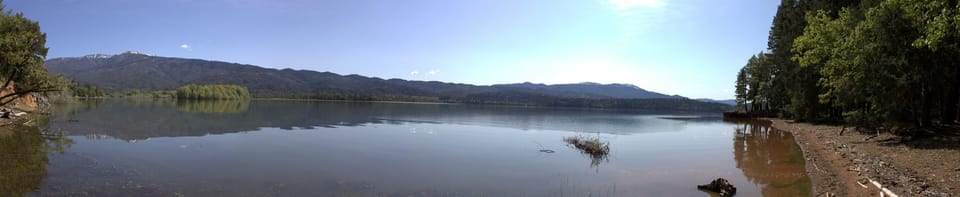
This fall, a barge sat on Lake Pillsbury, drilling into the bottom.
It was pulling up a century of mud. If Scott Dam comes out, that mud goes down the Eel River, and PG&E needs to know what's in it.[1]
Forty miles south, the Eel water spilling into the Russian River's East Branch dropped to a trickle.[1]
One dam made a lake people love, cut a river off from its salmon, and sent water to a valley and a river system that came to depend on it.
All three can't stay as they are.
How the Eel ended up in the Russian
In 1908, Cape Horn Dam and a mile-long tunnel began sending Eel River water over the ridge to a powerhouse in Potter Valley, then down the Russian River's East Branch.[2]
In 1922, Scott Dam went in upstream to store more. Its lake is Lake Pillsbury. The dam has no fish ladder.[2][3]
Map: USGS river and lake data, Census county lines. Dams and the tunnel are placed by hand.
Around that borrowed water grew Potter Valley's pears and vineyards, and later Lake Mendocino.
Most of that water has already stopped coming:
Source: Sonoma Water modeling for the Eel-Russian Project Authority, August 2026.[4]
Fish protections cut it in the 2000s. The powerhouse broke down in 2021. In 2023, PG&E found Scott Dam's earthquake risk higher than it thought and lowered the lake 10 feet.[4][5]
Why it matters in Sonoma County
Lake Mendocino, behind Coyote Valley Dam near Ukiah, is the Russian River's upper reservoir. It was designed when Eel water came by the hundred thousand acre-feet.[6]
Its summer releases keep the river flowing past Hopland, Cloverdale and Healdsburg, for farms, towns and endangered salmon and steelhead.
Lake Sonoma, on Dry Creek, is the bigger reservoir. It gets no Eel water, and most of what Santa Rosa and Petaluma drink leans on it.
So losing the Eel hits the upper river hardest. Sonoma County feels it as more pressure on Lake Sonoma in dry years. With no diversion at all, Sonoma Water's modeling says, Lake Mendocino would run short eight years in ten and go dry two in ten.[6]
Who has a stake
- PG&E, which owns the dams and wants out.
- Lake Pillsbury's cabin owners, campers and boaters, and Lake County.
- Potter Valley's farmers.
- Water agencies, from Sonoma Water and Ukiah to Marin.
- Tribes, above all the Round Valley Indian Tribes.
- Salmon advocates and fishers.
- Humboldt County and the lower Eel.
- Firefighters and the Mendocino National Forest, where the lake sits.
- The state and the federal government, which don't agree.
- PG&E's customers, who will likely pay for removal.
The lake
About 300 cabins, a campground, and families who've summered there for generations.[7] Lake County's supervisors voted 5 to 0 against removing Scott Dam. They fear dry wells, lost taxes and a lakebed left as mud.[7][8] Fire crews filled helicopters there during the 2020 August Complex fire.[9]
The lake's defenders say it's more than stored water. It's where kids learn to sail, fish and camp, and where many people first come to love wild places.
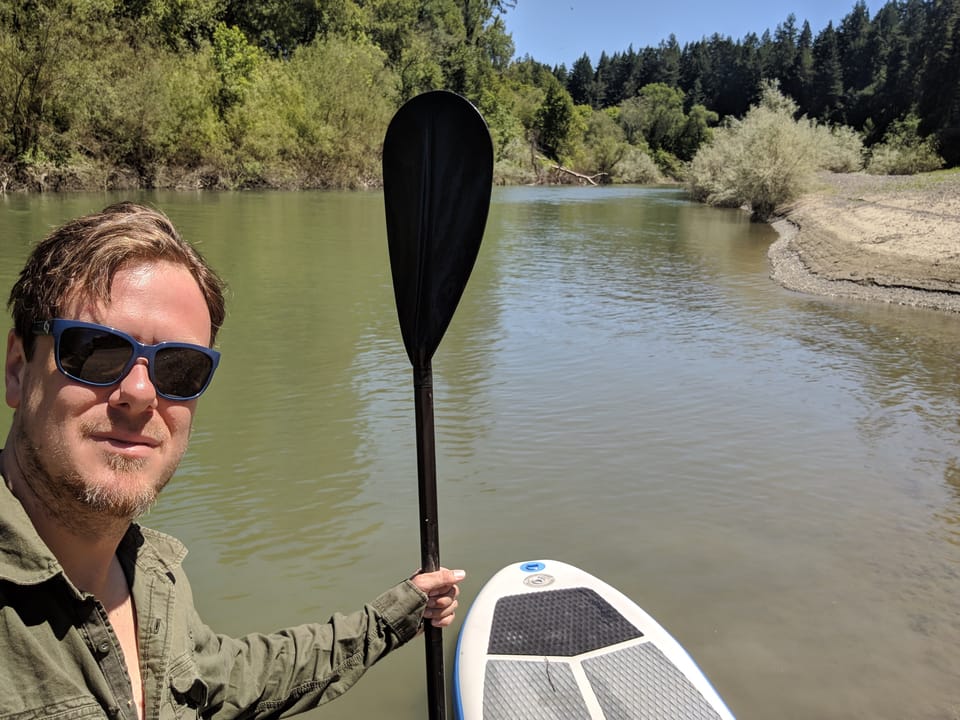
The author of this story is one of them. He grew up sailing and camping on Lake Pillsbury and Lake Mendocino. He also lives in Sonoma County, drinks Russian River water and paddles the Russian. He has a stake on both sides.
Public places like this take a fight to keep. In 2025, a Senate plan to sell millions of acres of federal land, national forest included, was dropped only after a public backlash.[10]
"If we don't fight for these small rural communities, who will?"[7]Bruno Sabatier, Lake County supervisor
The valley
Potter Valley has about 390 farmers on some 4,900 acres, almost no usable groundwater, and water at about $35 an acre-foot.[11][12]
"If anybody had asked me ten years ago what would happen if [the Project] was gone I would have said it would be disastrous."[12]Janet Pauli, Mendocino County Inland Water and Power Commission
Now she's working on ponds, groundwater and a bigger Lake Mendocino instead.[12]
The tribes
Under the compromise deal, PG&E's Eel River water rights would go to the Round Valley Indian Tribes, whose water was taken a century ago without their consent.[13][14] In June 2026, they were left out of a White House meeting about their own river.[15]
The process "should be guided by the communities and Tribal Nations that live with its consequences, not by interests seeking to reshape it from outside the region."[15]Joseph Parker, President, Round Valley Indian Tribes
The fish
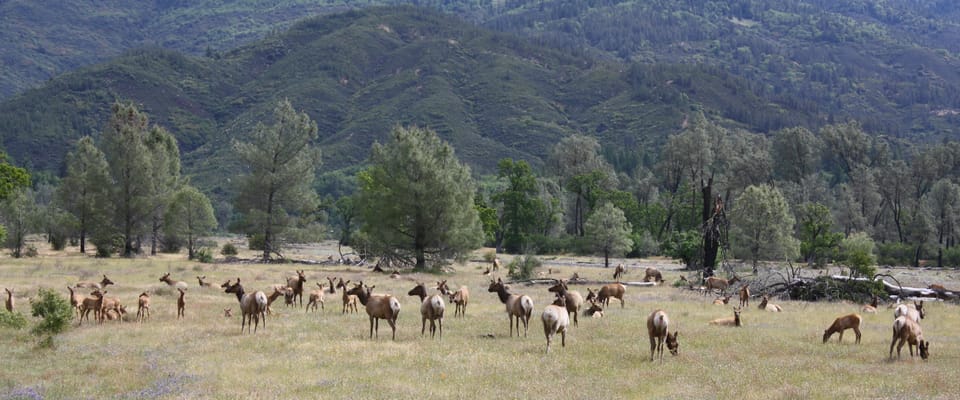
The Eel once had some of California's biggest salmon and steelhead runs. Above Scott Dam lie roughly a hundred miles of Chinook habitat, and more for steelhead, depending on whose survey you read.[3][16] Fishing groups see removal as the biggest single thing that could bring those runs back.[3][17]
The federal wildcard
In December 2025, the US Department of Agriculture asked regulators to reject PG&E's plan,[18] and later floated a Southern California water district as a buyer.[19] Regulators turned the district away in July 2026. It's appealing.[20][21]
"Water supply for farms and communities is not a secondary amenity of this proceeding."[21]US Department of the Interior, September 2026
Rep. Jared Huffman, who helped build the compromise, called the federal intervention potentially "catastrophic" for North Coast water.[22]
PG&E's part in this
PG&E said in 2019 that it wouldn't renew its license,[23] the same year it filed for bankruptcy over wildfire claims.[24] The powerhouse hasn't made power since July 2021.[2]
PG&E says the project stopped paying and the earthquake risk came later. Lake County points to a state inspection that found the dam safe to keep using under limits.[5][7]
Removal could cost $532 million, and customers will likely carry much of it.[25]
Is this about safety and fish, or a utility walking away from a project it stopped keeping up? The record supports some of each.
What a lake gives, and what a dam takes
Lake Pillsbury, Lake Mendocino and Lake Sonoma are all made by dams. People love them anyway.
A reservoir gives camping, sailing and summers that become family memory. It gives eagles and ospreys open water, fire crews a place to fill up, and dry summers stored winter rain.
A dam also takes. It blocks salmon from cold spawning streams and traps the gravel rivers need. Its warm, slow water favors invaders: Sacramento pikeminnow, dumped into Lake Pillsbury in 1979, now hunt young salmon across the basin.[26]
Lake Pillsbury has its own troubles. The state lists it for mercury in fish,[27] and this September recommended its highest toxic algae warning there.[28]
Removal costs something real too: the lake and its campground, a muddy few years as 20 million or more cubic yards of sediment move downstream, a bare lakebed, and less cold summer water in the upper Eel.[26][16]
What happened on the Klamath
Want to know what happens when a dam comes out? Look north.
The last of four dams on the Klamath River came out in October 2024. It was the largest dam removal in US history, and the closest preview of what the Eel could go through.
About 7,700 Chinook passed the old Iron Gate Dam site in 2024, and about 13,300 in 2025. Within two seasons they were back in 88% of their old range above the dams.[29]
"The biological response has been much faster than I, and most of us, expected."[30]Damon Goodman, CalTrout
The drained reservoirs left about 2,200 acres of bare lake bottom. Crews, many of them Yurok tribal members, started seeding it before the water was even gone: about 15 billion seeds from roughly 100 native plants.[31]
Two years later, poppies, lupines and native bunchgrasses cover the old lakebeds. Willows and cottonwoods came back on their own.[32]
The land the power company left behind, about 8,000 acres, goes to California and Oregon. California has promised about 2,800 acres to the Shasta Indian Nation, whose land was taken to build the dams.[33][34] Much of it is expected to stay open to the public.[33]
It's no fairy tale. Heat and low snow still hit the Klamath hard in 2026,[30] and no valley there leaned on a diversion the way Potter Valley does.
And Lake Pillsbury's land?
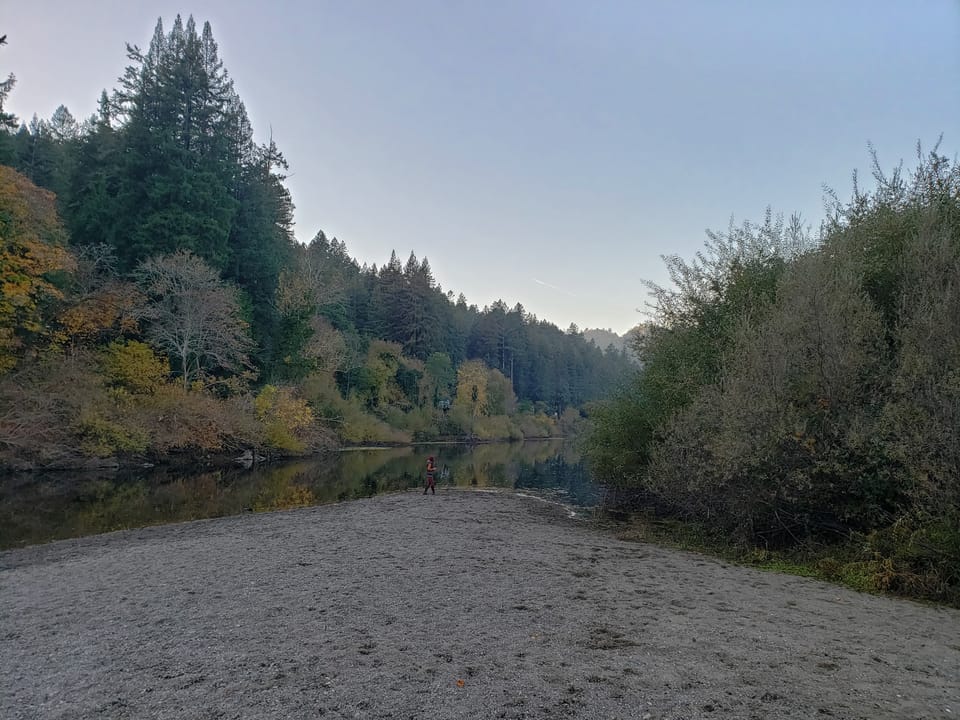
If Scott Dam comes out, the Eel would run through a valley again.
Most of that land is already protected. Since 2022, about 5,600 acres of PG&E's Eel River land have been under a permanent conservation easement held by the Mendocino Land Trust. It bars new development and protects public access.[35] The national forest around it stays.
PG&E's plan is to return the lake's footprint to a more natural state. Its 2023 plan would also close the campgrounds it runs at the lake.[36]
What no one has laid out yet is what the valley becomes for people: trails, river camps, swimming holes. The Klamath's wildflowers and Lake County's mud flat are both possible. Which one happens depends on whether someone plans for it.
Can we keep the lake and free the river?
On paper, maybe. In practice, it's hard.
In 2018, engineers studied a fish ladder over Scott Dam for PG&E. They priced it at $55 to $93 million and concluded:
"The most feasible and cost-effective fish ladder design would be challenging to build, complicated to operate, very costly, and would have uncertain effectiveness."[37]Mead & Hunt, for PG&E, 2018
Lake County argues cheaper options were overlooked, like trapping fish and trucking them around the dam.[38] Even then, someone would have to own the dam, fix its earthquake problem and win a new license. No buyer has made PG&E a real offer.[20]
Three possible futures
1. Both dams out, no more Eel water
- Eel River fish
- Best. The whole river opens up.
- Lake Pillsbury
- Gone.
- Lake Mendocino
- Often runs short in summer.
- Potter Valley farms
- Hit hardest.
Backed by some Eel River advocates.
2. Both dams out, winter water only
- Eel River fish
- Nearly as good.
- Lake Pillsbury
- Gone.
- Lake Mendocino
- OK, if new storage gets built.
- Potter Valley farms
- Need ponds and new water.
The deal on the table, backed by Sonoma and Mendocino water agencies, the Round Valley tribes and fishing groups.
3. The dams stay
- Eel River fish
- Little change.
- Lake Pillsbury
- Stays, but kept low.
- Lake Mendocino
- Much like now.
- Potter Valley farms
- Best, for now.
Backed by Lake County and federal agencies. Needs a new owner, an earthquake fix and a new license.
Future 2 is the Two-Basin Solution. A fish-screened pump station would replace Cape Horn Dam and take Eel water only in the wet months, and only when the river runs high.[13][39] It would cost about $50 million, not yet raised.[39] And winter water only helps if there's somewhere to keep it until summer.[4]
If not Eel water, then what?
- Store more winter water. A raised Coyote Valley Dam would let Lake Mendocino hold much more. The House voted 415 to 9 in September 2026 to speed up the study, but with no money.[40]
- Run reservoirs smarter. Since October 2025, Lake Mendocino can hold up to 11,650 extra acre-feet when forecasts show no storm coming.[41]
- Ponds and recharge. Potter Valley needs at least 5,000 acre-feet of new storage.[12] Winter water spread on fields can refill groundwater. See can your yard recharge groundwater?
- Use less. Every gallon saved in summer is one Lake Mendocino doesn't have to release. See water rebates in Sonoma County.
- Borrow from another river? It would face the same objections. As one public comment to the state put it, a diversion like this "would not be approved today."[42]
Storage, recharge and using less help in every future, even if the dams stay. The hard part is paying for them in time.
How it gets decided
- Federal regulators (FERC) closed early public input on September 18, 2026. Next is a draft environmental review, open for comment, then a decision.[43]
- The State Water Board runs its own review and must certify water quality.[44]
- The pump station needs its own review, expected to open for comment this fall.[45]
- Removal could start in 2028 at the earliest. That's PG&E's goal, not an approved date.[46] Appeals and lawsuits could slow it.
How to weigh in
- Get an email when it's your turn. Sign up for FERC's free eSubscription and enter docket P-77. You'll hear when the draft review opens for comment.[47]
- Comment to FERC. When the review opens, use the eComment form at ferc.gov. Name the docket, P-77, and say what you value and why.
- Comment to the state. The State Water Board posts its comment periods on its Potter Valley page.[44]
- Weigh in on the pump station. The Eel-Russian Project Authority posts its review and meetings at eelrussianauthority.org.[45]
- Show up locally. Lake County supervisors, the Sonoma Water board and Mendocino County's Inland Water and Power Commission all take public comment at meetings.
Questions worth sitting with
We don't pick a side here. There's a real case for the lake and a real case for the river, and you may feel both.
The author does. He'd love to keep Lake Pillsbury. He also believes the tribes whose river this is should have a strong voice, maybe the final one. He's still making up his mind.
If you are too, these are the questions that matter most:
- Who should decide? Regulators in Washington, the people at the lake, the farms that use the water, or the tribes who were here first?
- What is a lake worth? It's made by a dam, but it's where people learn to love the outdoors. How does that weigh against a hundred miles of salmon river?
- Who pays? Keeping the dams safe and fish-friendly costs a lot. So does taking them out. Either way, it lands on someone.
- Can we get ready in time? The water is already fading. Storage, ponds and recharge take years to build.
What a fair ending needs
Whichever way it goes, a fair ending would:
- Replace the fire crews' water.
- Protect the wells around the lake.
- Invest in Lake County.
- Build storage before the Eel water ends.
- Keep the land public, lake or valley.
The real question isn't only dam or no dam. It's whether we build the storage, the recharge and the habits that let us lean less on any one river.
Photos by Devan Hemmings unless noted.
Sources
- 1. Russian River Flood Control District, current PG&E Potter Valley Project operations
- 2. FERC, Scoping Document 1 for the Potter Valley Project surrender (May 22, 2026)
- 3. CalTrout, Eel River dams decommissioning
- 4. Sonoma Water, presentation to the Eel-Russian Project Authority board (August 6, 2026)
- 5. Russian River Flood Control District, seismic safety of Scott Dam
- 6. Sonoma Water, Future diversions fact sheet
- 7. Lake County News, Supervisors discuss concerns over plan to remove Scott Dam
- 8. County of Lake, Lake Pillsbury
- 9. City of Cloverdale, Potter Valley fire suppression impact
- 10. Boston Globe, Public lands sell-off struck from Republican bill (June 29, 2025)
- 11. Potter Valley Irrigation District
- 12. Press Democrat, Water storage options floated for Potter Valley (November 28, 2025)
- 13. Water Diversion Agreement for the New Eel-Russian Facility (July 2025)
- 14. Press Democrat, Round Valley tribes and the Eel River dam removal (January 31, 2026)
- 15. Mendocino Voice, Tribe with senior Eel River water rights shut out of White House meeting (June 2026)
- 16. Mendocino Voice, The Potter Valley dams are coming down (May 2026)
- 17. Friends of the Eel River, Eel River dam removal
- 18. Press Democrat, Trump administration intervenes in Potter Valley Project dispute (December 20, 2025)
- 19. US Department of Agriculture, statement on the Potter Valley Project
- 20. Press Democrat, FERC denies Southern California district (July 28, 2026)
- 21. Anderson Valley Advertiser, Latest on the Potter Valley Project (September 26, 2026)
- 22. Rep. Jared Huffman, Federal Potter Valley intervention could be catastrophic
- 23. PG&E, surrender application and decommissioning plan for the Potter Valley Project
- 24. NPR, PG&E files for bankruptcy in wake of fire lawsuits (January 29, 2019)
- 25. SFGATE, PG&E customers face bill for dam removal (May 29, 2025)
- 26. Mendocino Voice, Some animals win, some lose when the Potter Valley Project dams come down (May 2026)
- 27. State Water Resources Control Board, Lake Pillsbury mercury listing fact sheet
- 28. Mendocino Voice, State recommends danger advisory at Lake Pillsbury (September 3, 2026)
- 29. The Planet Brief, Klamath salmon recolonisation after dam removal
- 30. Inside Climate News, Salmon return to the Klamath River after dam removals (August 27, 2026)
- 31. The Revelator, The monumental effort to replant the Klamath River dam reservoirs (February 20, 2024)
- 32. Active NorCal, Wildflowers are exploding where Klamath River dams stood just two years ago (May 29, 2026)
- 33. San Francisco Chronicle via WaterWatch, Who gets the once-submerged Klamath land? (February 22, 2024)
- 34. Active NorCal, Shasta Indian Nation to reclaim 2,800 acres of ancestral land (June 24, 2024)
- 35. Mendocino Land Trust, Lake Pillsbury and Eel River conservation easement (June 2022)
- 36. EcoFlight, PG&E formalizes plan to eliminate Lake Pillsbury (November 2023)
- 37. Mead & Hunt for PG&E, Scott Dam fish ladder feasibility evaluation, executive summary (April 30, 2018)
- 38. Lake County Board of Supervisors, public statement on Lake Pillsbury and Scott Dam (June 15, 2022)
- 39. Sonoma Water, Eel-Russian Project Authority overview fact sheet (September 2025)
- 40. Active NorCal, The plan to raise Lake Mendocino's dam got a 415-9 vote and zero dollars (September 2026)
- 41. Sonoma Water, new forecast-informed operations manual for Lake Mendocino (October 2025)
- 42. State Water Resources Control Board, Potter Valley Project CEQA scoping report (2026)
- 43. Federal Energy Regulatory Commission, Potter Valley Hydroelectric Project (P-77)
- 44. State Water Resources Control Board, Potter Valley Hydroelectric Project
- 45. Eel-Russian Project Authority, FAQs
- 46. Press Democrat, FERC process for the Eel River dams (May 26, 2026)
- 47. FERC, How to eSubscribe
Checked 2026-10-18. Rules and programs change. If something here is out of date, the source above wins. Spot an error? See our corrections policy.
Related reads
 Rivers and pollutionHow the Russian River works: dams, minimum flows and floodsTwo dams store winter rain and release it in summer. Sonoma Water draws the water from wells beside the river for over 600,000 people. The state sets how much must stay in the river.Updated Oct 18, 2026
 Rivers and pollutionOnly rain down the storm drainStorm drains carry water straight to the nearest creek. It is not treated. Only rain should go down them.Updated Oct 11, 2026
 Rivers and pollutionEl Niño and Sonoma County water: the river, the reservoirs and your rainNOAA says a strong to very strong El Niño is likely this winter, which tilts California toward a wet one. On the Russian River, strong El Niño winters brought a major flood at Guerneville in 3 of 9 cases since 1951, about twice the usual rate, but the worst floods came in other winters. Get ready for high water and plan to keep some of the rain.Updated Oct 18, 2026