NewsNews
Cloverdale's Esmeralda plan: a site health study comes before phase one, and groundwater testing is required
On November 11, 2026, the Cloverdale City Council adopted the environmental review update for Esmeralda, a plan for up to 605 homes and 160 hotel rooms on a former mill site. The city's documents require a site health risk study before the first development phase can be approved. They also require groundwater testing.
Listen to this article
Read aloud by an AI voice.
Where it is and what it does
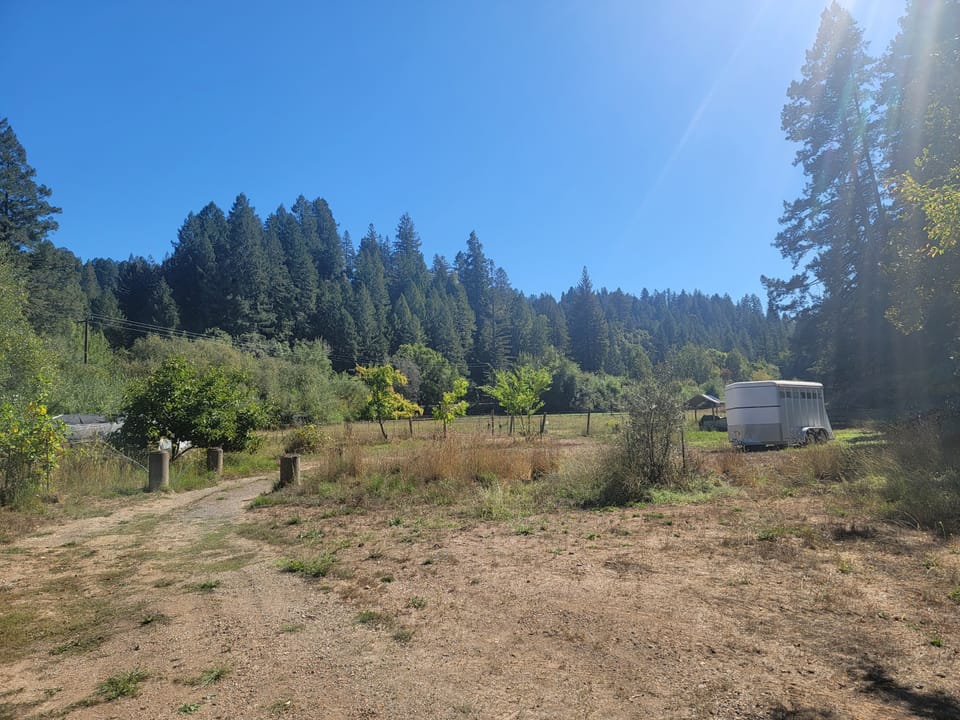
Esmeralda is a proposed neighborhood and resort in Cloverdale, in Sonoma County. It would have up to 605 homes and 160 hotel rooms on about 261 acres in southeast Cloverdale. The developer is Esmeralda Land Company, LP. The city's resolution places the site between Asti Road and U.S. 101 on one side and the Russian River on the other. The Cloverdale Municipal Airport is to the south and southeast. See it on a map: Esmeralda site, Cloverdale.
It would replace the Alexander Valley Resort plan, which the city approved in 2009 but never built. The city says the new plan keeps visitor uses, adds housing and drops the old golf course layout.
A water study for the project says the site was a timber mill and wood processing plant from the 1950s to the early 1990s. It also had wood waste landfills.
What happened
On November 11, 2026, the Cloverdale City Council met on Esmeralda. The agenda had one Esmeralda item with five actions: an update to the 2009 environmental review (the study of what the project could affect), a change to the city's General Plan (its long-range land use plan), the Esmeralda Specific Plan (the rulebook for the site), new zoning, and a development agreement (the contract with the developer).
The city's Specific Plan resolution says the council adopted the environmental review update on November 11. The city's meeting packet lists the Specific Plan resolution as “As Adopted 11/11/26.” The signed resolutions and the vote count were not posted when we checked, so we are not reporting a vote.
The documents carry forward three steps from the 2009 environmental review. The developer agreed to the first one at the November 4 meeting.
- A health risk assessment for the whole site. The developer's environmental professional prepares it. It must look at risks from chemicals that may remain from the old mill: petroleum products, metals, dioxins, furans and wood preservatives, in soil and groundwater. A risk management plan then sets measures to bring those risks down to set goals.
- The North Coast Regional Water Quality Control Board (the Water Board), the state agency that watches water quality in this region, gets the draft for review and approval. The city will not approve the first development phase until the final assessment and plan are done. Final copies are to be posted on the city's website.
- Groundwater pumped from the site for drinking must be tested as state rules require. It must meet state rules or the Water Board's site criteria, whichever is stricter.
The version of the resolution marked as adopted adds two conditions. First, the developer must take soil samples at named areas, including the old landfills, the disposal ponds and the planned sports park, and anywhere records point to possible contamination.
Second, each future site management plan must say the Water Board decides whether construction caused worse contamination in a private well enrolled in a voluntary groundwater sampling program. That program is set out in the development agreement, which we did not read. The resolution says a property owner, a well owner or an authorized user of a well has the right to enroll. If the Water Board finds construction caused it, the developer pays to fix the well or to compensate the owner for limits on using it.
What it means for you
If you have a private well, the sampling program is the part to read. The documents we read do not say who runs enrollment. The city's main line is 707-894-2521. Ask the city or the developer how to enroll. For questions about your own well water, ask a certified lab. Our well testing guide explains what to test for.
If you get city water, these numbers come from a study prepared for the developer, not from the city. The study estimates the project would use up to about 76 million gallons a year when fully built. That is 233 acre-feet. An acre-foot is about 326,000 gallons. For scale, the city's seven wells along the river produced between about 325 million and 570 million gallons a year from 2004 through 2024.
The study finds the city has enough water for the project in normal years through 2045. It also finds that in an extreme drought like 2021, shortfalls of up to 11 percent are possible. It concludes the project would not harm existing residents. That is the study's conclusion, not a city finding.
A second developer-paid study estimates the project would add about $1.2 million a year in water bills at full buildout against about $152,000 in city costs. It calls the difference a surplus for the city's water fund, the account that pays for the city water system. It says the figures will be refined.
The water study says the city's wells draw from shallow ground connected to the Russian River. The documents we read do not say whether groundwater from the Esmeralda site reaches those wells. Our view: the testing results are worth reading when the city posts them.
What happens next
The documents say the first development phase cannot be approved until the health risk assessment and risk management plan are final. Watch the city's Esmeralda page for the signed resolutions, the minutes and the vote count.
Where this came from
The City of Cloverdale's agenda report and agenda for the November 11, 2026 City Council meeting, the Specific Plan resolution marked as adopted, and the city's Esmeralda project page. Water numbers come from the Esmeralda Water Supply Assessment (by the firm EKI Environment & Water, November 2025, revised September 29, 2026) and a September 28, 2026 water fund memo by Keyser Marston Associates. Both were prepared for the developer. The two studies count the project slightly differently. This post uses the city's 605 homes and 160 hotel rooms.
Photos by Devan Hemmings unless noted.
Sources
- City of Cloverdale, Agenda Report, Esmeralda entitlements, November 11, 2026 City Council meeting
- City of Cloverdale, City Council Agenda, November 11, 2026
- City of Cloverdale, Resolution adopting the Esmeralda Specific Plan and Objective Design Standards, as adopted November 11, 2026
- City of Cloverdale, Esmeralda Project Information
- EKI Environment & Water for the developer, Esmeralda Water Supply Assessment, November 2025, revised September 29, 2026
- Keyser Marston Associates for the developer, Esmeralda water and wastewater fiscal impacts memo, September 28, 2026
Checked 2026-11-14. Rules and programs change. If something here is out of date, the source above wins. Spot an error? See our corrections policy.
Related reads
 NewsMidweek storm looks stronger than the last two: 2 to 5 inches forecast, with flooding concernsThe National Weather Service expects the storm arriving late Tuesday and lasting through Thursday to be more impactful than the two before it. Its forecast is 2 to 3 inches of rain across much of the Bay Area and 3 to 5 inches in the coastal ranges, with a rising flooding concern. Monday night and Tuesday are the dry window to get ready.Posted Nov 15, 2026
 NewsVan Arsdale Dam drilling: state says PG&E's test holes need no full environmental reviewOn November 2, 2026, the state said PG&E's planned test drilling at a dam on the Eel River needs no full environmental review. The state lists it as Van Arsdale Dam, and we read it as Cape Horn Dam. It sends water to the Russian River. PG&E's request to remove the dam is not decided.Posted Nov 13, 2026
 NewsNot a week of rain: three storms, starting overnightNot a week of rain. Three storms: Friday (the wettest, starting before dawn), Sunday into Monday, and about Wednesday, with mostly dry days between. Waves up to 30 feet hit the coast Saturday. Little flooding is expected this early in the season.Posted Nov 12, 2026