
Saving waterGuide
Drought tolerant plants for Sonoma County: what to plant, when, and how much water they need
Choose plants that the Water Smart Plant Picker, the local water utilities' plant list, rates low or very low water. In Santa Rosa, a bed of them needs about a quarter of a lawn's summer water. Plant in fall, so winter rain gets the roots going.
Listen to this article
Read aloud by an AI voice.
Late fall is planting time, so choose now. Start with the ten plants below.
Which plants do well here?
You do not have to guess. The Water Smart Plant Picker, run by Sonoma and Marin water utilities, lists plants for our area. You can filter by water need, sun, deer resistance and pollinators.[1] Of its 169 plants, 165 are rated low or very low water, by our count.
Here are ten common picks from that list. Use the sun column to match each plant to its spot.
| Plant | Sun | Water |
|---|---|---|
| Manzanita (native) | Full sun or part shade | Very low to low |
| California lilac, Ceanothus (native) | Full sun or part shade | Very low to low |
| Sage, Salvia (native) | Full sun or part shade | Very low to low |
| Coffeeberry (native) | Full sun or part shade | Very low to low |
| California fuchsia (native) | Full sun or part shade | Very low to low |
| Toyon (native) | Full sun or part shade | Low |
| Yarrow (native) | Full sun or part shade | Low |
| Deer grass (native) | Full sun or part shade | Low |
| Douglas iris (native) | Part shade or shade | Low |
| Lavender | Full sun | Low |
Sun and water labels from the Water Smart Plant Picker, read October 26, 2026.
Two cautions. Plants that grow along creeks need regular water even when they are native.[2] And some Ceanothus with large, glossy leaves want summer water inland.[3] To check any other plant, look it up in WUCOLS, the plant water list California's landscape rules use.[4][5]
Local plants also give shelter and food to pollinators and birds.[6][3] Most plant-eating insects, like caterpillars, can eat only the plants they evolved with. Many songbirds feed their chicks caterpillars and other insects. In a study of yards near Washington, D.C., chickadees raised fewer young where non-native plants filled the yard.[7]
Replacing a lawn? Start with lawns: water use, alternatives and removal.
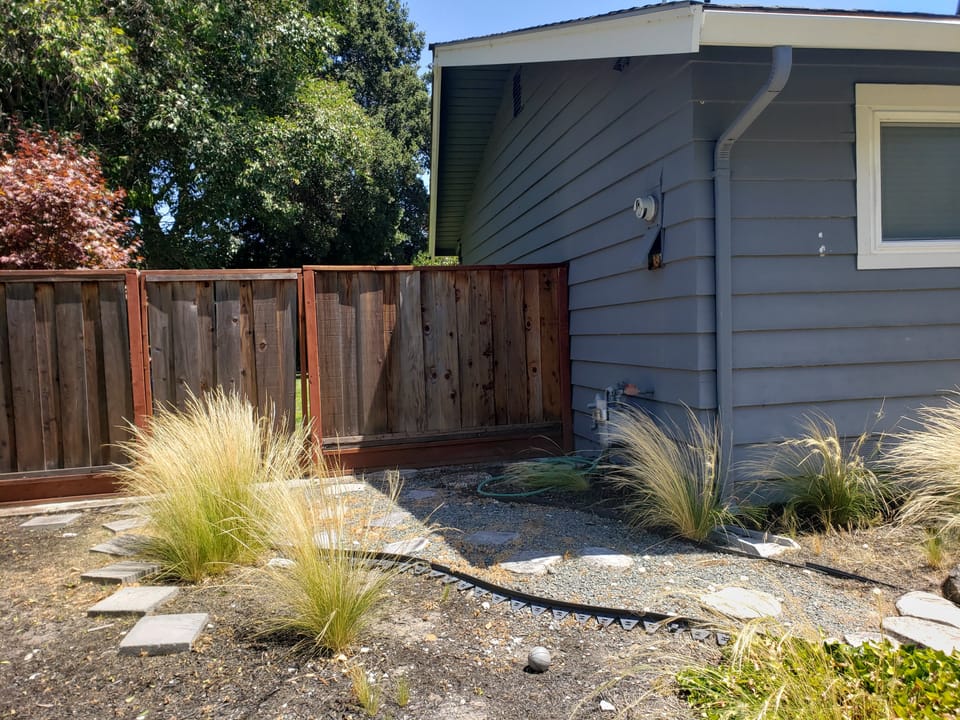
How much water does a low-water garden save?
Our summers are long and nearly rainless. In Santa Rosa, June through September brings about half an inch of rain in a normal year.[8] Everything green in those months runs on stored winter rain or on your hose.
Scientists measure how much water summer pulls out of plants: the water a well-watered patch of grass loses to sun and wind.[5] By our math from Santa Rosa figures from Sonoma Water, the county water agency, that adds up to about 23 inches from June to September.[9] California rates each plant by what share of that it needs, called its plant factor. Low water plants need 10 to 30 percent of that summer total. A typical green lawn here (cool-season grass such as tall fescue) needs about 80 percent.[10]
Compare the two green bars with the long gray lawn bar near the bottom.
Our calculation from Sonoma Water and UC Master Gardener Santa Rosa weather data, state plant factors and NOAA normal rain. Method: the summer total times each group's share, in gallons for 100 square feet.
Scaled up, a 1,000 square foot bed of low water plants needs about 1,400 to 4,300 gallons in a summer. The same area of lawn needs about 11,500. These numbers are what the plants themselves use. You will put out a bit more, because a hose or drip line always loses some on the way.
Others put the savings a little differently. Sonoma Water says plants adapted to our climate need 70 to 90 percent less watering than lawn.[6] Garden Sense, a free garden advice program, says a low water garden uses about a third of a lawn's water, counted over a whole year.[11] Our take: plan on a quarter to a third.
Why plant in fall?
Our native plants get nearly all their water in the wet season. Planted in fall, they grow roots all winter and are ready for summer.[3] Late fall is best, while the soil is still warm.[2] You can still plant in winter or early spring. Summer is the worst time.[2]
Once the rain starts, your sprinklers can usually rest. See when to turn off sprinklers for winter.
Buy small. Plants in 4 inch or 1 gallon pots settle in well and grow fast.[2]
How do you water them?
- Put like with like. Group plants with the same water needs so they share one watering line. Then the plants that like it dry do not get drowned along with the thirsty ones.[2][5]
- Water new plants for one to two years. Even drought tolerant natives need regular water until they settle in, often when they double in size.[2] In the first month, plan on a deep soak about once a week.[2]
- Check before you water. Push a finger 1 to 2 inches into the soil. Water deeply only if it is dry there, early in the morning. Too much water rots many natives.[2]
- Then cut back. Many established natives do worse with extra summer water.[3]
- Water less in spring and fall. Think of July's watering as full. In Santa Rosa, June needs about the same as July, September about 69 percent of it, and October and March about half.[9]
- Use drip lines instead of sprinklers. Drip puts the water at the roots. For the basics, see grow vegetables with less water.
Mulch, but not against the house
A layer of mulch holds water in the soil. Spread 2 to 3 inches around new plants and keep it a few inches back from the stems.[2]
Keep wood mulch out of the first 5 feet around your house, for fire safety. Use gravel or another material that will not burn there.[12] Our sister site Home Ready Sonoma explains swapping bark for gravel next to the walls.
Planning the whole yard with fire in mind? Home Ready California has a free wildfire course for homeowners on Zone 0 and defensible space.
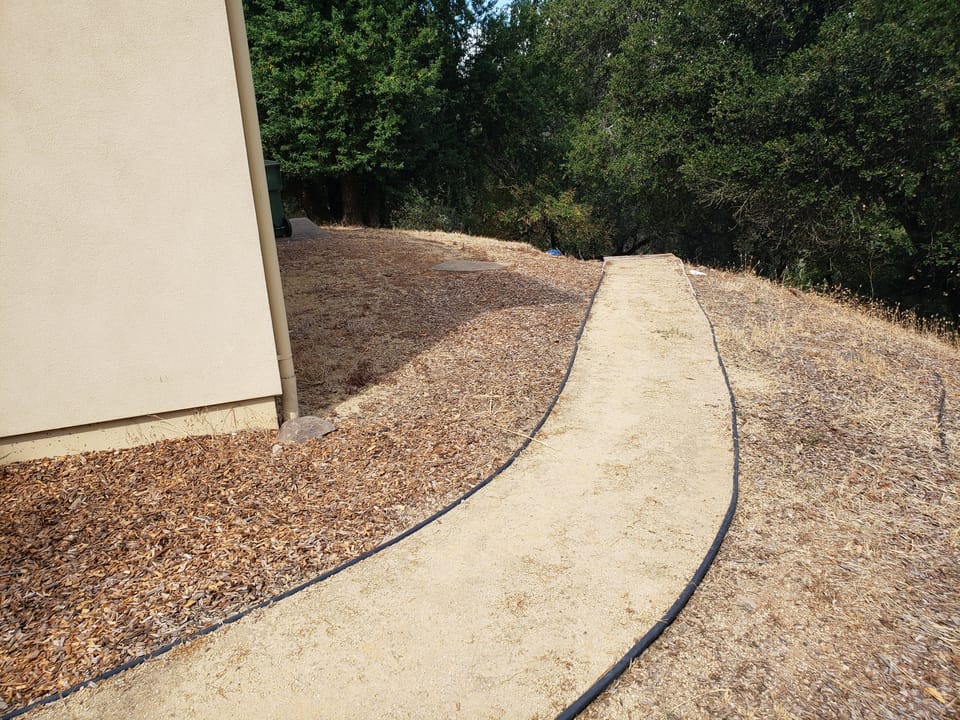
What it means for the river
Sonoma Water supplies drinking water to over 600,000 people. In summer, it releases water stored in Lake Sonoma and Lake Mendocino down Dry Creek and the Russian River.[13] The same releases must keep a minimum flow in both, partly for fish. Demand peaks in July and August.[13] A low water garden takes less from that stored supply in the driest weeks. See where your tap water comes from.
Get free help
- Book a Garden Sense visit. Trained UC Master Gardeners come to your yard for free. They suggest plants, sketch a layout and check your sprinklers. Call 707 565-3026 or request a visit online.[11]
- Hire a QWEL pro to do the work. QWEL means Qualified Water Efficient Landscaper: a pro trained in efficient watering who can set up your drip and program your watering timer.[14]
- Look for the Water Smart Plant label at local nurseries. It goes with the Plant Picker above.[6]
Rebates change. Check water rebates and programs before you buy or dig.
What should I do now?
- Pick plants rated low or very low water, and match each to its sun.
- Plant this fall or winter, in small pots, and let the rain start them.
- Water new plants for a year or two, then cut back and check the soil first.
- Keep wood mulch 5 feet from the house.
Photos by Devan Hemmings unless noted.
Sources
- 1. Sonoma-Marin Saving Water Partnership, Water Smart Plant Picker
- 2. UC Master Gardeners, Garden Notes, Fall Planting for California Natives (Oct 2025)
- 3. UC Master Gardener Program of Sonoma County, Natives for the Garden (2021)
- 4. WUCOLS, Water Use Classification of Landscape Species, UC Davis
- 5. California Code of Regulations, Title 23, section 490.2, Model Water Efficient Landscape Ordinance definitions (2025)
- 6. Sonoma Water, Saving Water Programs
- 7. University of Delaware, Biodiversity for the birds: non-native plants in yards and chickadees (2018), on Narango, Tallamy and Marra, PNAS 115(45)
- 8. NOAA NCEI, 1991 to 2020 monthly normals, Santa Rosa (USC00047965)
- 9. UC Master Gardener Program of Sonoma County, Garden Sense, Seasonal Adjustments (March 2023; CIMIS data analyzed by Sonoma Water)
- 10. WUCOLS, UC Davis, Plant Factors for Turfgrasses
- 11. UC Master Gardener Program of Sonoma County, Garden Sense
- 12. UC Master Gardener Program of Sonoma County, Types of Mulch (2022)
- 13. Sonoma Water, Water Supply
- 14. Qualified Water Efficient Landscapers, Hire a QWEL pro
Checked 2026-10-26. Rules and programs change. If something here is out of date, the source above wins. Spot an error? See our corrections policy.
Related reads
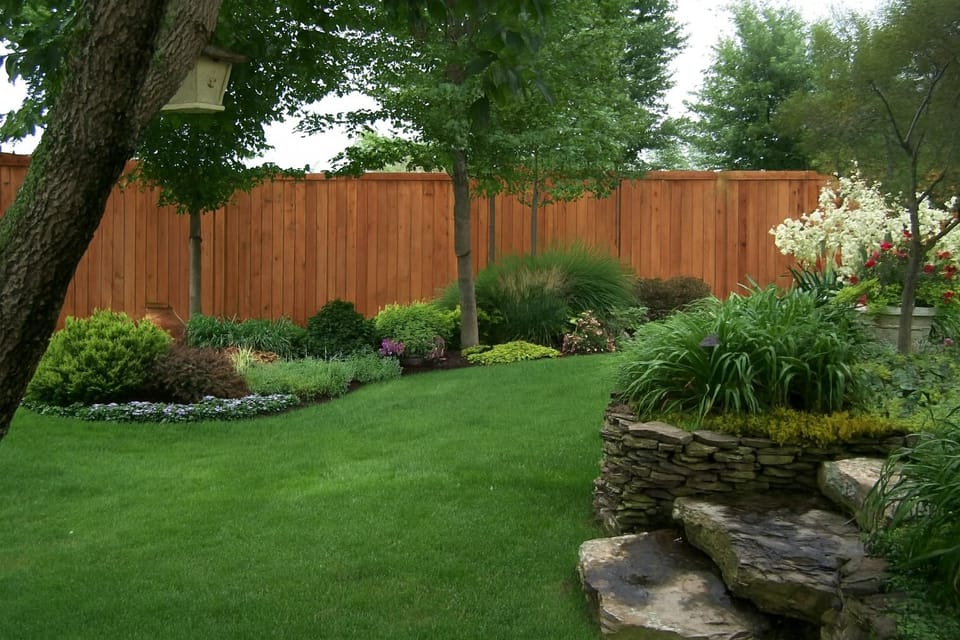 Water rebates in Sonoma County: what they pay for, and how to get themYour water utility may pay you to pull out your lawn, about $1 a square foot in most of Sonoma County. Many also pay toward a new washer or toilet. Here is what your city offers and how to get approved before you start.Saving water · Updated Oct 19, 2026
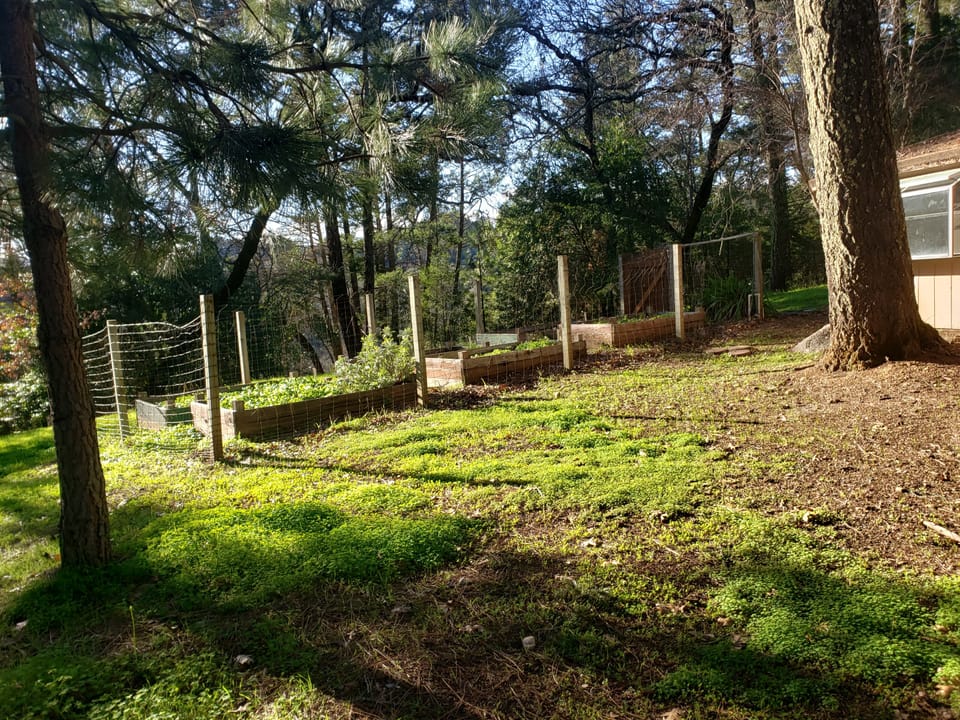 How much water does a vegetable garden need? Growing food with less water in Sonoma CountyIn summer, a 4 by 8 foot bed of grown vegetables needs about 20 to 30 gallons of water a week here, and about half that in March and October. To use less, grow a smaller garden, grow greens in the cool seasons, mulch deeply and water with drip on a timer.Saving water · Updated Oct 28, 2026
 Lawns in Sonoma County: how much water they take, how to keep one, and what to grow insteadKeep grass where you use it, water it deeply and less often, and keep chemicals out of the creek. A green 1,000 square foot lawn takes about 11,000 gallons over a Sonoma County summer. Where nobody walks, native plants, clover or a meadow do the job with less water.Saving water · Updated Nov 17, 2026