
Rain and storageGuide
How to store water for an emergency
Store 1 gallon of water per person per day, for at least 3 days and up to two weeks. Buy sealed bottled water or fill clean food-grade containers from the tap, date them, keep them cool and dark, and replace water you bottle yourself every six months.
Listen to this article
Read aloud by an AI voice.
One gallon. That is how much water each person needs for one day of an emergency, for drinking and basic washing.[1] A storm, an earthquake or a broken main can leave the tap dry or unsafe for days. Storing water is cheap, and you can fill your own containers from the tap.
How much to store
Keep at least 3 days' worth, and work up to two weeks if you can.[2] Store more for children, nursing mothers, pregnant women, anyone sick, pets and hot weather.[1][2]
Look at the weight in the chart. Two weeks for four people is about 470 pounds, so use containers you can lift.[3]
Our take: get to 3 days this week. Then add a few gallons each time you shop: aim for a week, then two.
What to store it in
Sealed store-bought water is the easiest. CDC calls it the safest and most reliable source.[2] To fill your own, use food-grade water containers from a camping or surplus store, or clean 2-liter soda bottles.[2][4] Skip milk and juice jugs: they are hard to clean and the plastic isn't made for storage.[4] Never reuse a container that held bleach or other chemicals.[2]
- Wash the container with soap and rinse it.
- Sanitize it with 1 teaspoon of unscented bleach in 1 quart of water. Shake, wait at least 30 seconds, pour it out and let it air-dry. This mix is for cleaning, not drinking.
- Fill it from the tap and cap it tightly. City water is already treated, so you don't need to add anything.[4]
- Label it "drinking water" with the date, and keep it cool and out of the sun, away from gasoline and pesticides.[2]
On a private well, no utility tests your water. Our take: buy bottled water for drinking.[5]
How long it lasts
Replace water you bottled yourself every six months. For store-bought water, go by the date.[2] Our tip: swap it when the clocks change, and pour the old water on the garden.
Water you already have
A tank water heater holds 30 to 80 gallons. Turn off its power, close the supply valve on top, open a hot faucet in the house, then drain water from the valve at the bottom.[6] So do melted ice cubes made from safe water.[7] Don't drink from a pool, hot tub or waterbed.[6] If a big storm is forecast, fill the bathtub for flushing and washing.[5]
If you run out
Bring water to a rolling boil for at least 1 minute. If you can't boil it, add 8 drops of unscented 6% bleach per gallon (double it if the water is cloudy), stir and wait 30 minutes.[8] Neither one removes chemicals or fuel.[8] Thinking of catching rain to drink? Read can you drink rainwater first.
In Sonoma County
- The county asks for 7 days of supplies in a home kit: 28 gallons for a family of four.[9]
- On a well? An electric pump stops when the power does. See how to get a well ready for a power outage.
- Sign up for SoCoAlert, the county's free alert system. It sends boil water advisories.[10]
What it means for you
- This week, fill and date 1 gallon per person for 3 days.
- Find your water heater's drain valve before you need it.
Sources
- 1. Ready.gov (FEMA), Water
- 2. CDC, How to Create an Emergency Water Supply (June 27, 2025)
- 3. USGS Water Science School, Water Density
- 4. Utah State University Extension, USU Extension Offers Water Storage Tips (July 20, 2021)
- 5. Ohio State University Extension, Preserving Water for Emergency Use, HYG-5354 (2017)
- 6. Regional Water Providers Consortium (Portland, Oregon area), Emergency Water Sources
- 7. CDC, How to Find Clean Water in an Emergency (June 25, 2025)
- 8. US EPA, Emergency Disinfection of Drinking Water (updated February 24, 2026)
- 9. County of Sonoma, Build a Kit
- 10. County of Sonoma, About SoCoAlert Notifications for Emergencies
Checked 2026-11-09. Rules and programs change. If something here is out of date, the source above wins. Spot an error? See our corrections policy.
Related reads
 Rain and storageRain catch calculator for your roofA 1,000 square foot roof catches about 15,700 gallons in an average Santa Rosa year. Enter your ZIP and roof size to see yours.Updated Oct 18, 2026
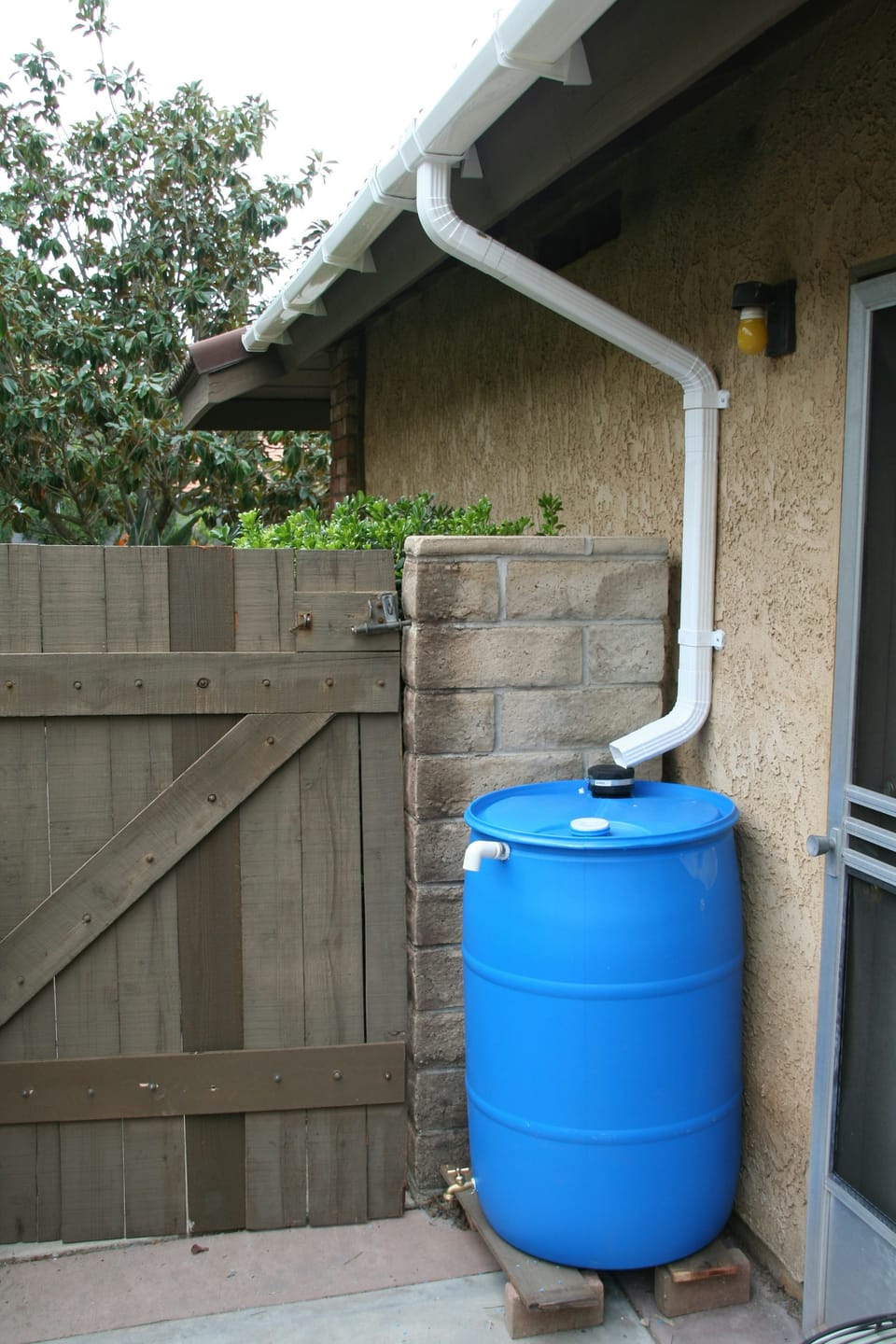 Rain and storageAre rain barrels legal in California? Yes. Here is when you need a permitYes. State law says you do not need a water right to use rainwater from your roof. Under the state plumbing code, a barrel or tank up to 5,000 gallons for drip or hose watering needs no permit if it sits on the ground, is no taller than twice its width, has no pump and is not hooked to tap water.Updated Nov 4, 2026
 Rain and storageHow much rain Sonoma County gets, town by town and month by monthSanta Rosa gets about 30 to 34 inches in an average year, depending on the gauge and the years counted. Petaluma gets about 26 and Healdsburg about 43. Most of it falls from November to March.Updated Oct 18, 2026