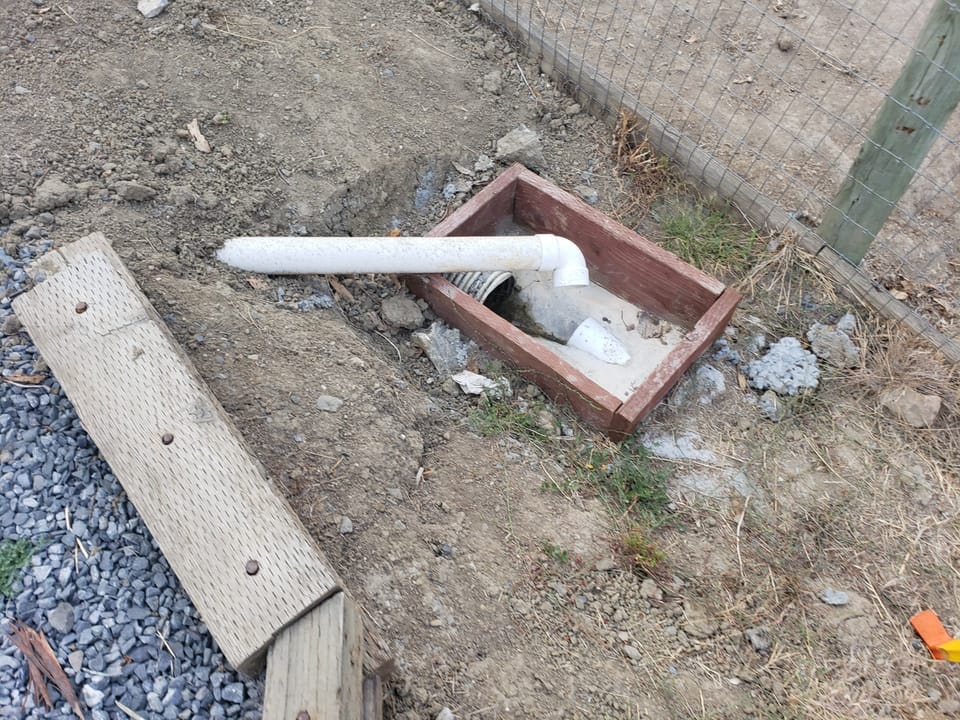
Do you need a French drain? Wet yards, clay soil and where the water goes in Sonoma County
Usually not at first. A French drain is a gravel trench with a perforated pipe that carries water out of the soil to a safe outlet. In our view, it suits ground that stays soggy after the rain stops. Water running off a roof or across the ground has cheaper fixes: gutters and downspouts, sloping the ground away from the house, or a shallow planted ditch called a swale. Start there.
Listen to this article
Read aloud by an AI voice.
You know the spot. The strip of lawn along the side of the house that turns to mush after the first real storm, and still squishes underfoot three days later.
Search for a fix, and a French drain comes up first. It is a good tool. It is also a trench, a lot of gravel and a pipe that has to end somewhere. So it pays to know when you need one.
Our pick, in order: fix the roof water, then the slope of the ground, then give surface water a path. Save the French drain for ground that stays wet from water moving through the soil, and only when you have a safe place to send it.
Below: what a French drain is, a quick way to tell which kind of wet you have, why so much Sonoma County ground drains slowly, and where the water can and cannot go.
What is a French drain?
A French drain is a trench lined with filter fabric and filled with gravel, with a perforated pipe, a pipe full of small holes, along the bottom.[1][2] Water seeps into the gravel, drops into the pipe and runs downhill underground to an outlet, the spot where the pipe ends.[1]
That outlet is the part people forget. A French drain does not make water disappear. It moves it. Most of the how-to advice below comes from extension guides in other states. As one extension drainage expert put it, drainage is three jobs: get the water into the pipe, through the pipe, and out of the pipe.[3]
Here is one cut open, seen from the end of the trench.
- Size. Most trenches are about 1.5 feet deep and 10 to 12 inches wide, around a pipe 4 to 6 inches across.[1] Simple yard drains can be as shallow as 8 inches or as deep as 2 feet.[4]
- Fabric. It keeps soil from filling the spaces between the stones, so water keeps moving.[2]
- Slope. The pipe has to run downhill the whole way. Advice ranges from 0.5 to 1 percent.[2][3] Our take: aim for 1 percent, a 1 foot drop over 100 feet, or about 1/8 inch per foot. The steeper end keeps water moving.
- Holes down. Lay the pipe with its holes facing down.[3]
- No heavy loads. Keep vehicles and machines off it. They can crush the pipe.[2]
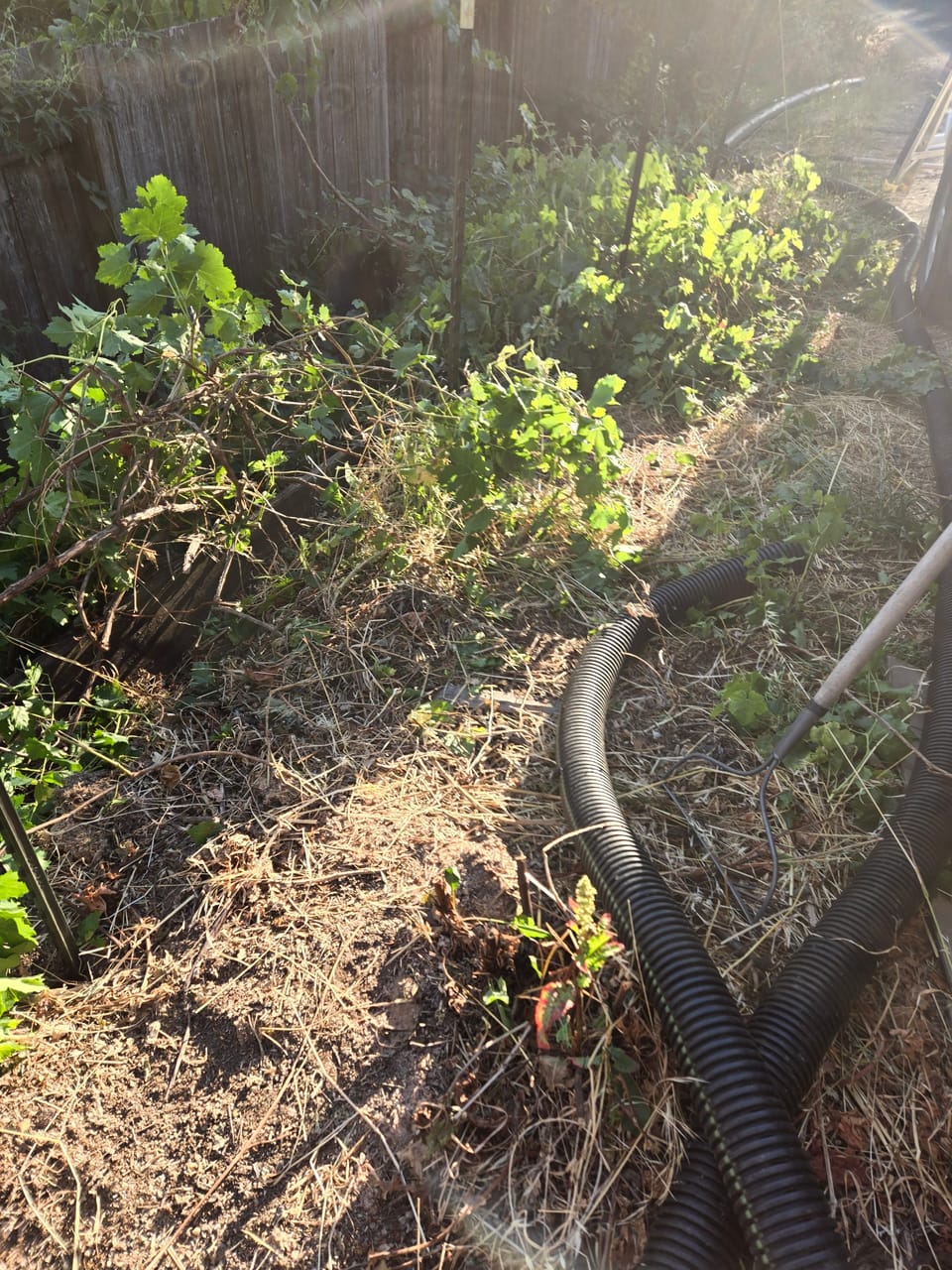
Is the water on top of the ground, or in it?
This question decides the fix, so answer it before you buy anything.
Wait until the season has had one or two storms of more than half an inch. Then walk the property during the next storm, once you see water flowing. Draw arrows on a sketch where water runs and where it pools, and take photos.[5]
Our take on reading what you see:
- Water running across the ground from a downspout, a driveway or a slope is surface water. Fix where it comes from, or give it a path on the surface. A buried pipe is not the first tool. Some extension guides do use French drains to carry roof water or runoff from a slope.[1][2] We would try the surface fixes first. Swales often cost less to put in than underground drains.[2]
- Ground that stays soggy a day or more after the rain stops, or water seeping out of a bank, is water moving through the soil. That is the job a French drain is built for.
- Still not sure? Dig a hole 6 inches deep, fill it with water and check it the next day. If it is still full, the soil itself drains slowly. If it is empty, the soil drains fine, and the water is likely coming across the surface. Our 24-hour soak test has the steps.
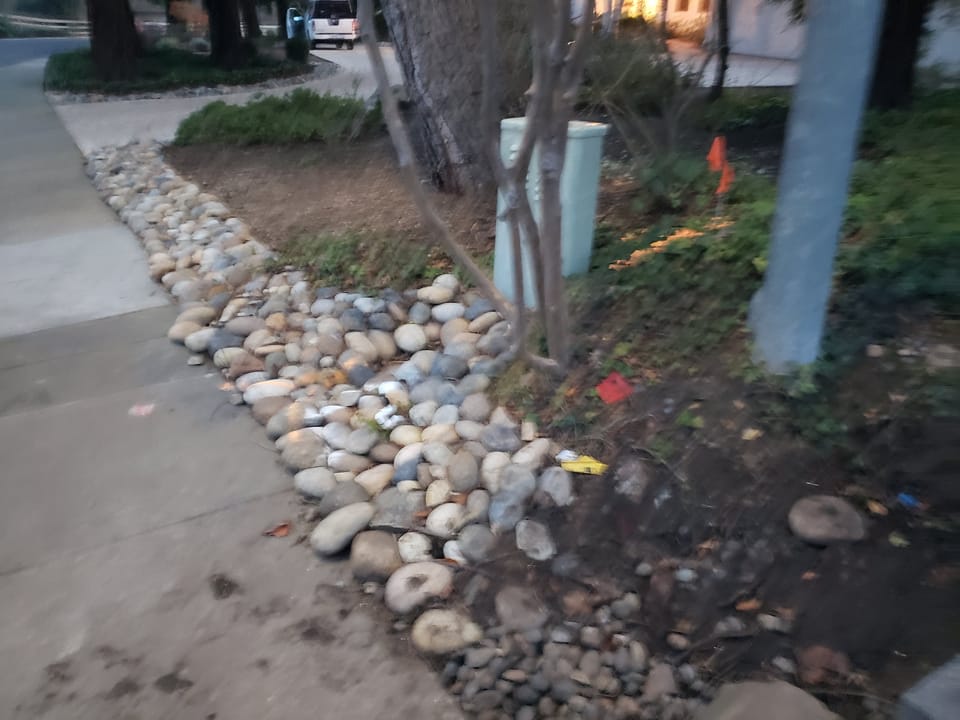
Try these first
A roof gathers a lot of water in one place. One inch of rain on a 1,000 square foot roof is about 623 gallons. Where that water lands is often where the mush is.
- Clean the gutters after big storms, and check that every downspout flows.[5]
- Spread the downspouts out. If they are bunched together, add or move them so they sit 20 to 50 feet apart, and no one spot gets all the water.[5]
- Carry the water away from the house. Use downspout extensions 4 inches across, flexible or rigid, to send it to a rain garden, a swale or another safe spot away from buildings and steep slopes. Not onto the driveway.[5] Where it lands on bare ground, put rock there so it does not dig a hole.[5]
- Slope the ground away from the house. It should fall at least 6 inches over the first 10 feet out from the foundation.[5]
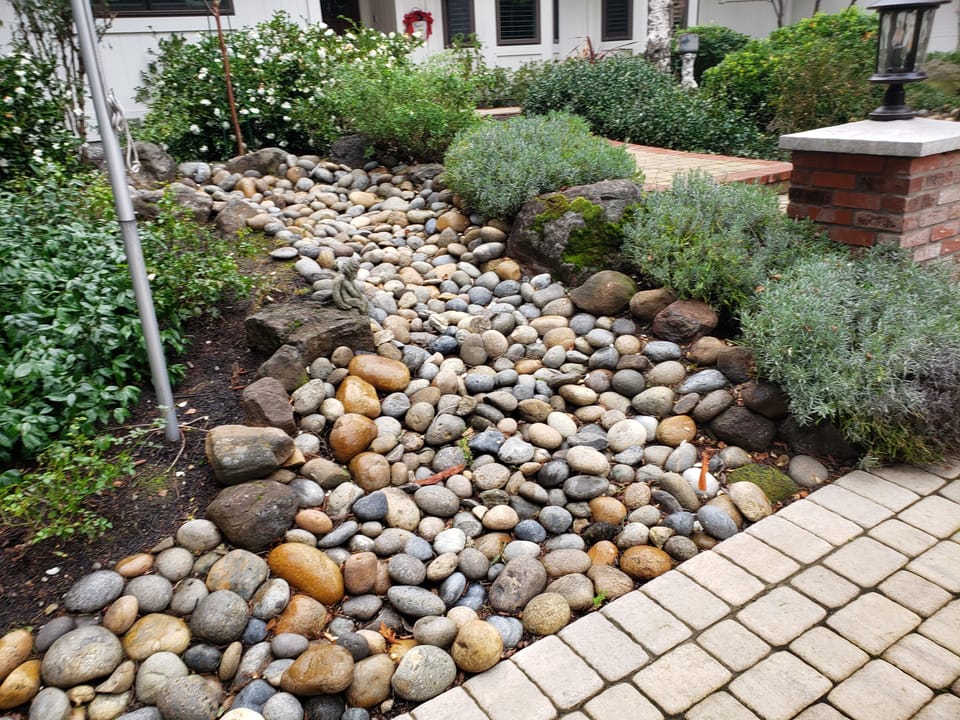
- Give surface water a path. A swale is a shallow planted ditch. Lined with rock, it is called a dry creek bed. Give it a slope of at least 2 percent, a 2 foot drop over 100 feet, so it carries water away from buildings.[5] Our guide to swales covers how to build one.
- Let it soak in where the soil allows. A rain garden is a shallow planted dip that holds roof water while it sinks in. In clay or where the water table is high, give it an overflow.[5] See how big to dig one.
Most of these are also the cheaper steps. Sonoma Resource Conservation District (RCD), a local district that helps landowners with soil and water, rates swales and rain gardens as low to medium cost and easy to moderate to build. It rates rock-filled trenches that soak water into the ground as high cost and complex, a job to plan with a professional.[5]
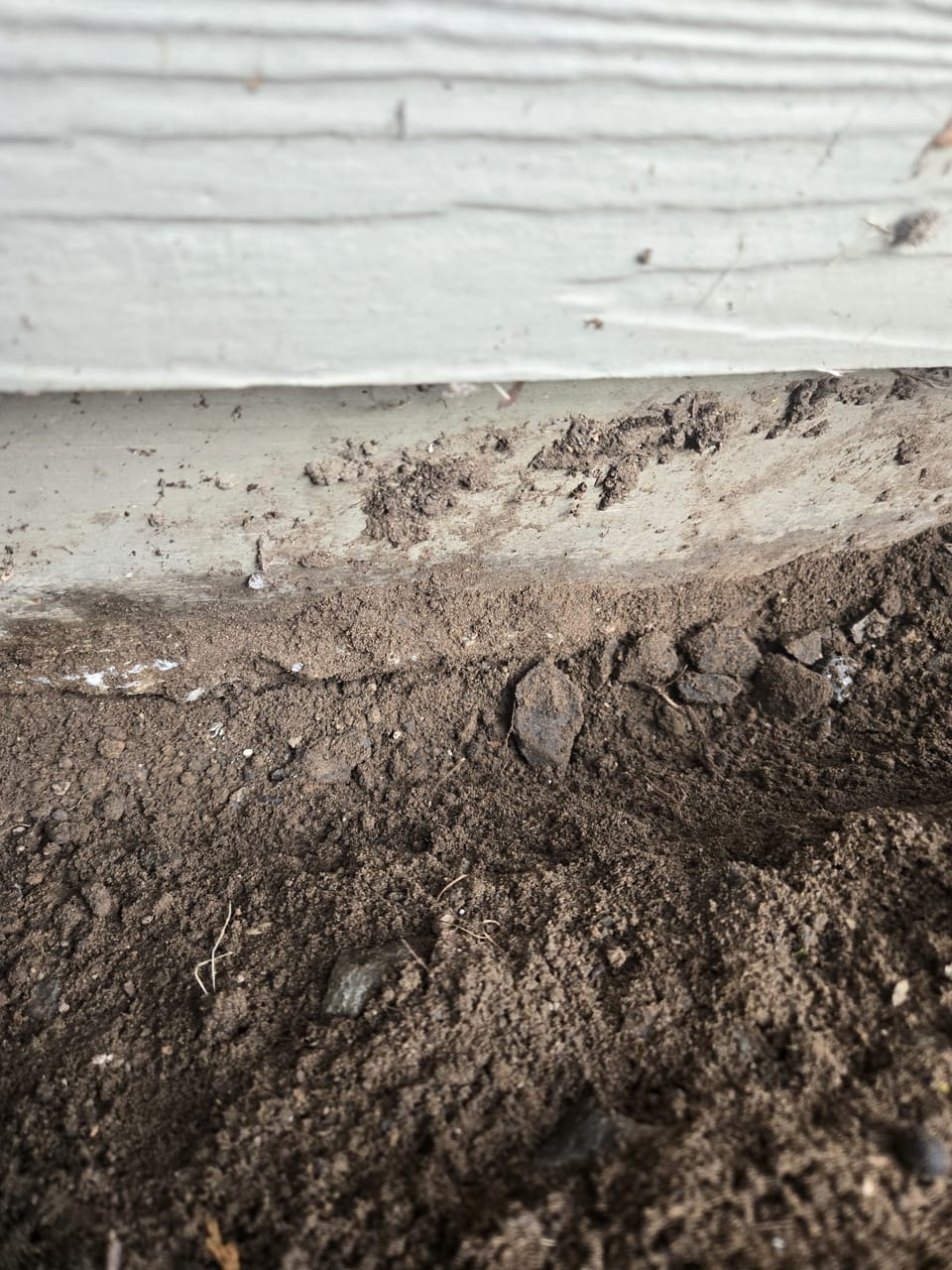
Why so many yards here stay wet
A lot of Sonoma County soil takes in water slowly. We added up the county's soil survey map to see how much.
The US Department of Agriculture (USDA) sorts soils into four hydrologic groups, A to D, by how fast soaked ground takes in water. Group D is the slowest: soil with more than 40 percent clay, a water table within 2 feet of the surface, or rock or another hard layer within 20 inches.[6]
Look at the two blue bars. Together they are about 7 in 10 acres of the county's rated soil, by our count.[7] That leaves out the 5 percent of the map with no rating, such as water.
Some of that slow ground is thin soil over rock in the hills. Some is valley clay. One example is Clear Lake clay, which covers about 50 square miles of the county on the soil map.[7] It forms in flood basins, flood plains and low swales. It is poorly drained and takes in water slowly to very slowly. In some places its water table comes very near the surface in the wet months.[8]
It also cracks. As it dries, cracks open as deep as 4 feet by June or July, and close again by October or November.[8] Some group D soils also shrink and swell a lot.[6] Our read: wide summer cracks in your yard point to this kind of clay.
The soil map also shows about 62 square miles, roughly 4 percent of the county, where the water table reaches the surface at some point in the year.[7] Our read: on that ground, a wet yard in winter is normal.
A county map is a rough guide. Soil around a house has often been dug, filled or packed down, and that changes how it behaves.[6] The test hole in your own yard is the better answer.
Do French drains work in clay soil?
Partly. On flat ground in heavy clay, rainwater moves so slowly through the soil that it is slow to reach a pipe, even a good one.[3]
- What it can do: help a soggy lawn dry out sooner in spring.[3]
- Space them close. To drain a whole wet lawn, drain lines are normally about 10 feet apart, and closer works better.[3]
- Use the surface. Water that runs across the ground to the trench gets in faster, so a gentle grade toward the drain helps.[3]
- Expect stripes in summer. Ground over the drains dries out faster, and a lawn can show lines where they run.[3]
Our take. In clay, fix the surface first: roof water, grade and a swale. A French drain in clay is a slow helper, not a cure. If a spot is still wet after those fixes, have a drainage contractor or the RCD look at it with you.
Where does the water go?
Pick the outlet before you dig. Sending water to the wrong spot just moves the problem downhill.[1]
- Best: a planted spot on your own land where it can soak in, such as a rain garden or a swale, away from buildings and steep slopes.[5] Ending the pipe in a T-shaped fitting spreads the water out and slows it down.[2] Put rock at the outlet.[5]
- Never onto a neighbor's land.[5] Sending water to a neighboring property is one of the cases that may need a permit.[5]
- Never into the sewer. Rainwater in sewer pipes can overwhelm them in a storm and cause backups. Sebastopol bans it outright. The extra water gets pumped to the treatment plant in Santa Rosa, and ratepayers pay for that.[9] Our take: treat it as off limits wherever you live. Here is where sewer water goes.
- The street or a storm drain: ask first. Nearly all storm drains in Sonoma County empty untreated into local waterways.[5] Ask your city's public works department, or Permit Sonoma, the county permit office, if you live outside city limits. See only rain down the storm drain.
- Away from a septic system. A septic system spreads wastewater into the soil through buried pipes called the leach field. Many also have drains of their own. Keep your new drain from picking up that wastewater or touching either one, and find out where your system is first.[5] Our septic guide shows how to find the county records for your system.
- Away from your well. Our take: keep the outlet at least 100 feet from a drinking water well, the same distance we suggest for rain gardens.
Why the creeks care. Before roofs and roads, as much as half the rain here soaked into the ground and only about a tenth ran off.[5] Runoff that rushes into storm drains and creeks erodes their banks, harms fish and wildlife, and adds to flooding.[10] Water that soaks in instead can refill groundwater and help keep creeks flowing through the year.[5] That is our leaning: keep the water on your land when you safely can.
When to call a professional
- Deep drains, or drains near the foundation. Delaware's state flood program calls shallow yard drains a do-it-yourself job, and deeper ones or those close to the house a job for a drainage contractor.[4]
- Water under the house. A yard French drain may not stop seepage into a crawlspace or basement.[4]
- Flat ground that floods often. French drains are not recommended where a yard floods often because it has no slope.[4]
- A high water table, meaning groundwater that rises near the surface in winter, like the 62 square miles above. French drains work best above the groundwater, not sitting in it.[2] Have a pro look first.
- Slopes and slides. Sending water onto a steep slope can saturate it and help set off a slide. Get professional advice before draining toward any slope steeper than 1 foot down for every 2 feet across, a 50 percent slope.[5] Our erosion guide covers bare slopes.
Help is close. The RCD offers technical help, and sometimes money, for managing stormwater on your land.[10] Our guide to finding a licensed water pro covers contractors.
Do you need a permit?
- Outside city limits, Sonoma County requires a drainage permit before any drainage improvement, including site clearing and digging, unless the county code exempts the work, so ask when you call.[11] New drainage features need a drainage report showing no harm to buildings or to neighbors.[11] Call Permit Sonoma's engineering desk at (707) 565-2268 before you dig.[11]
- Inside a city, ask your city's public works or building department. Rules differ from city to city.
- Outside city limits, moving a lot of soil also needs a county grading permit: more than 50 cubic yards, or a cut or fill deeper than 3 feet.[12] For scale, a trench 100 feet long, 1 foot wide and 1.5 feet deep is about 6 cubic yards.
- Call 811 first. Underground Service Alert takes calls at 811 about buried utilities such as water, gas and power lines. If you have a county permit, you must call at least two working days, and no more than 14 calendar days, before digging.[13]
- Do not block natural drainage. If you have a county permit, you are liable for damage caused by blocking a natural drainage path.[13]
More on the county rules: when you need a county permit to change drainage.
What does a French drain cost?
We found no Sonoma County price list we could check. The closest public estimate we found comes from Delaware's state flood program, in 2022 dollars, for a 60 foot yard drain:[4]
- Dig it yourself, shallow, 8 to 24 inches deep: $600 to $2,000, materials only.
- Deep or complex, with a contractor doing the work: $1,000 to $4,000.
Prices here will differ. Get two or three written quotes, and ask each contractor where the outlet will be and whether the work needs a permit.
What it means for you
Back to that soggy strip along the side of the house. Our take for this winter:
- Next storm, go look. Watch where the water comes from, and take photos.
- Fix the roof water first. Clean gutters, and extend downspouts to planted ground.
- Check the grade. Look for 6 inches of fall over the first 10 feet.
- Still soggy days later? Dig a test hole. Then consider a French drain, and choose its outlet before you dig.
Next: sink it or shed it helps you decide whether to keep rain on your land or send it away. The rain calculator shows how much your roof sheds in a storm.
Photos by Devan Hemmings unless noted.
Sources
- 1. Ask Extension, Water drainage from rain downspout, answer #420397 (Aug 10, 2017), quoting Virginia guidance on redirecting runoff
- 2. Washington State University Clark County Extension, Small Acreage Program, Improving Drainage
- 3. Ask Extension, Poor Drainage in Lawn on Heavy Clay Soil, answer #218022 (Oct 27, 2014)
- 4. Delaware DNREC, I-ADAPT Yard Adaptation: French Drain for Yard (2022 cost estimates)
- 5. Sonoma Resource Conservation District and RCD of Santa Cruz County, Slow It. Spread It. Sink It. Store It! A Homeowner's Guide to Beneficial Stormwater Management (2nd ed., June 2015)
- 6. USDA NRCS, National Engineering Handbook Part 630, Chapter 7: Hydrologic Soil Groups (January 2009)
- 7. Sonoma County GIS, Soil Survey Geographic Database (SSURGO) layer from USDA NRCS, our calculation (queried Oct 21, 2026)
- 8. USDA NRCS, Official Series Description: Clear Lake series (rev. March 2018)
- 9. City of Sebastopol, Roof gutters, downspouts, and storm drains must not connect to sewer system (March 3, 2026)
- 10. Sonoma Resource Conservation District, Assisting Residents
- 11. Permit Sonoma, Storm Water (Drainage) Permits
- 12. Permit Sonoma, Frequently Asked Questions about Grading and Storm Water
- 13. Permit Sonoma, GRD-010 Grading and Drainage Notes (April 18, 2025)
Checked 2026-10-21. Rules and programs change. If something here is out of date, the source above wins. Spot an error? See our corrections policy.
Related reads
 Stormwater and drainageSlow it, spread it, sink it: downspouts, rain gardens and how big to digTurn your downspouts toward planted ground, put gravel under the roof edge, and slope the soil away from the house. Then, if a test hole drains within a day, dig a shallow rain garden: about 56 square feet for 1,500 square feet of roof draining to it.Updated Oct 19, 2026
 Stormwater and drainageWhen you need a county permit to change drainagePlanning to regrade a yard, add a drain or change how water leaves your property? In unincorporated Sonoma County, drainage work needs a county permit before you start, and moving more than 50 cubic yards of soil needs a grading permit.Updated Oct 18, 2026
 Stormwater and drainageSink it or shed it? When to keep rain on your land and when to drain itMost properties need both. Sink clean water where the soil can take it and nothing will be harmed. Shed water, slowly and safely, where soaking it in would threaten a foundation, a slope, a septic system or a neighbor. The craft is deciding which water goes where.Updated Oct 18, 2026