
Gutters overflowing in heavy rain? When it's normal, and how to fix it
A brief spill in the hardest minutes of a big storm is normal. Gutters are often built for the hardest few minutes of rain a place gets about once in 10 years. If yours overflow in ordinary heavy rain, or always in the same spot, something is wrong. The usual causes are a clog where the gutter drops into the downspout, too few downspouts, a gutter that sags or runs flat, or an inside roof corner, where two slopes meet, that dumps too much water in one place.
Listen to this article
Read aloud by an AI voice.
In the hardest few minutes of a downpour, rain can fall at 3 inches an hour, and in many places more than twice that fast.[1] Even at 3 inches an hour, a 1,000 square foot roof pours about 30 gallons a minute into its gutters, by our math from USGS figures.[2] That is more than half a 55 gallon barrel every minute. Sometimes the gutter can't keep up, and a curtain of water pours over the front edge and splashes down right beside the house.
Whether that is normal depends on how hard it rains in the worst few minutes, not the storm total in the forecast. Where the water spills tells you the rest.
Is it normal for gutters to overflow in heavy rain?
Once in a while, yes. Home gutters are often sized for the most intense five-minute burst of rain a place is likely to get in about ten years.[3][4] A burst harder than that can top even clean, well-hung gutters for a few minutes. That is the design working as planned, not a failure.
If it spills in most heavy rains, not just the rare worst few minutes, something is wrong. The same goes for a spill in the same spot every storm. Both point to a clog or a problem in how the gutter is built or hung.
That spill is a good warning, because you can see it. Building investigators at the engineering firm WJE, writing in The Construction Specifier, call overflow "an early and relatively benevolent indicator" that something needs a look.[5] Water that hides is worse. A gutter that holds water or leaks out of sight can rot wood and soak walls before anyone sees a drop.[5]
The same gutter works very differently from place to place, because the hardest bursts do. The chart shows how much roof one standard 5-inch gutter, hung level, can drain between downspouts in the five-minute burst each city gets about once in 10 years. In Chicago or Miami, it handles less than half the roof it handles in Santa Rosa, California.
The fix starts with finding where your water goes over.
Why are my gutters overflowing? Start with where it spills
During a storm, watch where the water goes over.[6] Stay on the ground to do it. Then find the spot that matches yours.
| Where it spills | Likely cause | First fix |
|---|---|---|
| Near the downspout | A clog where the gutter drops into the downspout, or inside the downspout | Clear the opening and the pipe |
| Along the whole front edge | Leaves and grit in the gutter, or too few downspouts | Clean it, then add a downspout |
| In the middle of a long run | The gutter sags or runs flat, so water sits | Rehang it so it tilts toward the downspout |
| Below an inside corner of the roof, where two slopes meet in a V | Both slopes pour into one spot | A splash guard at the corner, or another downspout |
| Behind the gutter, down the wall | Roof water slips past the back of the gutter | A metal strip that leads the water into the gutter |
Start at the downspout end. Even a small handful of leaves can block the opening where the gutter drains into the downspout.[7] Bends and elbows in the pipe make a clog more likely, so check those too.[5]
How do I stop my gutters from overflowing?
Start with the fix that matches your spot, then work from the cheapest up. Most of these are a ladder job. Our take: leave a second story or a steep roof to a gutter pro.
- Clean the gutters and the downspouts. Do it at least twice a year, and more often under trees.[6] Gutter guards can cut down on leaves, but they don't replace checking and cleaning.[7]
- Check the slope. A gutter should drop toward the downspout. The US Department of Energy says at least a sixteenth of an inch per foot, about five eighths of an inch over every 10 feet.[8] Some guides use as little as a quarter inch over 10 feet.[6] Our take: aim for the Energy Department's number. A gutter that sags, runs flat or tilts the wrong way won't empty, and it overflows in heavy rain.[7] Loose brackets, the hangers that hold the gutter up, are a common cause, so tighten or add them.[6][7]
- Add a downspout. A standard 2 by 3 inch downspout handles about 600 square feet of roof. A 3 by 4 inch one handles about 1,200.[3][8] Space them 20 to 50 feet apart.[8]
- Guard the inside corners. Where two roof slopes meet in a V, water can shoot right over the gutter. A small metal deflector, or splash guard, at the corner turns it back in.[7]
- Stop water running behind it. The metal strip at the roof edge, called the drip edge, should hang over the back of the gutter. If it doesn't, a metal strip slid under it so it hangs into the gutter can stop the water running behind, depending on the gutter and its hangers.[9]
- Go bigger last. Wider gutters carry more, but they are usually the last step, not the first.[6] A wider gutter only helps if it has enough downspouts to drain it.[8]
Then follow the water down. Whatever leaves the downspout should land at least 5 feet from the foundation, on ground that slopes away.[8] Here's how to get downspout water away from the house.
In Sonoma County
- Our bursts are mild. Santa Rosa's five-minute burst that comes about once in 10 years falls at about 3 inches an hour, less than half the rate in Washington, D.C., or Chicago.[1] Our take: here, gutters that overflow in an ordinary winter storm usually have a clog, a flat run or too few downspouts. They are rarely too small.
- The state has a rule for swelling soil. Where soil is known to swell when wet, California's residential code requires roof water to reach the ground at least 5 feet from the foundation, or go to an approved drainage system.[10] Water pouring over the front edge lands right at the wall.
- Clean after the leaves drop. Our sister site Home Ready Sonoma covers when to clean gutters before storms and fire season.
- Catch some of it. A barrel at the bottom of a downspout saves some of that winter water for the garden. See how to collect rainwater.
What it means for you
- A short spill in the worst minutes of a big storm is normal. Overflow in every heavy rain is not.
- Next storm, step out and note where the water goes over. Match that spot to the table above.
- Start at the downspout end: clear it, then check the slope.
Sources
- 1. NOAA National Weather Service, Precipitation Frequency Data Server (NOAA Atlas 14), 5-minute intensities, read Nov 24, 2026
- 2. USGS Water Science School, How much water falls during a storm?
- 3. Andy Engel, Sizing Gutter Systems, Fine Homebuilding, issue 125 (1999)
- 4. USDA Natural Resources Conservation Service, Design Guide PA-1: Roof Gutters and Downspouts (rev. 2019)
- 5. Deborah Slaton, David S. Patterson and Mike Ford, When it rains, it overflows, The Construction Specifier (Feb 6, 2017)
- 6. This Old House, How To Size Gutters and Downspouts
- 7. InspectAPedia, Gutter Defects, Leaks, Problems
- 8. US Department of Energy, Building America Solution Center (Pacific Northwest National Laboratory), Gutters and Downspouts
- 9. Mike Guertin, Fixing a Dripping Gutter, Journal of Light Construction (2016)
- 10. California Residential Code, Section R801 (via GoCodebook)
Checked 2026-11-24. Rules and programs change. If something here is out of date, the source above wins. Spot an error? See our corrections policy.
Related reads
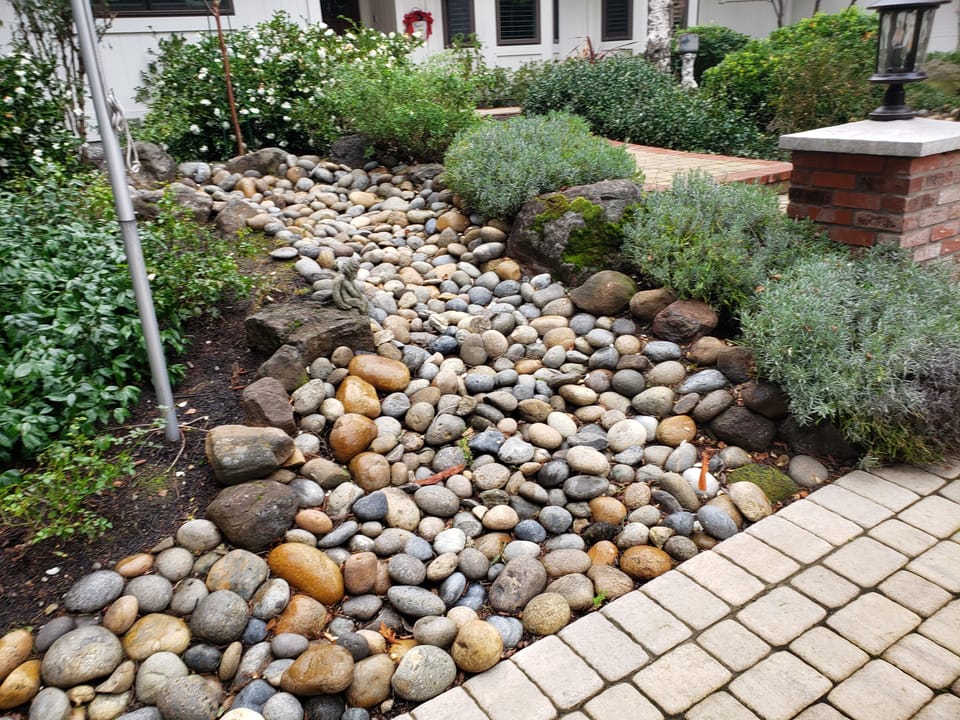 Slow it, spread it, sink it: downspouts, rain gardens and how big to digTurn your downspouts toward planted ground, put gravel under the roof edge, and slope the soil away from the house. Then, if a test hole drains within a day, dig a shallow rain garden: about 56 square feet for 1,500 square feet of roof draining to it.Stormwater and drainage · Updated Oct 19, 2026
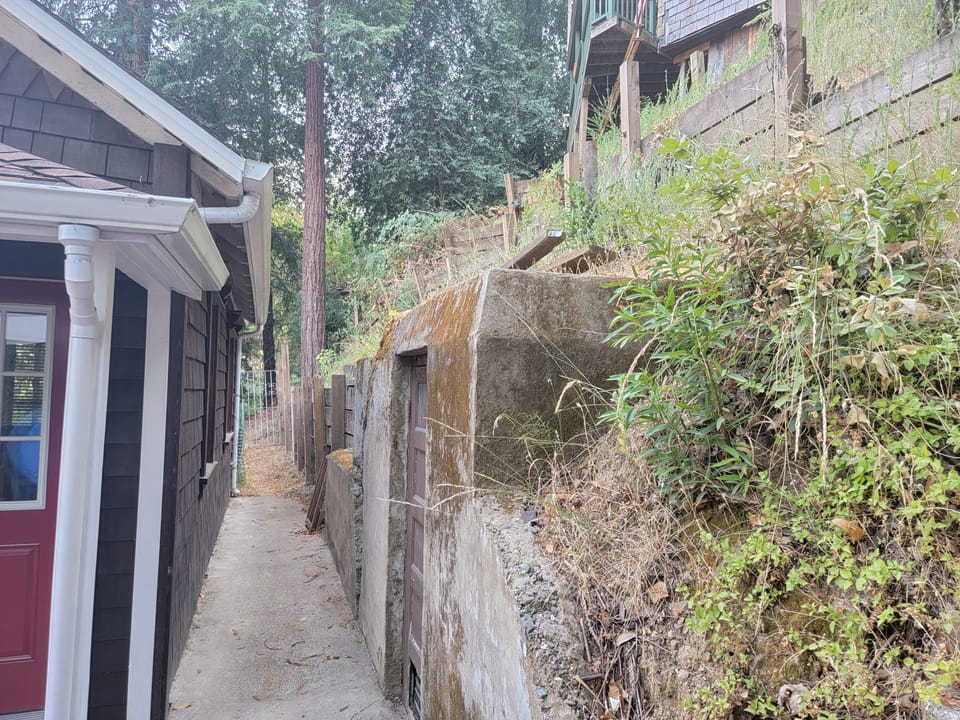 Sonoma County grading and drainage permits: when your yard project needs oneOutside city limits, Sonoma County needs a grading permit to dig out or fill in more than 50 cubic yards of soil, to go more than 3 feet deep, and for some smaller jobs on slopes or in flood zones. Building or changing a drain or ditch needs a drainage permit, except for repairs, some small pipes and ditches, and a few other cases.Stormwater and drainage · Updated Nov 21, 2026
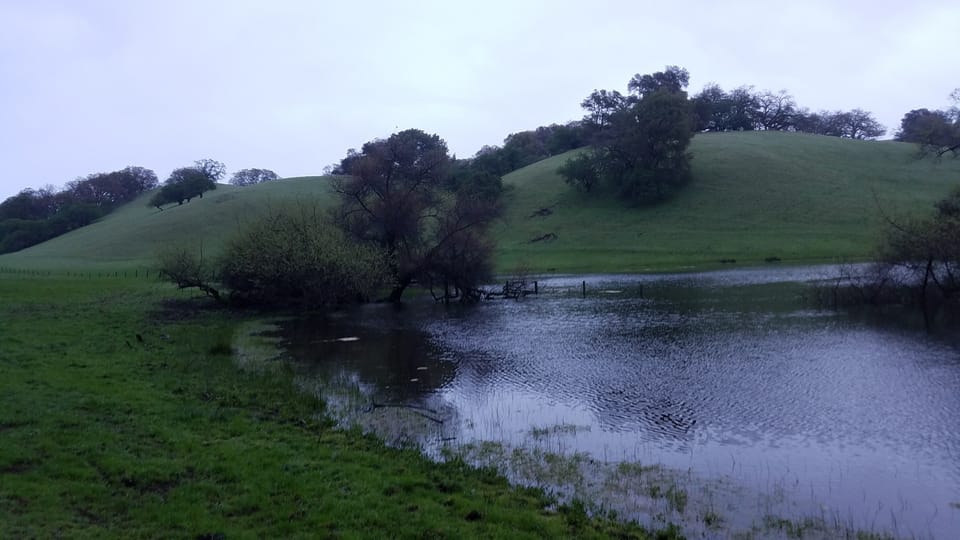 Sink it or shed it? When to keep rain on your land and when to drain itMost properties need both. Sink clean water where the soil can take it and nothing will be harmed. Shed water, slowly and safely, where soaking it in would threaten a foundation, a slope, a septic system or a neighbor. The craft is deciding which water goes where.Stormwater and drainage · Updated Oct 18, 2026