How far should downspouts be from the house? At least 5 feet in Sonoma County clay
At least 5 feet from the foundation, and 10 feet if your yard has room. Five feet is what California's building code asks for on clay that swells when wet, found in many of Sonoma County's valleys. Send the water to planted ground that slopes away from the house, not to the sewer, a steep slope or the neighbors.
Listen to this article
Read aloud by an AI voice.
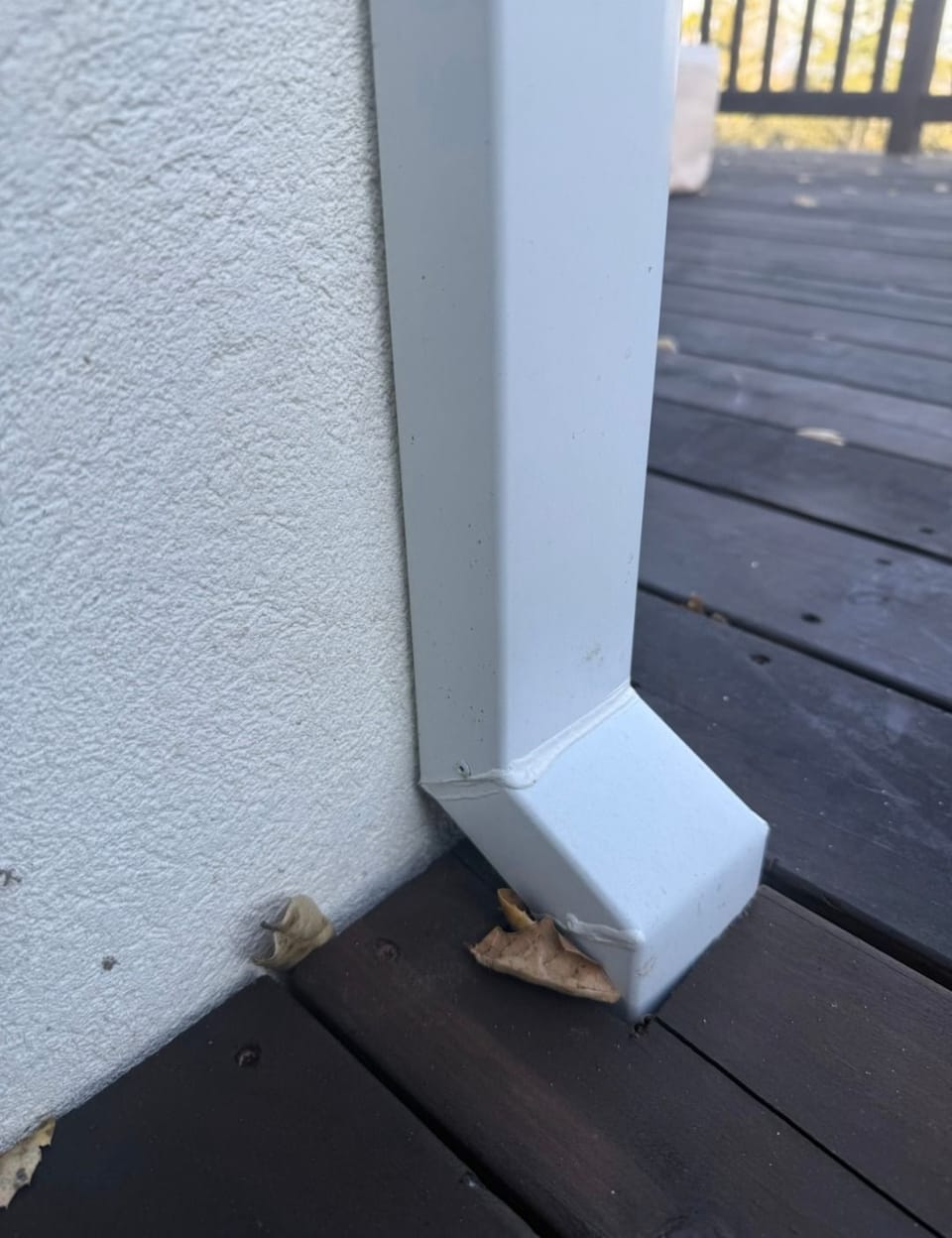
On soil that swells when it gets wet, California's residential code says roof water has to reach the ground at least 5 feet from the foundation walls, or go into a drain system the building department approves.[1] Five feet is about two long steps from the wall.
By that standard, a downspout that ends in an elbow a few inches from the wall isn't done yet. Below: why our clay cares, whether 5 feet is enough, and where the water should go.
Why does clay care where the water lands?
Start with one downspout in one storm. An inch of rain on 500 square feet of roof is about 310 gallons, nearly six 55 gallon barrels.[2] All of it leaves through that one pipe, and lands in one spot.
If that spot is next to the wall, the soil under the house takes it. Swelling clay grows as it soaks up water and shrinks as it dries. The county's long-range plan calls this a less obvious hazard: slow cracking and settling that adds up over time. It says clay-rich soils are found in many of the county's valleys.[3]
You can see the swing in summer. One clay found here, a soil type called Clear Lake clay, cracks open as deep as 4 feet by June or July and closes again by October or November.[4] Each winter's rain swells it shut, and a downspout by the wall adds a roof's worth more right there.
That is why the fix is so simple: move the water a few steps out, away from the soil the house stands on. Water by the wall can also end up under the floor.
Is 5 feet enough, or should it be 10?
Guides from other places range from 2 to 10 feet, with more for houses that have basements.[5][6]
Our take: 5 feet at the least, the code's number. Not sure what your soil is? Use 5 feet anyway. Go to 10 feet when the yard has room.
Rain garden guides, including the Sonoma Resource Conservation District's, put gardens 10 feet from the house, so the water can't soak back toward the foundation.[2][7]
Distance only works if the ground runs downhill from the house. It should drop at least 6 inches over the first 10 feet.[2] If it slopes toward the house, that needs fixing first; see when changing drainage needs a permit. Like this:
Where should the water go?
To planted ground that can soak it up: a garden bed, a rain garden or a swale, a shallow planted ditch. A rain barrel can catch the first of it.[2]
Water that soaks in waters the yard and refills the ground. Water sent onto a driveway runs to the street, adding to flooding downstream and carrying pollution to creeks.[2]
Three places it should not go:
- The sewer. Santa Rosa doesn't want downspouts tied into the sewer. In storms that water can cause sewer backups and overflows, and treating it raises costs.[8] Sebastopol's city code bans it.[9] If a downspout runs into a pipe in the ground and you don't know where it goes, ask your city.
- A steep slope or a septic leach field. Changes in drainage can help set off landslides here.[3] Keep roof water away from hillsides and from the field where septic water soaks in.[2]
- The neighbors' yard. Sonoma County's resource conservation district advises against it.[2] More on that next.
How far from the neighbors?
In California, if you change how water leaves your lot, you can be responsible for the damage it does next door. The state Supreme Court said so in 1966, in a case over an ice rink whose four downspouts and new paving sent rain toward the store next door. Both neighbors have to act reasonably.[10]
No Sonoma County rule we know of sets a distance from the property line. Seattle's utility asks for 5 feet from the line and 10 feet from a neighbor's house.[5] Our take: that is a fair rule of thumb. For a real dispute, talk to a lawyer.
How do I get the water out there?
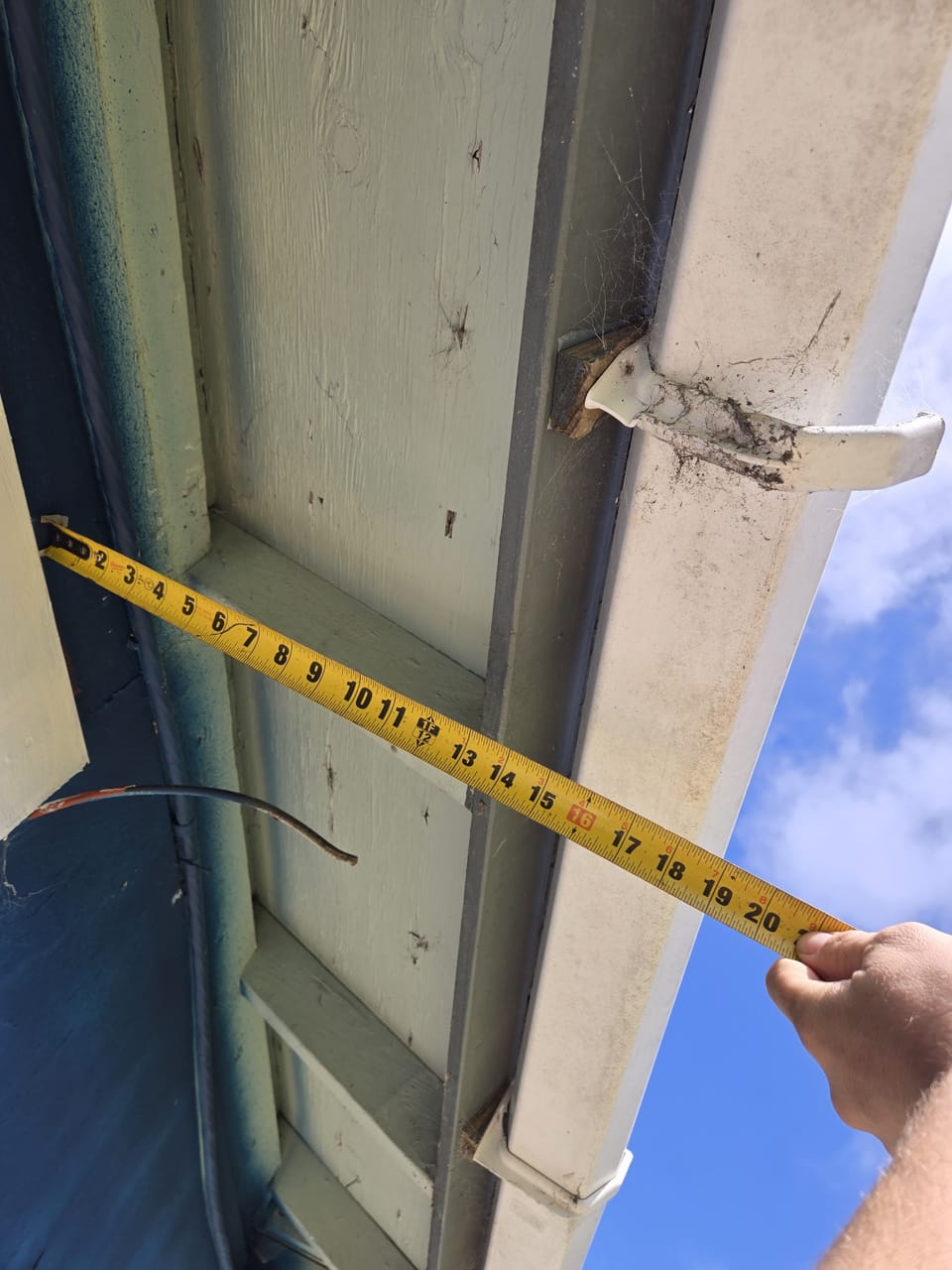
- Add an extension 4 inches across, flexible or rigid. Keep bends gentle, no sharper than 45 degrees, about half a right angle.[2]
- Put rock or a splash block where it lands, so the water doesn't dig a hole.[2]
- Keep it off the walkway. An extension across a path or driveway trips people.[6] Run it the other way, or ask a contractor about a buried pipe to carry it past the path.[7]
- Check the gutters after big storms. A clogged gutter overflows at the wall, wherever the downspout ends.[2]
What it means for you
- In the next storm, walk around and look where each downspout lands. Anything closer than 5 feet gets an extension.
- Aim it at planted ground that slopes away, not the sewer, a slope or the neighbors.
- Next: give the water a place to sink in. Start with slow it, spread it, sink it.
Two long steps from the wall: a small move for the water, and a drier start for the clay under your house.
Photos by Devan Hemmings unless noted.
Sources
- 1. 2025 California Residential Code, Section R801.3, Roof drainage (text as posted by GoCodebook)
- 2. Sonoma Resource Conservation District and RCD of Santa Cruz County, Slow It. Spread It. Sink It. Store It! Guide to Beneficial Stormwater Management and Water Conservation Strategies (2nd ed., June 2015)
- 3. Sonoma County General Plan 2020, Public Safety Element, section 2.1: Geologic Hazards in Sonoma County (amended 2014)
- 4. USDA NRCS, Official Series Description: Clear Lake series (rev. March 2018)
- 5. Seattle Public Utilities, Downspout Disconnection: discharge distances (RainWise contractor training, Nov 3, 2011)
- 6. NC State University Water Resources Research Institute and Department of Horticultural Science, Disconnect: downspout disconnection for rainwater dispersal (2019 revision)
- 7. University of Nebraska-Lincoln Extension, Stormwater Management: Rain Garden Design for Homeowners (G1758, 2007)
- 8. Santa Rosa Water, Collection System FAQ (inflow and infiltration, erroneous connections)
- 9. City of Sebastopol, Roof gutters, downspouts, and storm drains must not connect to sewer system (March 3, 2026)
- 10. Supreme Court of California, Keys v. Romley, 64 Cal.2d 396 (April 11, 1966)
Checked 2026-11-05. Rules and programs change. If something here is out of date, the source above wins. Spot an error? See our corrections policy.
Related reads
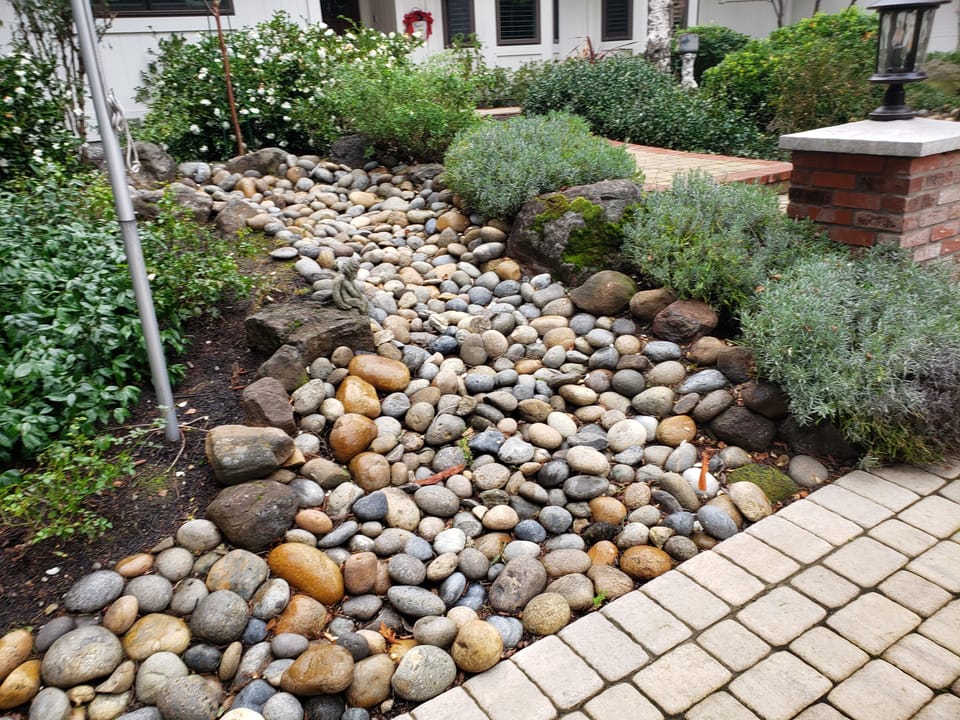 Stormwater and drainageSlow it, spread it, sink it: downspouts, rain gardens and how big to digTurn your downspouts toward planted ground, put gravel under the roof edge, and slope the soil away from the house. Then, if a test hole drains within a day, dig a shallow rain garden: about 56 square feet for 1,500 square feet of roof draining to it.Updated Oct 19, 2026
 Stormwater and drainageWhen you need a county permit to change drainagePlanning to regrade a yard, add a drain or change how water leaves your property? In unincorporated Sonoma County, drainage work needs a county permit before you start, and moving more than 50 cubic yards of soil needs a grading permit.Updated Oct 18, 2026
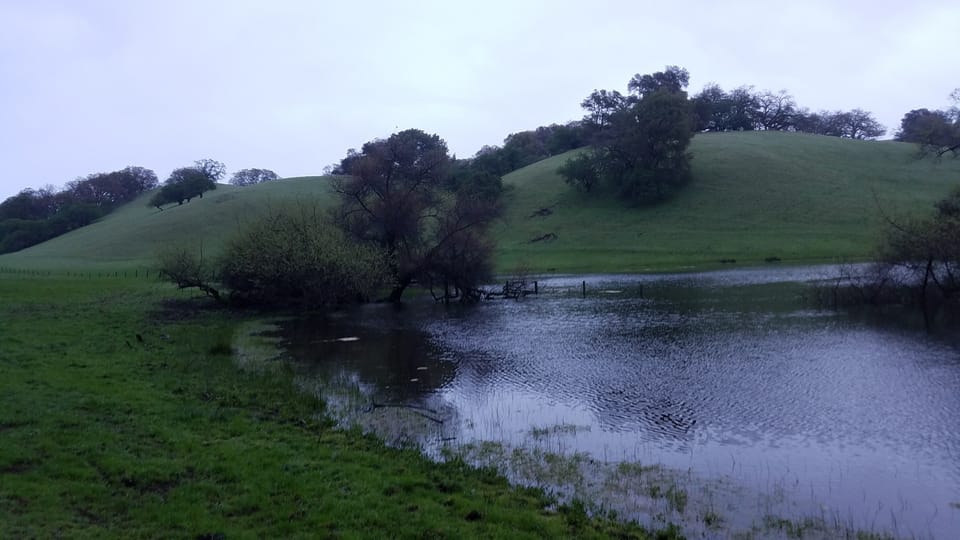 Stormwater and drainageSink it or shed it? When to keep rain on your land and when to drain itMost properties need both. Sink clean water where the soil can take it and nothing will be harmed. Shed water, slowly and safely, where soaking it in would threaten a foundation, a slope, a septic system or a neighbor. The craft is deciding which water goes where.Updated Oct 18, 2026