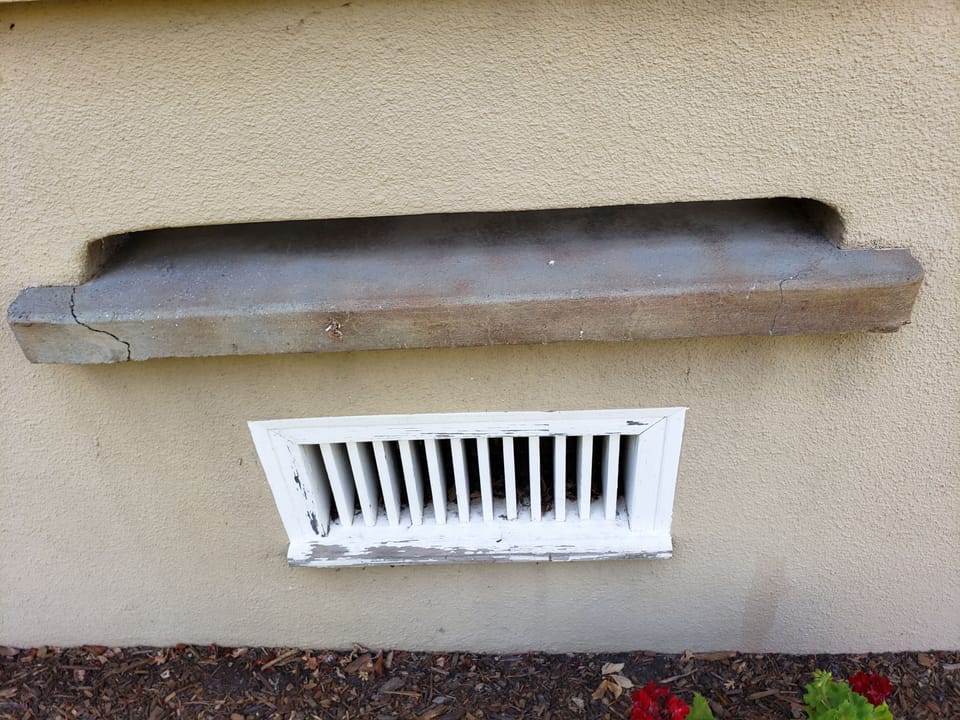
Water in the crawl space after heavy rain: is it normal, and what should you do?
You lift the hatch after a storm and see a puddle, or a shine on the dirt under the house. Water in the crawl space after heavy rain is a warning, not an emergency. Often it is roof water or a yard that slopes toward the house, and the first fixes are outside: move the downspout water and fix the slope.
Listen to this article
Read aloud by an AI voice.
One inch of rain on a 1,500 square foot roof is about 935 gallons. That is 17 rain barrels' worth.
All of it leaves through a few downspouts. With four, each one drops about 234 gallons in one spot. If that spot is the foundation wall, some of it ends up under your floor.
So far this season, Santa Rosa has had about a third of the rain it usually has by early November.[1] A normal year here brings about 34 inches, and less than 2 of it has usually fallen by now.[1] This is the time to look.
Where is the water coming from?
Follow the rain from the roof down. There are four ways it gets under a raised floor.
The drawing shows all four. Look at where each arrow starts.
- Roof water. A downspout that empties next to the wall soaks the soil right at the foundation.
- Surface water. Ground that slopes toward the house sends rain to the wall.
- Groundwater. In a wet winter the water table rises. That is the level below which the ground is full of water. It rises most after big storms or long rainy spells, when the ground is saturated.[2]
- A leak. A dripping supply or drain pipe under the floor wets the soil whether it rains or not.
If the water comes from a river or creek in flood, that is a different problem. See what floods at each river level.
A quick way to tell which one you have
When you see the water tells you a lot. Find when you saw it in the left column. This is our read.
| When you see water | Likely source | First thing to try |
|---|---|---|
| In a storm, by one corner | Roof water | Move the downspout water |
| In a storm, on the uphill side | Surface water | Slope the ground away |
| A day or more after, all over | Groundwater | Ask a contractor about a drain |
| In dry weather | A leak | Check your water meter, or call a plumber |
Our tip: check during a storm, or the day after. Bring a headlamp and gloves, and take photos so you can compare later.[3] If you only see water in dry weather, see how to check your meter for a leak.
Why so many Sonoma County homes get it
Slow soil plus a roof's worth of water in one spot is how a crawl space gets a puddle. And much of our ground drinks slowly.
By our count of the county soil map, about 7 in 10 acres of rated soil here soak up water slowly or very slowly. In about 62 square miles, the water table reaches the surface some part of the year. Our French drain guide has the map.
Even the state building code treats wet ground under a house as a drainage problem. For new homes where groundwater can rise to within 6 inches of the floor, or surface water does not drain away, it calls for raising the soil under the house or an approved drainage system.[4]
Is a little water under the house a problem?
Don't panic. Most moisture damage builds up over years, so a short delay won't make it much worse.[3] But it is worth fixing this winter, for three reasons.
- Mold. Wet materials that dry within 24 to 48 hours usually don't grow mold.[5] Wood that stays damp can.[6]
- Rot. Rot needs wood that stays wetter, longer. Wood that gets wet for a short time now and then won't rot.[7] Rot weakens wood; mold does not.[6]
- Termites. University of California pest experts say to keep the space under a house ventilated and dry, and to fix plumbing leaks and ground that slopes the wrong way. One kind, dampwood termites, nests in very moist wood and soil, most often near the coast.[8]
If you have health questions about mold, ask your doctor. EPA's mold guide covers cleanup.[5]
What to fix, in order
Our pick: start outside and work in.
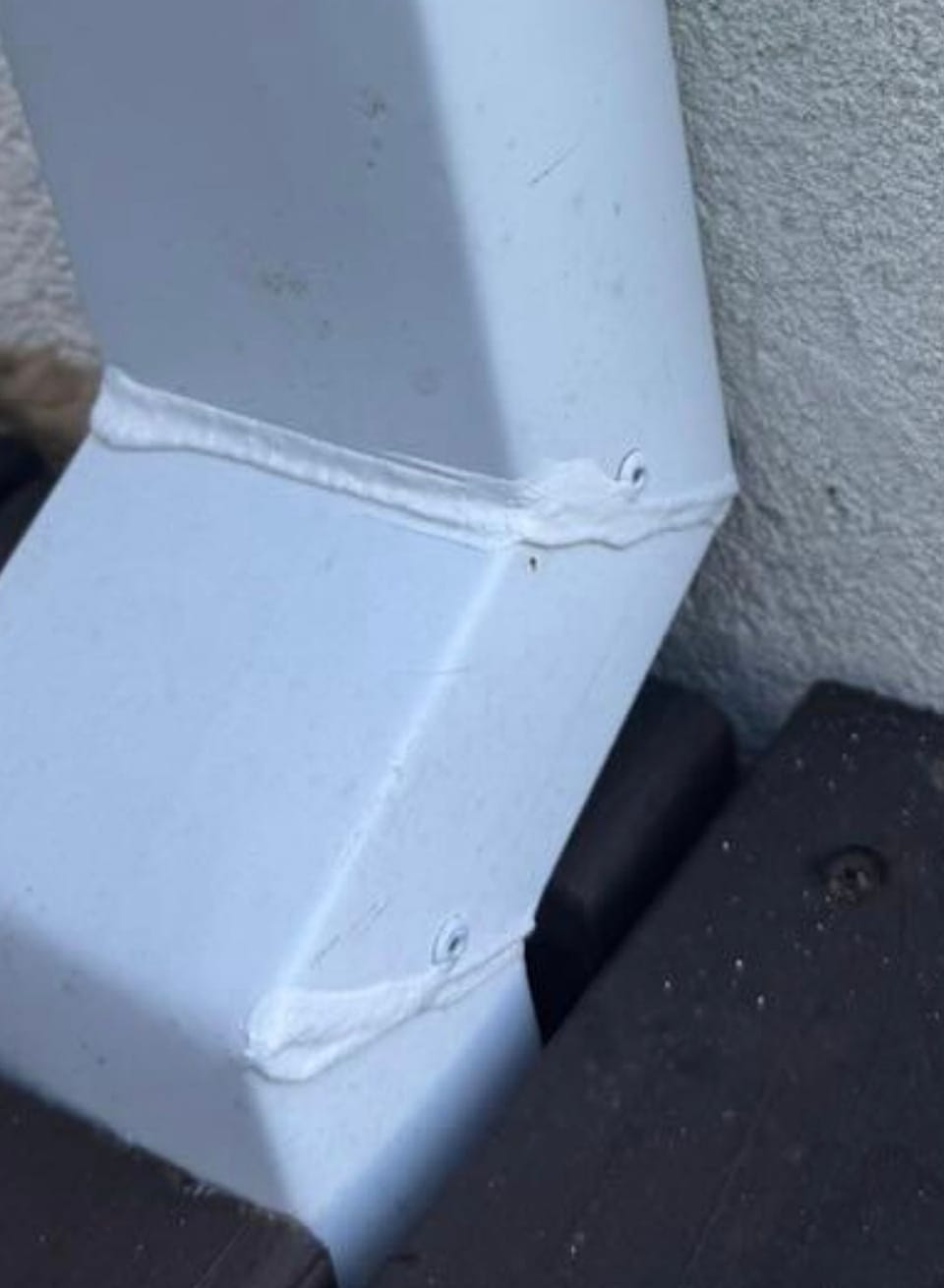
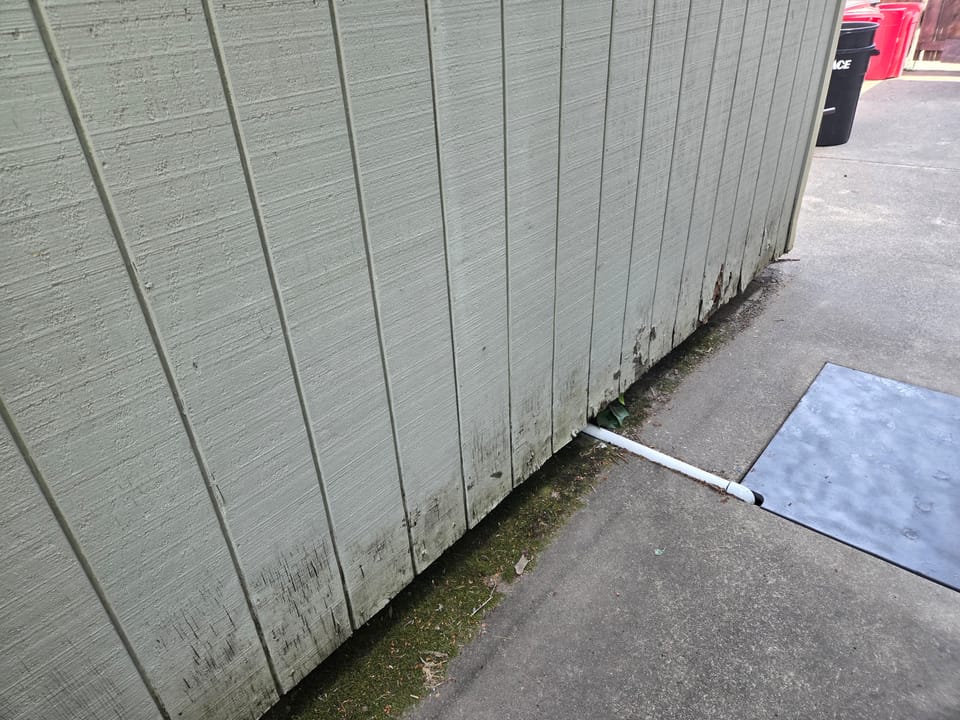
- Move the roof water. Clean and repair gutters, and check that each downspout flows during a storm.[5][3] Add an extension so the water lands well away from the wall. Our French drain guide covers how far and where to send it.
- Fix the slope. Make the ground fall away from the house on every side.[5] On the uphill side, a shallow planted ditch called a swale can carry water around the house.
- Cover the dirt. A plastic sheet on the soil, called a vapor barrier or ground cover, keeps damp soil from wetting the wood above.[3][6] Our take: don't block or seal the foundation vents on your own; ask your building department first. The code sets how much vent opening a crawl space needs, and allows less when the dirt has an approved plastic cover.[4]
- If it is groundwater, ask about a drain. A contractor can lay gravel and pipe with holes in it along the inside of the foundation, leading to a sump: a pit with a pump that pushes the water out.[9] A Delaware state guide put a crawl space system, pump and install at $2,000 to $10,000 for a 1,000 square foot house, in 2022 prices.[9] Costs here may differ, so get quotes. It may need a permit.[9] See when drainage work needs a permit here.
- Check the wood once a year. Probe sills and supports with a screwdriver for soft spots. Look for mud tubes, a sign of termites.[3] Fix the water before you replace rotted wood.[3] University of California pest experts suggest a professional termite inspection every 3 to 5 years.[8]
Where the water should go
Not into the sewer. Santa Rosa's water utility says sump pumps, downspouts and foundation drains should not be tied into the sewer. That water then has to be treated like sewage, which raises costs and can cause sewer overflows in storms.[2] Other cities have their own rules, so ask yours.
Not at the neighbors, either.[9] In Santa Rosa, street drains go to creeks, not the treatment plant.[2] See what belongs in a storm drain.
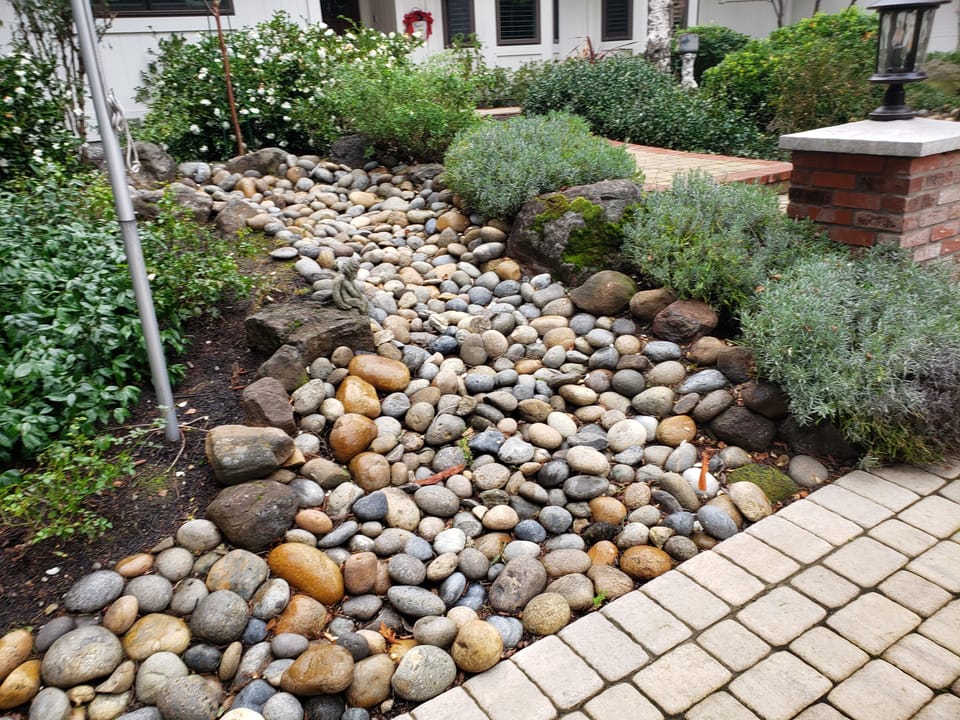
Our take: send roof and sump water to a planted spot away from the house where it can soak in, if your soil allows. It waters the yard instead of rushing to a creek. Here is how to slow it, spread it and sink it.
Who to call
- Gutters, slope, a simple swale: you, a handyman or a landscaper.
- A drain and sump: a licensed drainage or general contractor.
- Soft wood or termites: a licensed pest control company for an inspection.
- A leak: a licensed plumber.
Our guide to finding a water pro covers licenses and what to ask.
What it means for you
- Look under the house during the next big storm, and take photos.
- Move the roof water first. One downspout can drop hundreds of gallons in one spot.
- To see what your roof sheds in a storm, try the rain catch calculator.
Photos by Devan Hemmings unless noted.
Sources
- 1. NOAA California-Nevada River Forecast Center, climate station precipitation summary (Santa Rosa, Oct 1 to Nov 3, 2026; normals 1991 to 2020)
- 2. Santa Rosa Water, Collection System FAQ (inflow and infiltration, erroneous connections)
- 3. Oregon State University Extension Service, Annual home inspection for moisture, insects helps prevent costly damage
- 4. 2025 California Residential Code, Section R408, Under-floor space (text as posted by GoCodebook)
- 5. US EPA, A Brief Guide to Mold, Moisture and Your Home
- 6. USDA Forest Service, Forest Products Laboratory, Frequently asked questions: mold and moisture (archived 2013)
- 7. Carll and Highley, Decay of wood and wood-based products above ground in buildings, Forest Products Laboratory (1999)
- 8. UC Statewide IPM Program, Quick Tips: Termites (January 2026)
- 9. Delaware DNREC, I-ADAPT: Interior Drainage System with Sump Pump
Checked 2026-11-04. Rules and programs change. If something here is out of date, the source above wins. Spot an error? See our corrections policy.
Related reads
 Stormwater and drainageSlow it, spread it, sink it: downspouts, rain gardens and how big to digTurn your downspouts toward planted ground, put gravel under the roof edge, and slope the soil away from the house. Then, if a test hole drains within a day, dig a shallow rain garden: about 56 square feet for 1,500 square feet of roof draining to it.Updated Oct 19, 2026
 Stormwater and drainageWhen you need a county permit to change drainagePlanning to regrade a yard, add a drain or change how water leaves your property? In unincorporated Sonoma County, drainage work needs a county permit before you start, and moving more than 50 cubic yards of soil needs a grading permit.Updated Oct 18, 2026
 Stormwater and drainageSink it or shed it? When to keep rain on your land and when to drain itMost properties need both. Sink clean water where the soil can take it and nothing will be harmed. Shed water, slowly and safely, where soaking it in would threaten a foundation, a slope, a septic system or a neighbor. The craft is deciding which water goes where.Updated Oct 18, 2026