How to keep water out of your garage: find where it gets in, then fix that
Find where the water gets in, then fix that spot. Most garage water comes down a driveway that slopes toward the door, off a downspout that ends beside it, or through worn door seals. Move the downspouts at least 5 feet out, replace a cracked bottom seal, and add a threshold strip for a thin sheet of water. If the driveway slopes to the garage, a trench drain across it can send the water to a planted spot. For a real flood, use sandbags or barriers and lift valuables off the floor.
Listen to this article
Read aloud by an AI voice.
A hard rain drums on the garage door. Under it, a dark line creeps across the concrete toward the boxes you meant to put on shelves.
Garages let rain in for a simple reason. Most garage floors slope toward the big door on purpose, so oil and spills drain out.[1] When the driveway slopes back toward the house, rain runs the other way, straight at that door.[2]
So most fixes are outside. First, find where your water gets in.
Where does the water get in?
Most garage water comes one of three ways, numbered in the drawing. The next hard rain will show you which is yours.
- Down the driveway. Concrete and asphalt shed rain almost as soon as it lands.[3]
- Off the roof. A downspout that ends beside the door, or a clogged gutter spilling over it, drops roof water right where it can run in.[4][3]
- Through the door seals. The rubber strip along the bottom of the door shrinks over time and stiffens in the cold. Once it cracks or stops sitting flush, water gets under it.[4]
How much water paving sends your way in a 1 inch rain. Look at the bottom row: about nine 55-gallon drums.
| Paving that slopes to your door | Water in a 1 inch rain |
|---|---|
| One-car driveway, 10 by 20 feet | About 125 gallons |
| Two-car driveway, 20 by 20 feet | About 250 gallons |
| Long two-car driveway, 20 by 40 feet | About 500 gallons |
How do I stop it?
Cheapest first. Try one fix, then watch the next storm.
- Move the roof water. Clean the gutters. Then run each downspout near the garage at least 5 feet out, the building code's distance on clay that swells,[5] onto planted ground that slopes away, not onto the driveway.[6] See how far downspouts should be from the house.
- Replace a worn bottom seal. Close the door and look for daylight along the bottom and sides. Swap a cracked seal for a new rubber one that sits flush with the floor. Brush seals wear out faster.[4]
- Add a threshold strip. This is a rubber or vinyl hump glued to the floor where the door closes, so the door seals against it. Our take: it is worth it for a thin sheet of water off a driveway. It won't hold back water that is inches deep.
- Check the slope beside the garage. Soil should drop at least 6 inches over the first 10 feet from the wall.[7] Paths and patios beside it should tilt away too.[8]
- Catch driveway water before the door. If the driveway slopes toward the garage, a trench drain helps: a slotted channel cut into the paving across the driveway, at the foot of the slope.[2] A pipe carries the water to a planted spot a safe distance from the house, with a trap that holds back grit. Check it often: lift the grate and scoop out leaves and grit.[2] Cutting into the driveway is a job for a contractor.
Why a planted spot and not the street? Driveway water carries oil, grease and soap.[6] Soil can soak it up. Street drains here carry it straight to the nearest creek, untreated.[9] More in only rain down the storm drain.
What if a big storm is coming?
Seals and drains handle ordinary rain. For deeper water, here is what FEMA, the federal emergency agency, suggests before a flood:[3]
- Put temporary barriers across the door, such as sandbags or flood panels that fit the door frame. Home Ready Sonoma compares sandbags and water-activated flood barriers.
- Move valuables and electronics off the floor. Set appliances on concrete blocks.
- Clear the storm drain in front of your house.
Most homeowners policies don't cover flood damage.[10] Ask your agent what yours covers.
In Sonoma County
- Sandbags. During storms, county and city sites set out sand and bags that you fill yourself. Home Ready Sonoma lists where to fill sandbags in Sonoma County.
- Near the river? See what floods at each Russian River level.
- Before you dig. Outside city limits, ask Permit Sonoma at (707) 565-2268 whether a new drain or regrading needs a permit.[11] In a city, ask public works. Call 811 first to have buried lines marked. It is free.[12]
What it means for you
- In the next hard rain, open the garage door and find which of the three ways your water comes in.
- Start with the downspouts and the door seal. They cost the least.
- Keep boxes on shelves, off the floor, all winter.
Photos by Devan Hemmings unless noted.
Sources
- 1. 2025 California Residential Code, Section R317.1, Garages: floor surface (text as posted by GoCodebook)
- 2. Rhode Island Department of Environmental Management, Trench Drains for Sloping Driveways (fact sheet, updated 2018)
- 3. FEMA, Protect Your Home from Flooding: Low-Cost Projects You Can Do Yourself (2020)
- 4. Mehak Faisal, Water At The Bottom Of Your Garage Door? Here's Exactly What To Do, House Digest (Nov 9, 2025)
- 5. 2025 California Residential Code, Section R801.3, Roof drainage (text as posted by GoCodebook)
- 6. Sonoma Resource Conservation District and RCD of Santa Cruz County, Slow It. Spread It. Sink It. Store It! (2nd ed., June 2015)
- 7. 2025 California Residential Code, Section R401.3, Drainage (text as posted by GoCodebook)
- 8. US Department of Energy, Building America Solution Center, Patio Slabs, Porch Slabs, Walkways, and Driveways Slope Away from House (updated Sept 23, 2020)
- 9. Permit Sonoma, Pollution Prevention, Storm Water and Water Quality Programs
- 10. FEMA, Protect Your Property from Flooding (2023)
- 11. Permit Sonoma, Storm Water (Drainage) Permits
- 12. USA North 811, Every Dig. Every Time. (homeowner FAQ)
Checked 2026-11-21. Rules and programs change. If something here is out of date, the source above wins. Spot an error? See our corrections policy.
Related reads
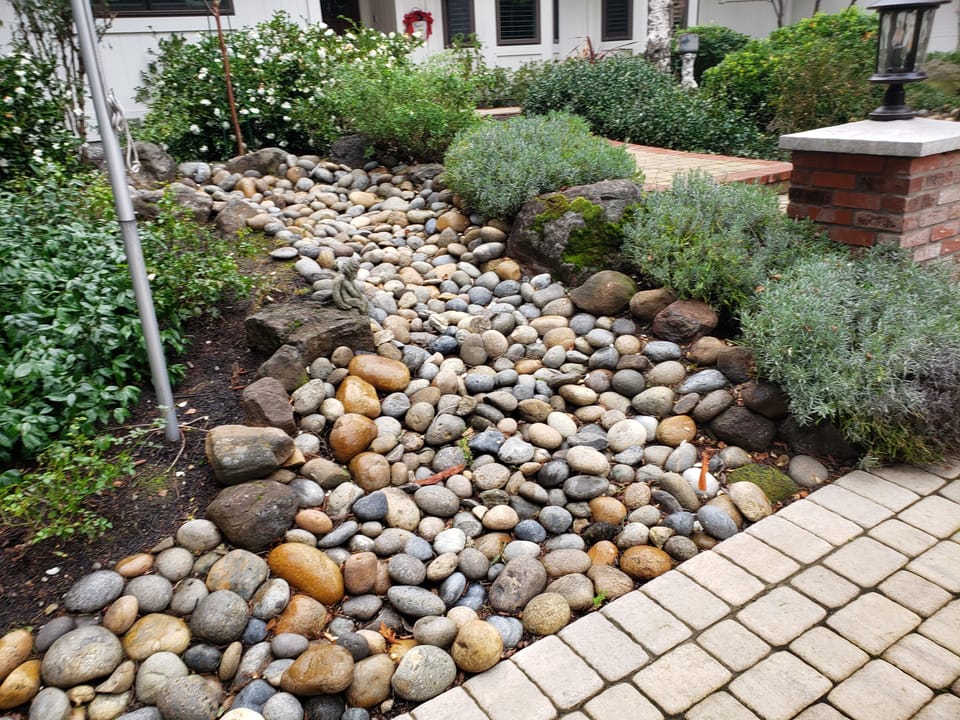 Slow it, spread it, sink it: downspouts, rain gardens and how big to digTurn your downspouts toward planted ground, put gravel under the roof edge, and slope the soil away from the house. Then, if a test hole drains within a day, dig a shallow rain garden: about 56 square feet for 1,500 square feet of roof draining to it.Stormwater and drainage · Updated Oct 19, 2026
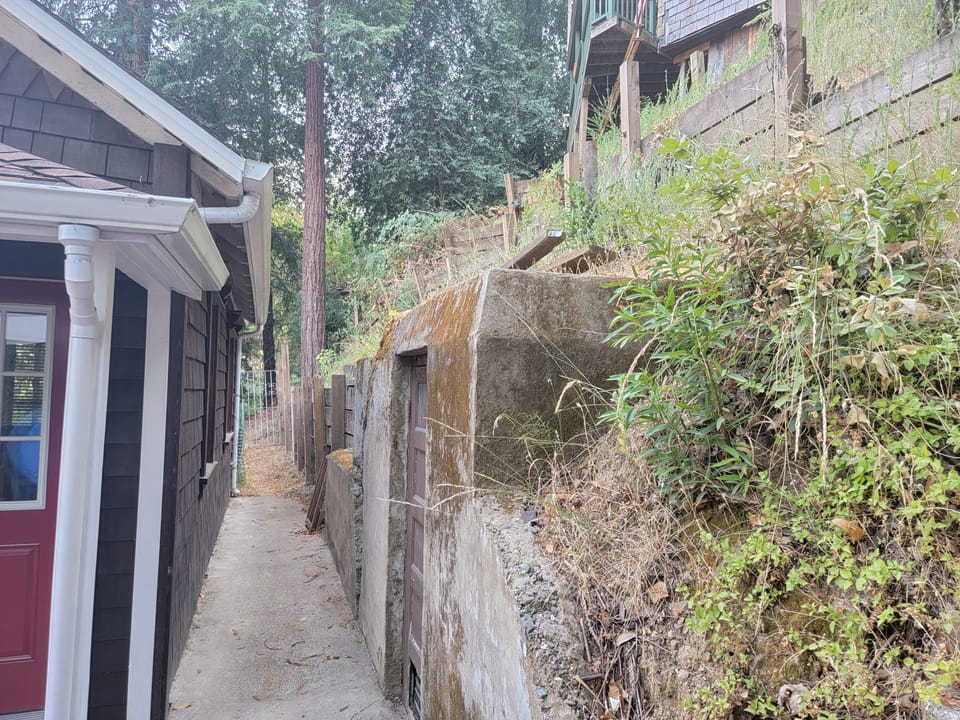 Sonoma County grading and drainage permits: when your yard project needs oneOutside city limits, Sonoma County needs a grading permit to dig out or fill in more than 50 cubic yards of soil, to go more than 3 feet deep, and for some smaller jobs on slopes or in flood zones. Building or changing a drain or ditch needs a drainage permit, except for repairs, some small pipes and ditches, and a few other cases.Stormwater and drainage · Updated Nov 21, 2026
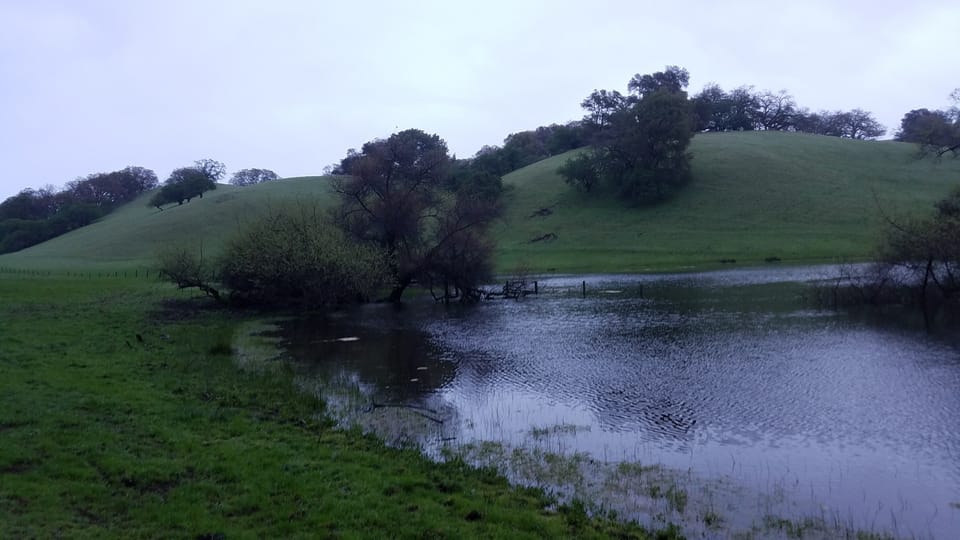 Sink it or shed it? When to keep rain on your land and when to drain itMost properties need both. Sink clean water where the soil can take it and nothing will be harmed. Shed water, slowly and safely, where soaking it in would threaten a foundation, a slope, a septic system or a neighbor. The craft is deciding which water goes where.Stormwater and drainage · Updated Oct 18, 2026