Rivers and pollutionGuide
Salmon run in Sonoma County: when and where to see salmon spawn this winter
Look for spawning salmon from late November through February, a day or two after a good storm. Chinook salmon come first, in the main Russian River and Dry Creek. Coho salmon follow in small creeks of the lower river. Steelhead trout run into spring. The surest place to see big fish up close is the fish hatchery at Lake Sonoma, especially January through March.
Is it too early to look? Probably, until the rain comes.
Salmon can't reach most of their spawning creeks until storms fill them. Last year is a good example. Crews from Sonoma Water, the county's water agency, started their creek surveys on November 17, 2025, right after a string of storms reconnected the creeks to the river. A few dry weeks later, some creeks were cut off again.[1]
So the salmon run here isn't a date on the calendar. It's a few weeks of good water, and you have to watch the weather.
Here is when to look, where to go, how to tell the fish apart, and how a river that nearly lost its coho is slowly getting some back.
When do salmon spawn in Sonoma County?
Three kinds of fish come up the Russian River to spawn, meaning to lay and fertilize their eggs. Each has its own season.
The calendar shows the usual months. The blue bar is coho. Coho stay by their nests until they die, so they are the easiest to spot.
- Chinook salmon come first. They spawn from November through January, in the main river and in Dry Creek below Lake Sonoma.[2]
- Coho salmon come next. They spawn from mid-November through February.[3] In the winter of 2023/24, survey crews saw the first coho nests on December 20, and the busiest time was early January.[4]
- Steelhead come last. Steelhead are the sea-run form of rainbow trout. They spawn from January to mid-April.[3]
Go one to three days after a good rain.[5] Rain lets fish swim up the creeks.[1] If you see nothing, try again after the next storm.[6]
See what El Niño could mean for Sonoma County this winter.
Where can I see salmon spawning near me?
Many coho creeks here run through private land. Scientists count fish there with permission from more than 500 landowners.[7] So pick a public spot, and stay off private banks.[6]
- Warm Springs Fish Hatchery, at Lake Sonoma near Geyserville. This is the surest place to see big fish up close. Adult steelhead are easiest to see there from January through March.[8] Its fish ladder, a set of seven water steps the fish jump up, opens by mid-October.[3] The hatchery is about 11 miles up Dry Creek Road from Healdsburg.[3] Visitor center: 3288 Skaggs Springs Road, open daily, 10 a.m. to 4 p.m. Call (707) 431-4533 before you go.[8][3]
- Lagunitas Creek, in Marin County. It has the largest coho run on the Central California Coast.[9] The Marin Municipal Water District opens a parking area at the Leo T. Cronin Fish Viewing Area, by Shafter Bridge on Sir Francis Drake Boulevard, from December through February.[5] Spawning there usually peaks in December and January.[9] SPAWN, a local nonprofit, leads public salmon walks.[5]
- From a public road or bridge. In the lower Russian River, coho come back to Willow, Dutch Bill, Green Valley and Mill creeks. NOAA Fisheries, the federal agency that protects salmon, hopes these four can become coho strongholds.[10] Look only from public places, and never cross a fence.[6]
- From your couch. Sonoma Water posts its fall fish counts from an underwater camera on the river.[2] California Sea Grant, the university program that tracks local coho, shares videos of salmon spawning in local creeks.[11]
How do I tell the fish apart?
Start with where you are. Chinook spawn in the main river and in Dry Creek.[2] Coho spawn mostly in small side creeks. Many of these are downstream of Mirabel, where Sonoma Water keeps an underwater fish camera.[2][10]
- Coho: Spawning males turn bright red and grow a hooked jaw. Females are dark red.[9] On a dead fish, look in the mouth: coho have a black mouth with white gums.[12]
- Steelhead: Lighter in color, often pink and olive, with a bright pink stripe along the side.[9]
- Who you'll see most: Coho stay and guard their nests until they die, sometimes for a week or longer. Steelhead spawn quickly and leave, and some go back to sea to spawn again.[9] So coho are easier to spot.
How close did the river come to losing its coho?
The Russian River once had perhaps 20,000 coho.[7] By 2004, when California Sea Grant began its counts, only a small handful came back to the whole watershed each winter.[12]
Coho live short lives on a tight schedule. They hatch in a creek, head out to sea, and come home after about 18 months in the ocean to spawn once.[7][12] Every coho dies after spawning.[9]
That schedule makes them fragile. One bad year can hurt a whole generation. Coho have a three-year life cycle. The three-year-olds that came home in the winter of 2017/18 had hatched in 2015, a drought year when creeks dried out. Few of them made it back.[12]
In 2001, state and federal agencies started a coho rescue program at the Lake Sonoma hatchery. Young wild coho are caught, raised to adults and spawned there. Their young are released into creeks that once had coho.[7] NOAA counts these hatchery-raised coho as part of the endangered population.[13]
Here is where that work stands. Look at the three blue bars at the bottom, then at the goal above them.
- The goal is far off. NOAA's recovery target is 10,100 adult coho each winter, three winters in a row.[11][12] In the winter of 2023/24, about 825 hatchery-raised coho came back, the most since the count began.[4] That is about 8% of the goal. Wild-born coho are extra.[4]
- Years swing a lot. The winter before, the estimate was 165.[14]
- Still, they turn up widely. In the winter of 2023/24, crews found adult coho or their nests in 20 of the 30 creeks they surveyed.[4]
- The winter of 2024/25 was better still. Crews estimated 417 coho nests across the basin. That is the most since basin-wide counts began in 2014, and nearly four times the average. In four lower river creeks, adult coho more than doubled the old record.[15]
A good fall for Chinook
Chinook tell a happier story right now. They are wild fish. No hatchery raises Chinook in the Russian River.[2]
Sonoma Water has an inflatable dam on the river at Mirabel. It is up through the fall and lowered for winter. An underwater camera in the fish ladder beside it counts the Chinook that swim past, but only while the dam is up.[2] Look at the blue bar at the right end.
- 2025 was strong. The preliminary count was 4,175 adults, the fifth highest in 23 years of counts and about 60% above the average of 2,633.[2]
- The real number is likely higher. The camera came out early, on November 13, when the dam went down. Fish that passed after that were not counted.[2]
- Lean years happen too. In 2020, the count was 626.[15]
Chinook eggs sit in the gravel for about two months before the young fish come out. Most of those young reach the ocean by July.[2] That is why staying out of the water matters all winter.
How to watch without hurting them
All three fish are listed under the federal Endangered Species Act. Coho are endangered and steelhead are threatened.[10][13] It is illegal to harm or harass coho.[9][13] Treat every salmon you see as protected.
- Stay out of the water. A salmon nest, called a redd, is a patch of gravel with eggs buried in it. One step can crush them.[9][6]
- Move slowly and stand quietly at the edge. Quick moves startle fish.[6]
- Bring polarized sunglasses and binoculars. They cut the glare and let you watch from farther back.[6][9]
- Leave dead salmon where they are. Their bodies feed the creek, the plants and the next generation of fish.[6][9]
- Leave the dog at home, or keep it out of the creek.[9][6]
- Stay on the trail. A new path down a bank sends mud into the gravel, and mud robs eggs of oxygen.[9] See how fine sediment hurts salmon eggs.
Can I fish for them?
Not for coho. Catching or harming them is illegal.[9] Other fishing on the main river and some creeks also shuts down when the water is low.
From September 1 to April 30, the state closes the main Russian River, Santa Rosa Creek, lower Salmon Creek and the Laguna de Santa Rosa, a large wetland near Santa Rosa, to fishing when flows are low. It updates the status three times a week, based on the flow forecast.[16] At the end of October 2026, all of them were closed.[16] Check the state's low-flow page before you go. For Chinook and steelhead, check the state's fishing rules too.
What does your yard have to do with salmon?
More than you might think. Willow, Dutch Bill, Green Valley and Mill creeks are the four NOAA hopes will become coho strongholds. In all four, NOAA says too little water is one of the biggest problems. Young coho live in those creeks through the summer.[10]
Our take: the most useful thing a home can do for salmon happens in summer, not in spawning season. Young coho need water in the creeks all summer. So catch rain in winter, then use less water in late summer, when creeks are lowest.
- Store winter rain for summer. Try the rain calculator. Or read how creek water rights work, and why roof rain is different.
- Keep soil on your land. See how to stop erosion on a slope.
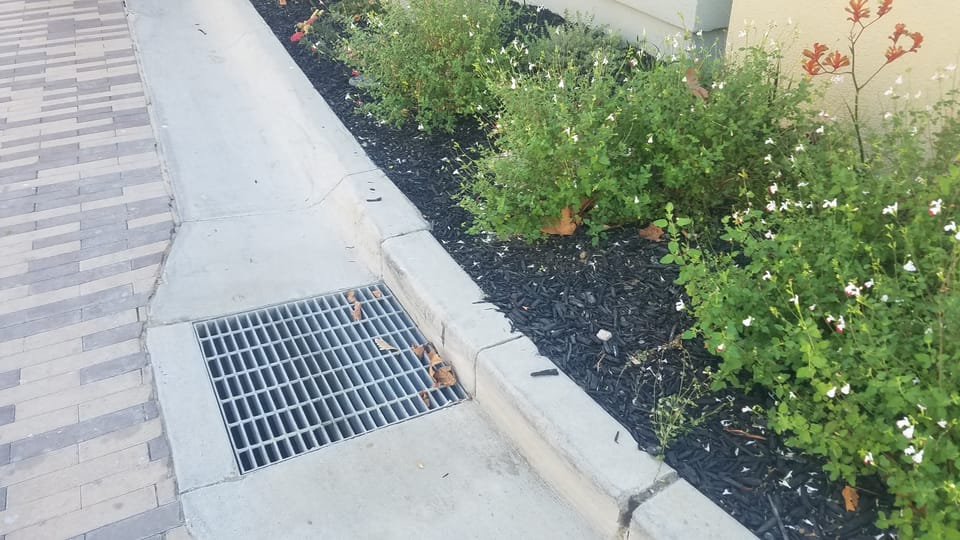
- Keep soap, paint and yard chemicals out of the street gutter. See where storm drains go, and what not to pour down them.
- Live on a creek? See how to heal a creek bank with willows.
- Want to help count or plant? See getting involved in your watershed.
What it means for you
- Watch the forecast, not the calendar. Go one to three days after a good storm, from late November into February.
- For a sure thing, go to Lake Sonoma. The visitor center is open daily, 10 to 4, and steelhead are easiest to see January through March.
- Stay out of the water. Eggs sit in the gravel for about two months after spawning.
- Our take: help the summer creek. Catch winter rain now, so you need less water in August.
Next: see how the Russian River's dams and flows work, or use the watershed finder to see which creek your rain runs to.
Photos by Devan Hemmings unless noted.
Sources
- 1. Sonoma Water, update on salmon surveys and river operations for its advisory committees (January 5, 2026)
- 2. Sonoma Water, Chinook Salmon in the Russian River (video counts at the Mirabel fish ladder, 2000 to 2025)
- 3. California Department of Fish and Wildlife, Warm Springs (Don Clausen) Fish Hatchery
- 4. California Sea Grant and Sonoma Water, Coho Salmon and Steelhead Monitoring Report: Winter 2023/24 (July 2024)
- 5. National Park Service, Point Reyes National Seashore: Viewing Coho Salmon
- 6. Washington Department of Fish and Wildlife, Salmon Viewing (viewing tips)
- 7. California Sea Grant, Recovery program sets up coho salmon rebound (June 22, 2014)
- 8. Sonoma Water, Steelhead School Tours at the Lake Sonoma Visitor Center and Warm Springs Hatchery
- 9. Turtle Island Restoration Network (SPAWN), Where to See Salmon Spawn in Marin County
- 10. NOAA Fisheries, Salmon Habitat Restoration Priorities in the Lower Russian River
- 11. California Sea Grant, Russian River Salmon and Steelhead Monitoring: Adult Returns
- 12. California Sea Grant, Russian River coho salmon continue their comeback (August 24, 2018)
- 13. NOAA Fisheries, Central California Coast Coho Salmon
- 14. California Sea Grant, Russian River Salmon and Steelhead Monitoring, 2022/23 Winter Monitoring Report
- 15. Sonoma Water, Russian River salmon monitoring report, 2024 to 2025
- 16. California Department of Fish and Wildlife, Low Flow Fishing Regulations: Central Coast (status of waters)
Checked 2026-10-31. Rules and programs change. If something here is out of date, the source above wins. Spot an error? See our corrections policy.
Related reads
 Rivers and pollutionHow the Russian River works: dams, minimum flows and floodsTwo dams store winter rain and release it in summer. Sonoma Water draws the water from wells beside the river for over 600,000 people. The state sets how much must stay in the river.Updated Oct 18, 2026
 Rivers and pollutionOnly rain down the storm drainStorm drains carry water straight to the nearest creek. It is not treated. Only rain should go down them.Updated Oct 11, 2026
 Rivers and pollutionEl Niño and Sonoma County water: the river, the reservoirs and your rainNOAA says a strong to very strong El Niño is likely this winter, which tilts California toward a wet one. On the Russian River, strong El Niño winters brought a major flood at Guerneville in 3 of 9 cases since 1951, about twice the usual rate, but the worst floods came in other winters. Get ready for high water and plan to keep some of the rain.Updated Oct 18, 2026