
How does a sump pump work? And do you need one?
A sump pump sits in a pit at the lowest point of a basement or crawl space. Groundwater drains into the pit, a float turns the pump on as the water rises, and the pump pushes the water outside through a pipe. You may need one if water collects under your house in wet weather and the ground is too flat to drain it away. Where the water may go depends on where you live.
Listen to this article
Read aloud by an AI voice.
In many houses, a motor below the floor hums for a bit, then goes quiet. Later it hums again. Nobody upstairs gives it a thought, which is exactly how a sump pump likes it.
Until the night it stops.
How does a sump pump work?
Its job is groundwater: water soaked into the soil around your house. The level below which the ground is full of water is called the water table, and it rises in wet seasons.[1]
Follow the numbers in the drawing. Water comes in at 1 and leaves at 6.
- Water drains in (1). Pipes with holes, often called drain tile, run along the bottom of the foundation. They collect groundwater and carry it to the sump, a pit set into the lowest floor.[2]
- The pit fills (2). A pit is usually about 2 feet across and holds about 15 to 25 gallons between runs, three to five big buckets.[2]
- A float turns the pump on (3). As the water rises, the float rises with it and switches the pump on. When the water drops, the pump shuts off.[3]
- The pump pushes the water out (4 to 6). It goes up a pipe and outside. A check valve on that pipe, a one-way flap, stops the water in the pipe from falling back into the pit. Without one, the pump turns on and off more than it needs to and wears out sooner.[2]
Some pumps sit underwater in the pit. Others keep the motor on a post above it. Either works if it is kept up.[3]
Do you need a sump pump?
Mostly if groundwater is your problem. Water gets into basements and crawl spaces three main ways: rain running in from the yard, a high water table, or a flood.[1] A sump pump is mainly for the high water table, though FEMA also suggests one as part of flood-proofing a basement.[4]
Rain running in from the yard has simpler fixes. Slope the ground away from the house and carry downspout water away.[1] Here is how far downspouts should reach.
And if your lot slopes enough, you may not need a pump at all. A drain pipe can carry the water downhill to open ground on its own. Gravity needs no power, so it is more reliable than pumping. A pump is for lots too flat for that.[1]
Crawl spaces get them too. A contractor lays gravel and pipe with holes along the inside of the foundation, leading to a sump.[1][5] Delaware's state estimate for a 1,000 square foot house was $2,000 to $10,000, in 2022 dollars.[5]
Our take: consider a pump if water still stands under your house after storms once the downspouts and slope are fixed. Our guide to water in the crawl space helps you find the source first.
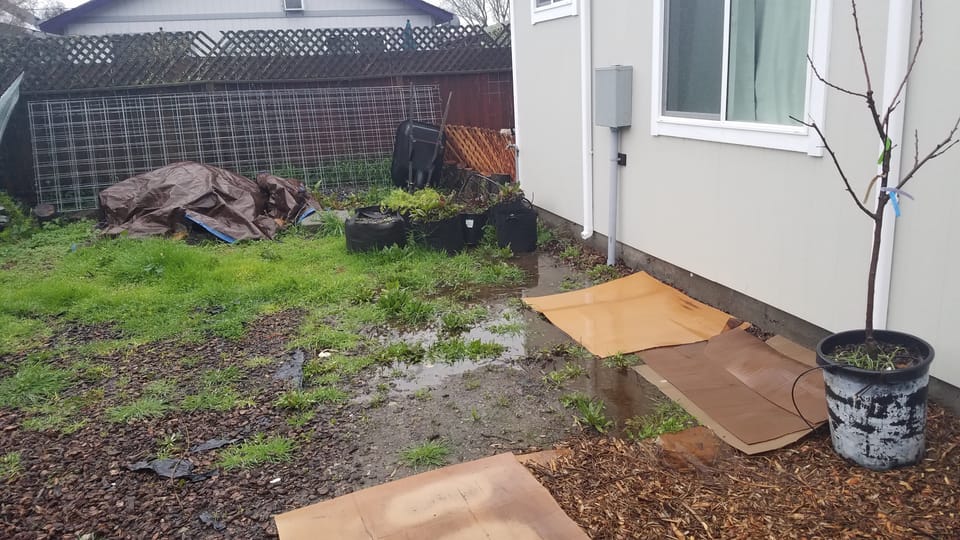
Where should a sump pump drain?
Outside, and well away from the house. NDSU Extension, North Dakota's farm and home advice service, suggests putting the end of the pipe at least 20 feet out, where the water flows away from the foundation. Keep it off your neighbor's lot and out of window wells.[2]
Two places it should never go:
- The sewer or a floor drain. In a storm, one sump pump can send as much water into the sewer as 40 homes do on a typical day, a Minnesota sewer agency says. That extra water can back sewage up into your house or a neighbor's. It may be against the rules where you live; around Minneapolis and St. Paul it is illegal.[6][2]
- A septic drainfield, also called a leach field: the buried pipes where septic water soaks into the soil. It is already soaked in wet weather, and extra water slows or stops the treatment.[7][2]
Rules differ by city and county, so ask your city or county what it allows.
Our take: aim the pipe at a planted spot downhill where the water can soak in. It waters the yard instead of rushing to the street. Here is how to help rain soak into your land.
What if the power goes out?
Then the pump stops. Power loss is one way pumps fail. A stuck float or a clog can stop one too.[8]
Backups, from simplest to most work. Our take: if you do just one, start with the alarm. It won't move water, but it tells you the pump has stopped.
- A high water alarm. It sounds when the water rises past where the pump should have started. Simple ones cost as little as $10.[8]
- A spare pump kept beside the pit, ready to swap in. You have to be home to do it.[8]
- A battery backup pump. It sits in the same pit and starts on its own. It pumps at about a third of the main pump's speed or less, and runs about 7 to 24 hours on a charge. Ann Arbor, Michigan's guide says the battery needs replacing every three years.[8]
- A water-powered backup. It runs on city water pressure, using about 2 gallons of tap water for every gallon it pumps out. It needs a backflow device to keep sump water out of the drinking water supply.[8]
- A generator, to keep the main pump running through a long outage.[8][5]
How do you test a sump pump?
All it takes is a bucket of water. Test it before your wet season. While the ground stays wet, check it monthly or even weekly.[1]
- Check the outside end. Make sure the pipe isn't plugged or frozen shut, and still points away from the house.[2]
- Check the plug. The pump should be plugged in, ideally to a ground fault (GFCI) outlet, the kind with a test button.[2]
- Look in the pit. Lift the lid and shine a flashlight in. The pit should be clean, with nothing blocking the pump's intake.[2]
- Pour in water. Slowly pour in water, about 5 gallons, until the float starts the pump. Watch it start and stop. Make it run at least twice.[2][3]
If it sounds like it is pumping gravel, or the float is slow to react, the pump or float may need replacing.[3] A licensed plumber can also check it for you.[3]
In Sonoma County
- Not into the sewer. Santa Rosa Water says sump pumps must not connect to the sewer. Their water should go to the storm drain or soak into the ground.[9] Other cities and the county set their own rules, so check with yours.
- Street drains lead to creeks. Permit Sonoma says outdoor drains carry water straight to the nearest creek, untreated.[10] Keep soil and anything else out of that water. See what can and can't go down a storm drain.
- Adding a drain and sump? It may need a permit. See when drainage work needs a county permit.
- On septic? Our septic guide covers keeping winter water off the leach field.
What it means for you
- Have a pump? Do the bucket test before your wet season.
- No pump, but a wet basement or crawl space? Fix the downspouts and the slope of the yard first.
Photos by Devan Hemmings unless noted.
Sources
- 1. Kansas State University Research and Extension, Dry Basements and Crawl Spaces (2008)
- 2. NDSU Extension Service, Sump Pump Questions
- 3. NDSU Extension, Now Is the Time to Check Your Sump Pump (March 17, 2022)
- 4. FEMA, Protect Your Property From Flooding (2023)
- 5. Delaware DNREC, I-ADAPT: Interior Drainage System with Sump Pump
- 6. Metropolitan Council (Minnesota), Protecting your health and home: reducing inflow and infiltration
- 7. US EPA, How to Care for Your Septic System (updated August 17, 2026)
- 8. City of Ann Arbor, Michigan, Sump Pump Backup Options
- 9. Santa Rosa Water, Collection System FAQ (inflow and infiltration, erroneous connections)
- 10. Permit Sonoma, Pollution Prevention, Storm Water and Water Quality Programs
Checked 2026-11-13. Rules and programs change. If something here is out of date, the source above wins. Spot an error? See our corrections policy.
Related reads
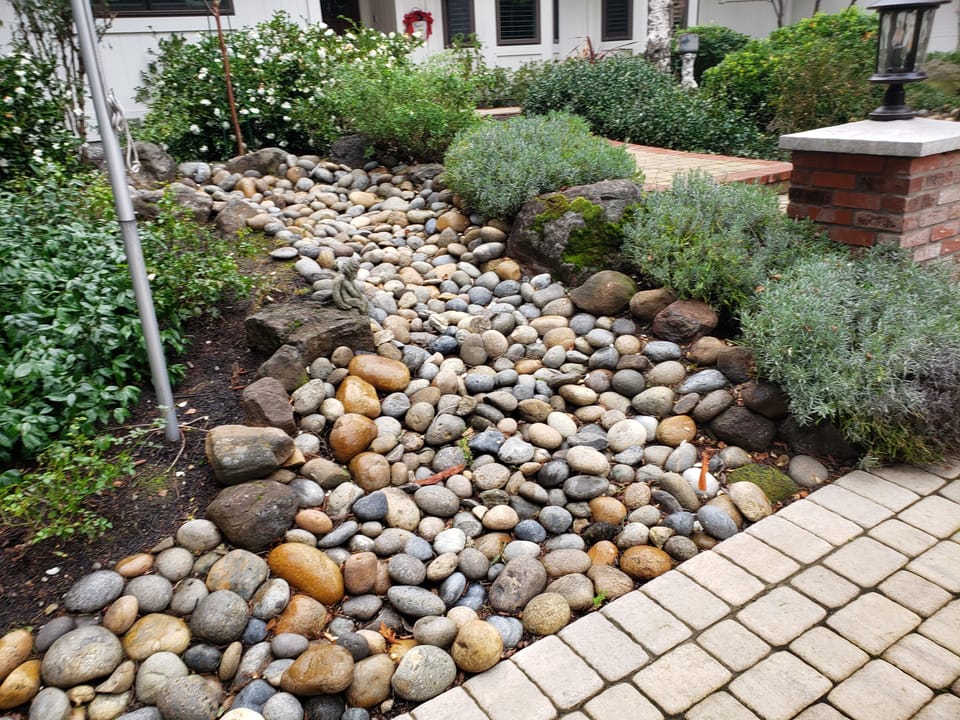 Stormwater and drainageSlow it, spread it, sink it: downspouts, rain gardens and how big to digTurn your downspouts toward planted ground, put gravel under the roof edge, and slope the soil away from the house. Then, if a test hole drains within a day, dig a shallow rain garden: about 56 square feet for 1,500 square feet of roof draining to it.Updated Oct 19, 2026
 Stormwater and drainageWhen you need a county permit to change drainagePlanning to regrade a yard, add a drain or change how water leaves your property? In unincorporated Sonoma County, drainage work needs a county permit before you start, and moving more than 50 cubic yards of soil needs a grading permit.Updated Oct 18, 2026
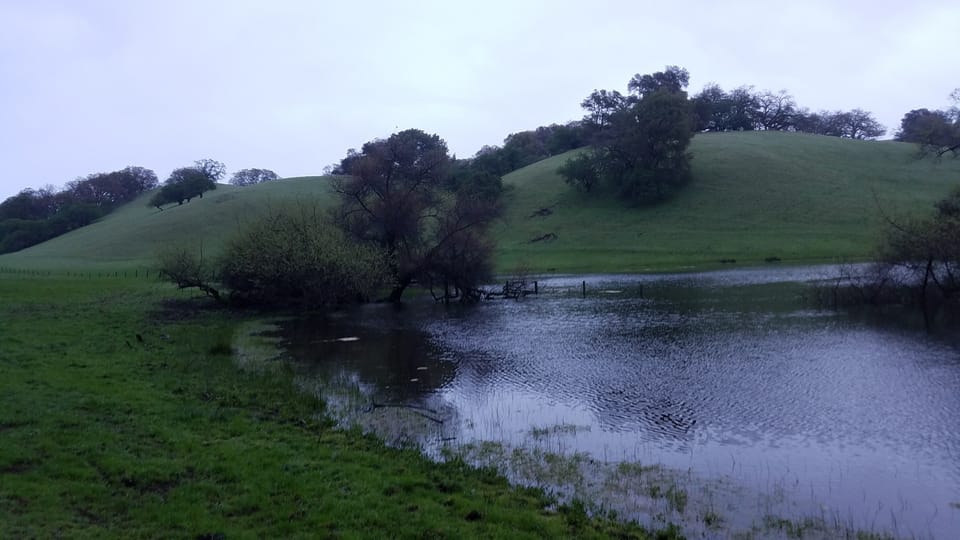 Stormwater and drainageSink it or shed it? When to keep rain on your land and when to drain itMost properties need both. Sink clean water where the soil can take it and nothing will be harmed. Shed water, slowly and safely, where soaking it in would threaten a foundation, a slope, a septic system or a neighbor. The craft is deciding which water goes where.Updated Oct 18, 2026