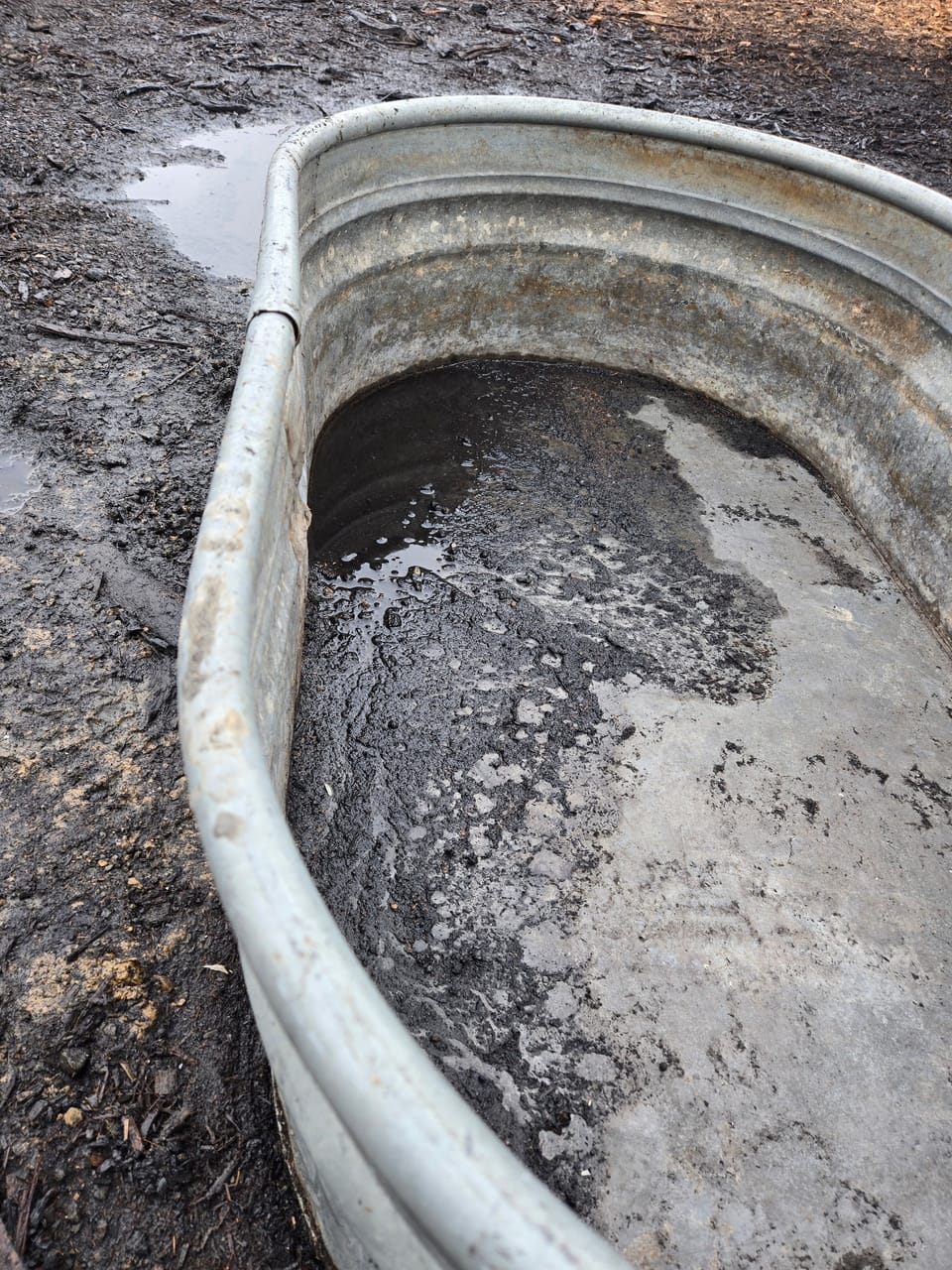
Standing water in your yard after rain: is it normal, and how do you fix it?
Puddles that soak in within a day or two after a big storm are normal. A good rule of thumb: water still standing on day 3 points to a drainage problem, and water that sits for days can breed mosquitoes. The usual causes are a downspout aimed at a low spot, packed soil or clay. Fix the cheap things first: move the roof water, fill the dip, loosen the soil. Water that stands when it hasn't rained can mean a leak or a failing septic system.
Listen to this article
Read aloud by an AI voice.
A puddle in the yard is the ground saying one thing: water is arriving faster than the soil can take it in.
Usually that's fine. Sometimes it's a problem you can fix in an afternoon. Here is how to tell which, and what to do.
How long is too long?
Rain gardens, beds dug on purpose to hold rain, are built to empty within 24 to 48 hours, partly so mosquitoes can't breed in them.[1]
Our take: use the same yardstick on your lawn, with a day of slack. Water still standing on day 3 is a drainage problem worth fixing.
Is standing water bad?
A day or two of it, no. Any longer, and it can cause three kinds of trouble.
- Mosquitoes. They lay eggs on or near water. Depending on conditions, an egg can become a flying adult in as little as 4 days, though two weeks is typical.[2]
- Sick grass and plants. Roots need air. Soil that stays soaked starves them, so plants grow shallow roots and can rot.[3][4]
- Your house. Water that collects around the foundation can get into the house and feed mold.[5][6] Fix water near the house before anything else. See water in the crawl space after rain.
Why does my yard hold water?
- Roof water. One inch of rain on a 1,000 square foot roof is about 623 gallons. A downspout drops all of it in one spot.
- A low spot. Water runs downhill and stops at the lowest place it can find.[3]
- Packed soil. Construction equipment and even foot traffic squeeze out the gaps that let water soak in.[3][7]
- Clay or a hard layer. Clay has tiny pores, so water moves through it slowly. Some yards also have hardpan, a packed layer below the surface that water can't get through.[3][7]
- A high water table, the level where the ground is already full of water. In some places it rises close to the surface in the wet season.[3][8]
- Too much watering. Sprinklers cause many drainage problems.[3]
Roof water plus slow soil is why a puddle lasts. The chart follows one downspout's water into one low spot. Look at how much longer it sits on slow soil.
On slow soil, one downspout can keep a low spot wet past day 3.[7][8]
How do I find the cause?
- Walk the yard in a storm. Once a few good rains have soaked the ground, go out during the next one. Note where water comes from and where it stops.[6]
- Test how fast the soil drains. A few dry days after the storm, dig a hole 12 inches deep and fill it with water. Let it drain, fill it again, and measure how far the water drops in 15 minutes. Multiply that drop by 4 to get inches per hour. Under 1 inch an hour is poor drainage.[7] Under a tenth of an inch is very slow, like the bottom bar in the chart.[8]
- Check for water from below. After a wet stretch, dig a hole at least 2 feet deep. If water seeps in from the sides or bottom, the water table is high.[8]
How do I get rid of standing water?
Cheapest first.
- Move the roof water. Extend downspouts away from the house onto planted ground, not toward a low spot or a neighbor.[6] See how far downspouts should be from the house.
- Fill the low spot. Lift the sod over the dip, spread a mix of half sand, half topsoil, and rake it level.[9] Near the house, building codes call for the ground to drop at least 6 inches over the first 10 feet.[10][5]
- Loosen packed soil. Rent a core aerator, a machine that pulls small plugs of soil from the lawn. Go over the lawn until the holes are about 2 inches apart.[3] Work compost into beds, and stay off soil while it's wet.[3][7]
- Water less. If sprinklers keep a spot soggy, cut back while rain is frequent.[3]
- Catch the water uphill. A rain garden soaks up roof water before it reaches the soggy spot. Don't dig it in the spot that already floods.[1] Keep it at least 10 feet from the house and 20 feet from a basement.[1] Guides put the distance from a septic drainfield at 25 to 40 feet.[1][6] Our take: use 40.
- Bigger fixes come last: regrading, or a buried gravel drain. See do you need a French drain? Where the water table is high, raised beds may be the real answer. Hardpan can be broken up by deep digging or boring holes through it.[3] Before any digging, call 811 to have buried utility lines marked.[1]
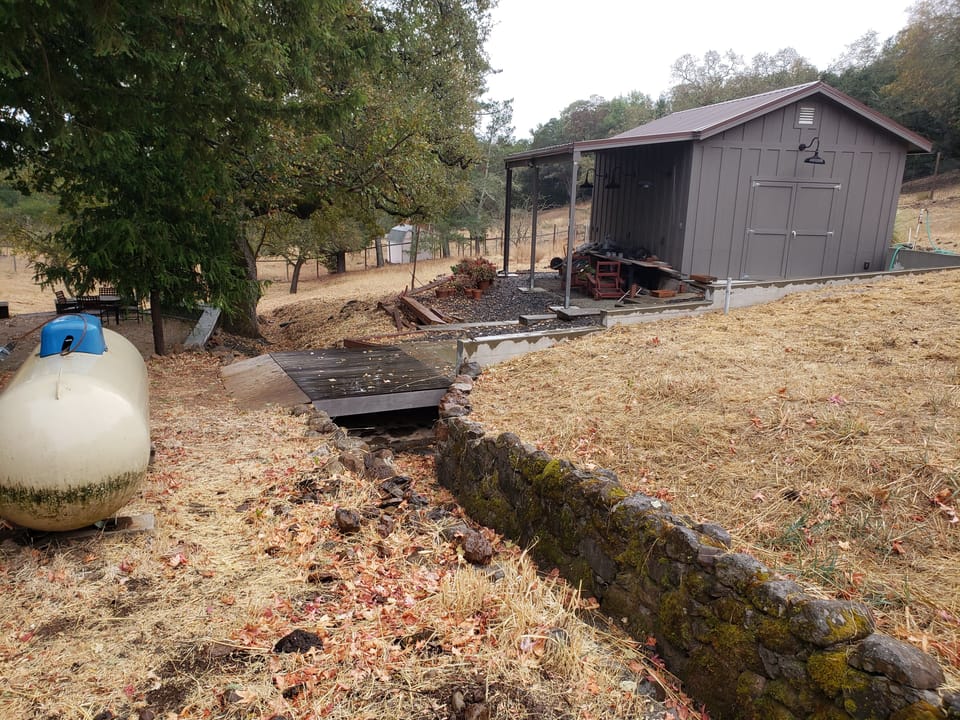
Standing water when it hasn't rained?
Then it's coming from somewhere else. Two common culprits:
- A leak. A wet spot, small hole or sunken patch can mean a leak in the buried pipe from the water meter to the house, or in a sprinkler line.[11] Here is how to find a water leak underground.
- A septic system. Wet spots, sewage smells or bright green, spongy grass over the septic tank or drainfield (the buried pipes that spread wastewater into the soil) in dry weather are signs of failure.[12] Stay out of it, and call a septic service or your local health department.[12] More: how often to pump a septic tank.
In Sonoma County
- Slow soil is common. About 7 in 10 acres here take in water slowly or very slowly, by our count of the county soil map.[13] Rain that soaks in on your land is also kinder to our creeks: see slow it, spread it, sink it.
- Mosquito help. Anything holding water 4 to 7 days can raise mosquitoes, the local district says. If you have water you can't drain, the Marin/Sonoma Mosquito and Vector Control District will send a technician at no extra cost. Call (707) 285-2200.[14]
- Permits. Outside city limits, most drainage work needs a county permit unless it is exempt. Call Permit Sonoma at (707) 565-2268 before you regrade or bury a drain.[15] In a city, ask public works.
- Calling 811 before you dig is the law in California, and free.[16]
What it means for you
- After your next big storm, count the days. Still wet on day 3? Walk the yard in the next rain and follow the water back to its source. Often it's a downspout.
- Fix the cheapest thing first, then wait for the next storm to see if it worked.
Photos by Devan Hemmings unless noted.
Sources
- 1. Purdue Extension and Illinois-Indiana Sea Grant, Introduction to Rain Garden Design, ID-533-W (March 2023)
- 2. US EPA, Mosquito Life Cycle (updated January 23, 2026)
- 3. Colorado State University Extension, Soil Drainage (GardenNotes #219, updated Oct 20, 2025)
- 4. UMass Amherst Center for Agriculture, Food, and the Environment, What's Wrong With My Lawn?
- 5. US EPA, A Brief Guide to Mold, Moisture and Your Home
- 6. Sonoma Resource Conservation District and RCD of Santa Cruz County, Slow It. Spread It. Sink It. Store It! A Homeowner's Guide to Beneficial Stormwater Management (2nd ed., June 2015)
- 7. University of Illinois Extension, Improving Soil Drainage (May 13, 2022)
- 8. Washington State University Extension, Hedgerows: Soils, Drainage, Subsurface Water
- 9. Ask Extension, Grass over grass, answer #870648 (May 30, 2024): leveling a low spot in a lawn
- 10. 2025 California Residential Code, Section R401.3, Drainage (text as posted by GoCodebook)
- 11. Arizona Municipal Water Users Association, Smart Home Water Guide: Outdoor Visual Leak Inspection
- 12. US EPA, Resolving Septic System Malfunctions (updated March 11, 2026)
- 13. Sonoma County GIS, Soil Survey Geographic Database (SSURGO) layer from USDA NRCS, our calculation (queried Oct 21, 2026)
- 14. Marin/Sonoma Mosquito and Vector Control District, When To Call the District
- 15. Permit Sonoma, Storm Water (Drainage) Permits
- 16. USA North 811, Every Dig. Every Time. (homeowner FAQ)
Checked 2026-11-17. Rules and programs change. If something here is out of date, the source above wins. Spot an error? See our corrections policy.
Related reads
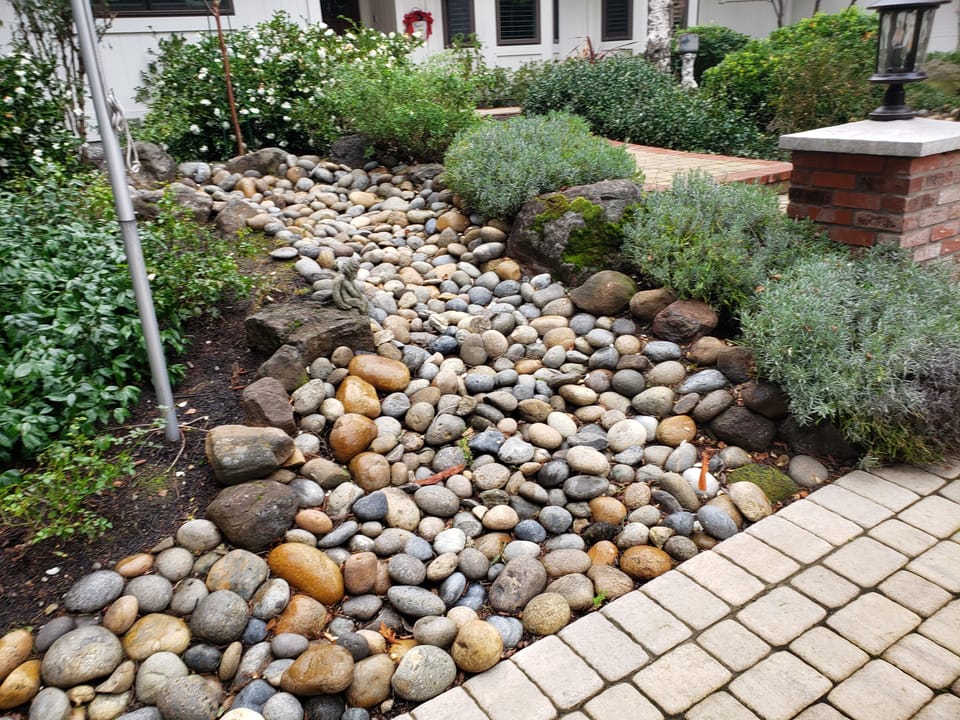 Stormwater and drainageSlow it, spread it, sink it: downspouts, rain gardens and how big to digTurn your downspouts toward planted ground, put gravel under the roof edge, and slope the soil away from the house. Then, if a test hole drains within a day, dig a shallow rain garden: about 56 square feet for 1,500 square feet of roof draining to it.Updated Oct 19, 2026
 Stormwater and drainageWhen you need a county permit to change drainagePlanning to regrade a yard, add a drain or change how water leaves your property? In unincorporated Sonoma County, drainage work needs a county permit before you start, and moving more than 50 cubic yards of soil needs a grading permit.Updated Oct 18, 2026
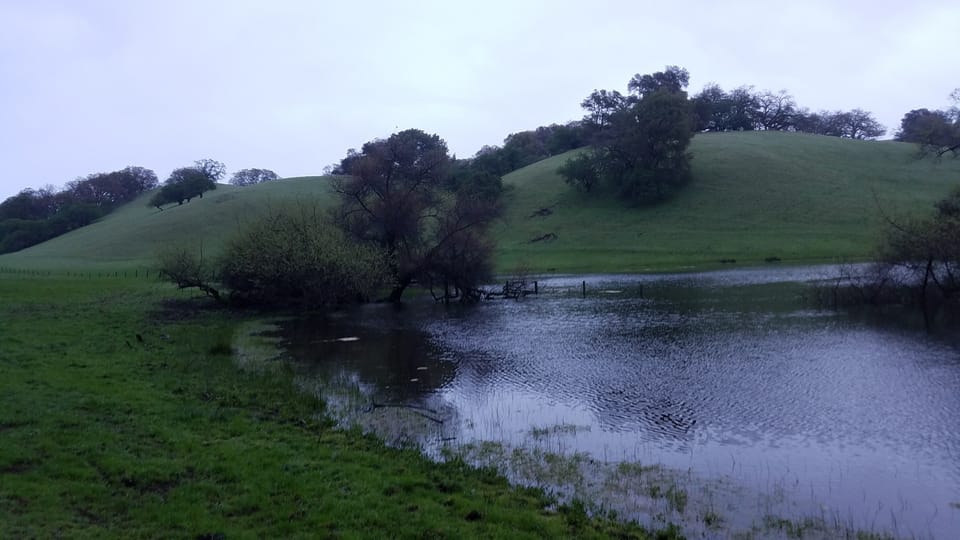 Stormwater and drainageSink it or shed it? When to keep rain on your land and when to drain itMost properties need both. Sink clean water where the soil can take it and nothing will be harmed. Shed water, slowly and safely, where soaking it in would threaten a foundation, a slope, a septic system or a neighbor. The craft is deciding which water goes where.Updated Oct 18, 2026